Salt bread
By VicentaLakin

Salt bread is also called salty, salty croissant, salty, creamy bread. Salt bread begins in Japan, and it is rare in Asia. It is simple in material, simple in plastic, but not simple in taste. The outer layer, its internal elasticity, its rich taste, its salty smell, it's not enough to eat even a few salt rolls, but it's the salt bread that you love most. The real salt bread, which uses more resilient French bread, is fermented over a long period of time and requires great patience. The salt bread made today, made with gold-mounted Japanese toast, made with a fermentation, has significantly reduced production time, made it easier to operate, and is more suitable for home-grown operations
Recipe Recommendations
- Jinshan Japanese Toast Powder 200 grams
- low-gluten flour 50 grams
- milk powder 8 grams
- white sugar 25 grams
- whole egg liquid 15 grams
- water 140 grams
- salt 4 grams
- oil smoke butter 20 grams
- unsalted butter 20 grams
- sugar-tolerant yeast 4 grams
- milk fragrance
- baking
- several hours
- simple
Steps for Salt bread
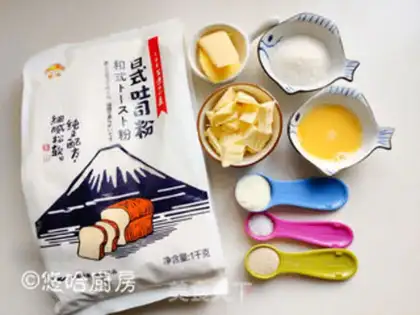
1
The materials were prepared, the butter was prepared in two types, salt-free butter was used in the dough and salt-yellow was used as a pie。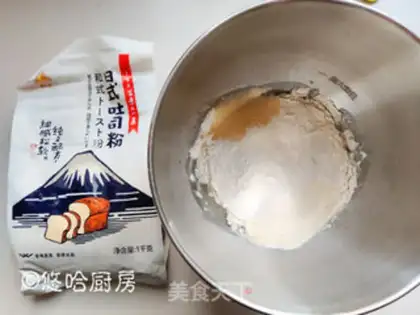
2
The mixing tank is first filled with liquid, then with flour, salt, sugar, milk powder, and the yeast at the top. Turn on the cook's machine。
3
It was then slowly mixed with a cook ' s machine and then at high speed for seven minutes into softened butter, which continued。
4
Until the noodles pull out the mural。
5
Thermometers are inserted into the centre of the face group, which is measured at 26 degrees. The mask covers the skin and wakes up for 20 minutes。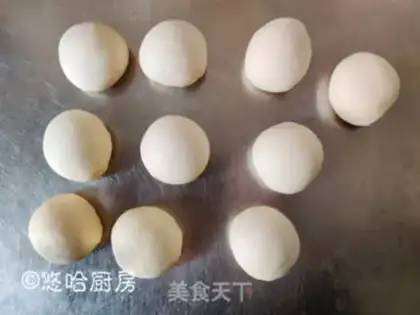
6
After 20 minutes, the noodles were taken out, divided into an average of 10 groups of about 48 grams, with the noodles rolling for about 15 minutes. This bread is fermented once and can be operated without complete fermentation。
7
The static face of the face is shaped by a drip。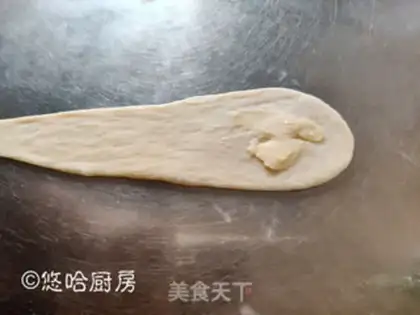
8
The noodles were split from the middle to the bottom, with a little softened salt butter on the thick head。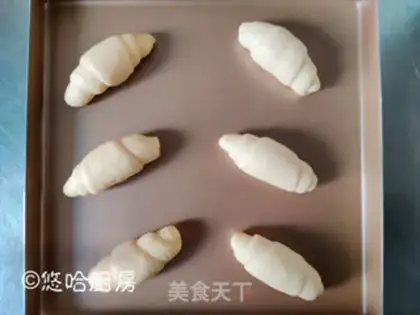
9
The noodles are rolled up from top to bottom into the shape of a calf horn. The plastic face is placed in the oven and fermented in warm, wet places. Without fermenters, the ovens are baked without charge and a bowl of hot water is placed under the oven。
10
One hour after the fermentation, the noodles have been sent twice as big. Draw a full egg fluid on the face of the dough, so that a little sea salt can be decorated。
11
The oven is 200 degrees above the oven and 160 degrees preheat, which is preheated and placed in the lower middle of the oven and baked for about 12 minutes。
12
It's good to have the baked bread cut open when it cools。Salt bread Make Tips
It is now possible to use hot water for seasons and surface rooms, with cold water and surfaces if indoor temperatures are low, with warm hands and in summer. The best temperature after the noodles is 26-28 degrees. The salt bread is fermented at a time, so that it can be fermented when it's quenched. The noodles are fermented for a longer period and room temperature takes between half and two hours. The gold-mounted Japanese toast is used because of its high intake of water, its wetness and softness, the softness of the entrance and the fragrance of wheat。