Four braids
By VicentaLakin
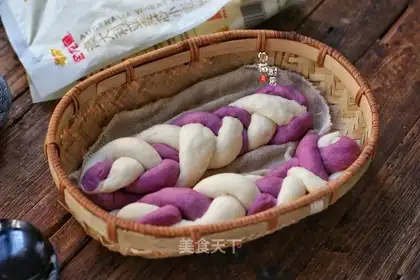
The old people like to eat grubs, it's the buns, but the kids always like colored foods, and the white buns don't seem to interest them, so they've taught their mother-in-law how to change them, so they're really good, they love to eat, and I love to eat
Recipe Recommendations
- Purple sweet potato vegetable powder 5 grams
- Australia wheat core flour
- yeast powder 4 grams
- vegetable oil 10 grams
- white sugar 2 grams
- sweetening
- steamed
- several hours
- ordinary
Steps for Four braids
1
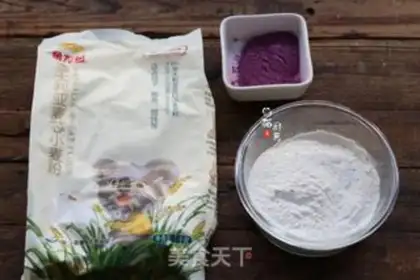
I prefer to make buns with wheat gravy, 100% Australian imports of wheat, flour, and taste. Flour and potato vegetable powder are prepared first, and fresh, varnished potatoes can be used instead。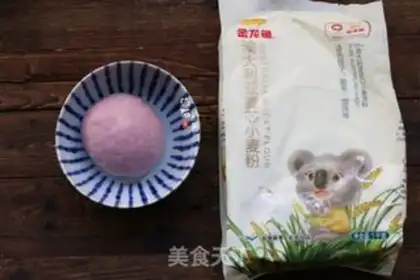
2
In two points, one of the 195 g of the bars was added to the potato vegetable powder, 120 g of warm water and 2 g of yeast to the yeast water, pouring into the flour, adding 1 g of white sugar, adding 5 g of vegetative oil with chopsticks, and rubbing into smooth noodles。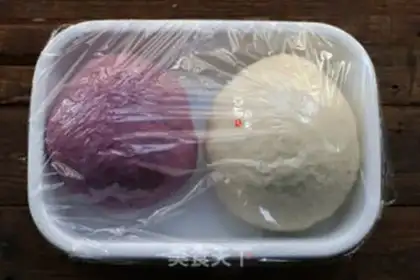
3
The other flour, which is not covered by purple potato flour, is also covered in smooth noodles, with a protective film placed on the side of it。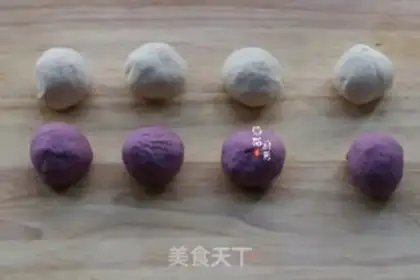
4
Ten minutes of awakening, the noodles continue to glitter out of the air and split them into eight equals。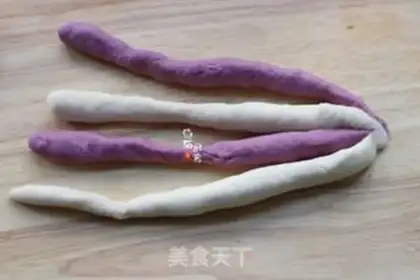
5
The lined noodles are swung into thin strips, and then, at intervals (as graphs), they tighten one end。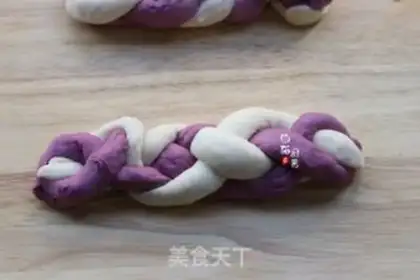
6
Then, like braiding, you can cross the four faces and make your favorite braid shape。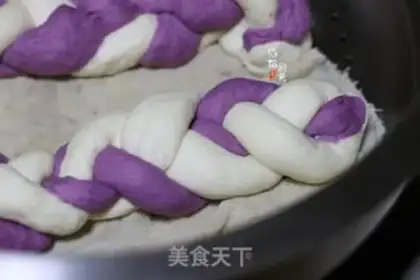
7
The buns are fermented once, and when the face is fermented, it is fermented at about 28 degrees of room temperature and the face is fermented about twice as large. Heated the steam pot, and then boiled the water for 20 minutes。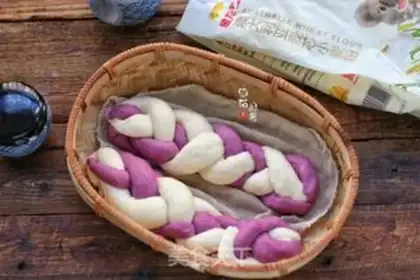
8
Two colors, made out of buns in the shape of braids, and children said they had no idea that flour could make a bun in that shape, and wondered whether because of its different shapes and the common white one, the children said they ate particularly soft and sweet, especially the coloured ones. Try itFour braids Make Tips
One fermentation is more time-efficient, winter temperatures are low, indoor fermentation is slower and the noodles are fermented and steamed according to reality