Mi Chi Fung
By VicentaLakin
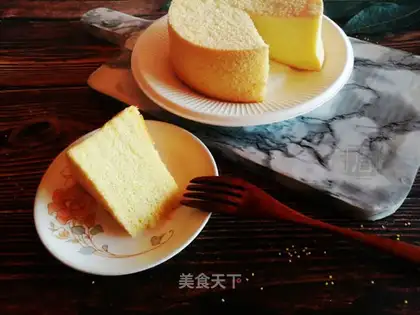
Fung's food is not only eggs, powder, water, oil, sugar. Eggs and duck eggs have been made of shifu, as well as low-banded flour, barley flour, corn flour and rice flour, and today they want to be made of millet. It's nice to look at the platinum, but it's a bit of trouble to grind it into powder and sift it through, and I don't want to get in trouble, boil it into porridge and make it into rice paste, with a little bit of low-banded flour, so I can make a soft, plumy, plumy little rice wind. Note: The rice porridge is too little to bear, and 70 grams are taken when the rice is dried. The amount given in the material table is a 6-inch clique model, which I made together, three times the amount in the process chart。
Recipe Recommendations
- Xiaomi 70 grams
- water 700 grams
- low-gluten flour 20 grams
- eggs of 3
- edible vegetable oil 20 grams
- salt 1 gram
- fine sugar 30 grams
- sweetening
- baking
- several hours
- senior
Steps for Mi Chi Fung
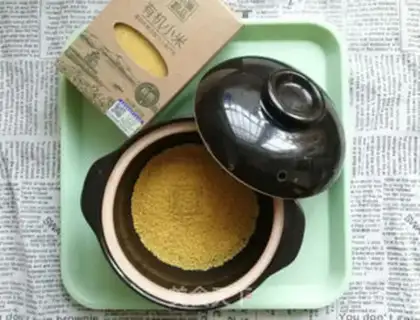
1
Take 70 grams of millet, wash it and add water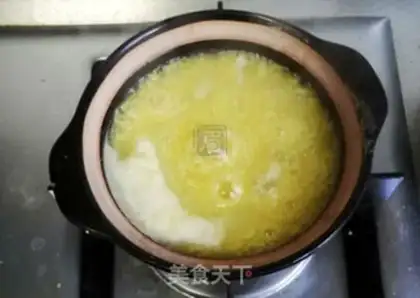
2
First the fire opens, then the fire boils, and from time to time mixes in order to prevent the end。
3
Put the rice congee in the ration machine. The status of the rice paste is as charted。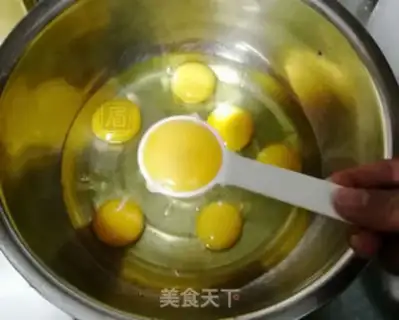
4
Eggs enter deep water-free and oil-free basins, and the egg yolk is sprung out with the same water-free and oil-free maximum number (one large spoon) and placed in other containers; the egg-cleaning basin is frozen in the freezer. There are no spoons to measure for soup-drinked egg yolk, or to separate the eggnog from the eggnog in any way you know。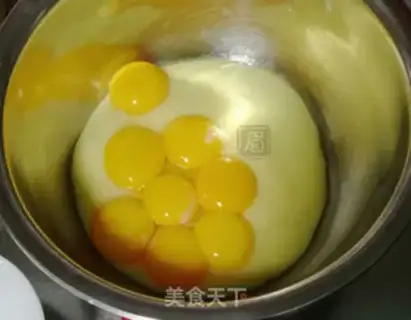
5
Another deep basin called 70 grams of small rice paste, poured into egg yolk, refuelled and salted, evenly mixed with hand-pumping (abbreviated) and no oil flower was visible。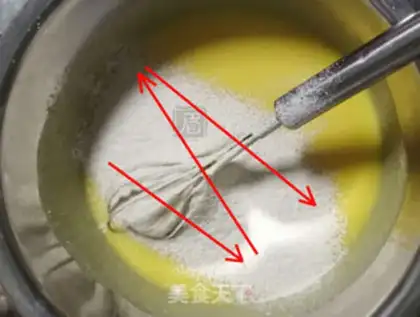
6
sifting in low-banded flour, hand-switching with the "z" font in the direction of the red arrow, be careful not to draw rings。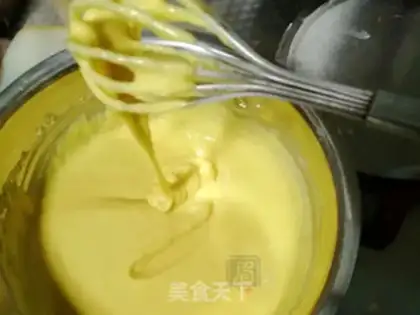
7
We've got a nice little rice yogurt and we've got a spare。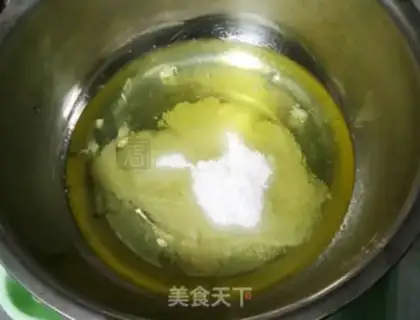
8
At this point, the oven is preheated and the fire is 150°C. Take out the egg pellets, the pelvis will be frozen, leave it alone, 30 grams in one-time sugar (which can also be added three times, with little difference) and the electric omelet will start at a low speed before the high-speed egg purification。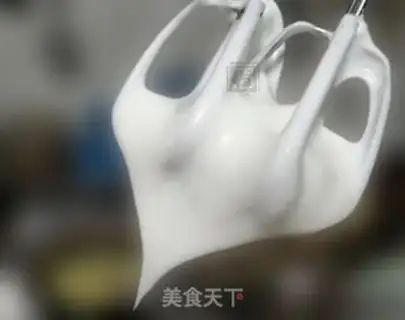
9
For about five minutes, the egg-beater power was shut off and the protein that had been mutilated manually was lifted to the egg, in a graphic state。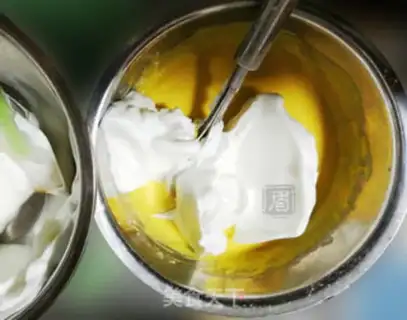
10
Take a third of the protein cream into the yolk paste。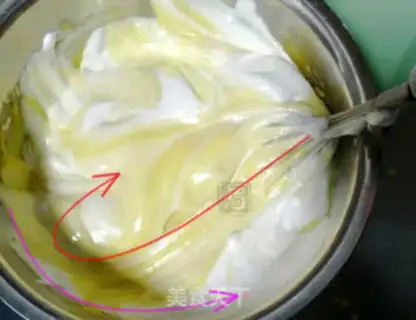
11
The right hand is drawn as shown by the red arrow, which is rolled down from 2 points to 8 points, and the left hand, which turns the basin in the direction of purple arrows, which is roughly even with the yolk paste。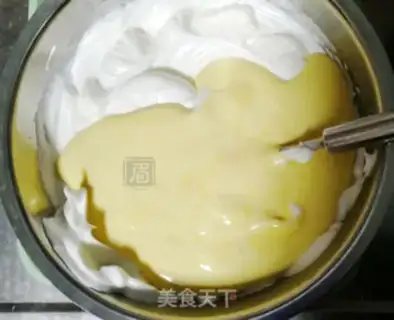
12
The mixed yolk paste drops into the protein basin, flips like the top figure, roughly even。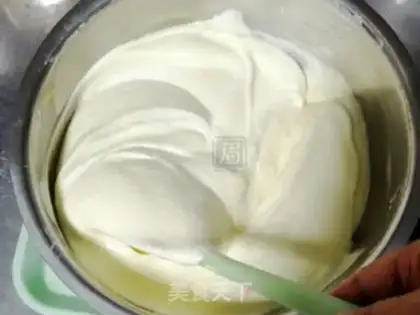
13
Then you change the razors and flip them. You can use the cake on the basin first. After scratching in the middle, the same method is used for mixing evenly。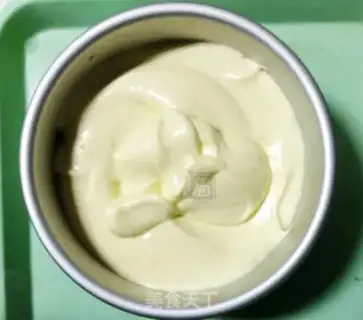
14
Get ready for a living twirl mold, pour the cake to eight cents full, shake a few times on the table and shake the bubble. Twilight moulds cannot be used without sticky molds, they cannot be coated with oil paper, and they cannot be oiled, as Tiki wind climbs high on the walls of the mold。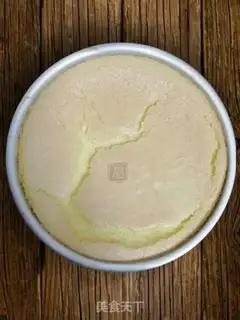
15
The oven is 120 ~ 130 °C, it's 150 °C, it's in the lower floor, it's about 50 minutes, it's up to the top and back, and the smell of the fragrance of the cake is high。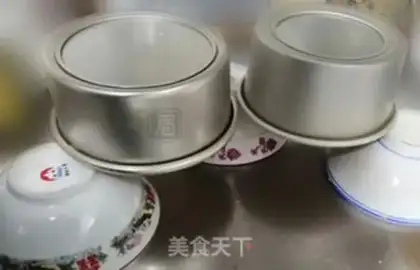
16
It's cool. It's my original way of rebutting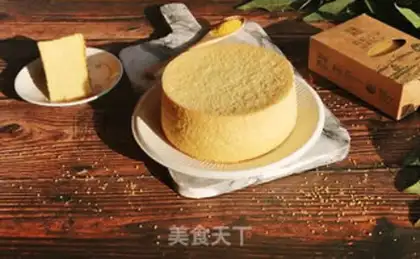
17
Expensive slices。Mi Chi Fung Make Tips
it is normal to break a twilight, especially in the middle chimney, and it is not good to look at it. if you don't want to break it, then you'll have to warm and warm, and you'll have to look at the temper of your oven. one. cake a. motion has oil stains. b. the yolk paste is not evenly mixed and the grease is not fully emulsed with particles. c. too long for mixing noodles. d. inadequate distribution of cake and unstable protein. e. no fully cooked wet pudding layer. ii. there's a dent on the bottom of the cake. the bottom fire is too high. b the mould is too close to the lower tube. the cake collapsed a. the mixing face was too long. b. early demodeling. the cake is not completely cool. iii. cake cracks a. the amount of yolk paste is low, dense and the ratio is problematic. b. the pasta is too long to mix. c. too hot and long. the fast loss of pasta water. iv. cake cakes of varying size a. inadequate proteins. b. the cake is brought into the air too hard when it falls into the mold. v. cake is not high a. convey and mix proteins to melt. b. a high volume of yolk paste and a problem with the formulation. c. oil stains on the inner walls of the mould