Preserved pepper and lotus root strips
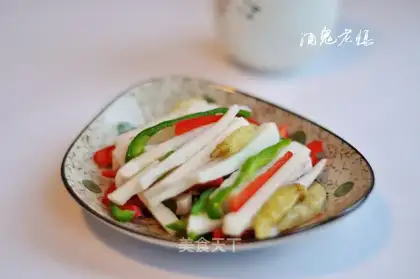
Fresh and simple small cold dishes. If you eat too much fish and meat, it's also good to eat some refreshing side dishes.
Recipe Recommendations
- green pepper appropriate amount
- red pepper appropriate amount
- Soaked wild pepper appropriate amount
- refined salt appropriate amount
- white sugar appropriate amount
- white vinegar appropriate amount
- hot and sour
- pickled
- half an hour
- ordinary
Steps for Preserved pepper and lotus root strips
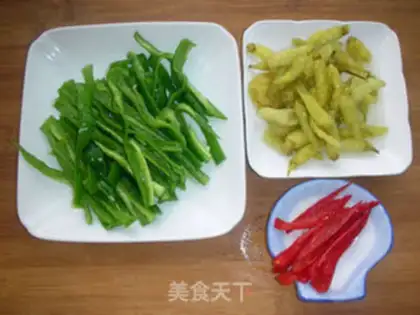
1
Remove the seeds and cut the green peppers into long strips, and cut the red peppers into thin strips.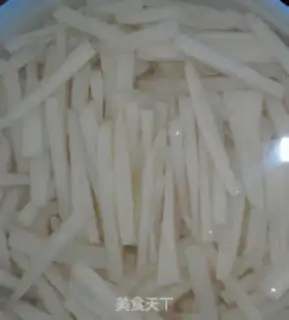
2
Peel and cut lotus roots into strips (of unlimited thickness), soak the lotus roots in cold water dripping with white vinegar.
3
Blanch the soaked lotus root strips with boiling water (add in boiling water for about 1 minute), remove them, place them in cold water, rinse, and cool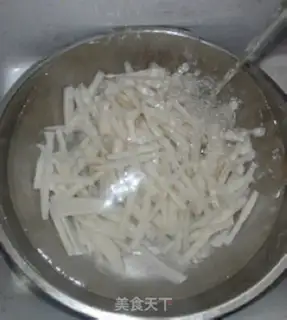
4
Finally, use cold boiled water to drain the water and remove it for later use.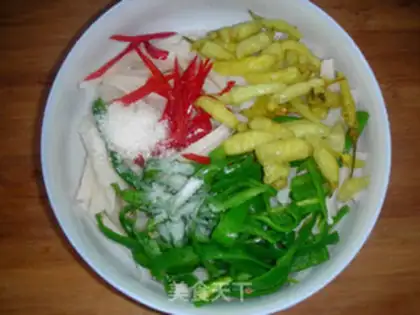
5
Place the lotus root bar code in a small basin, add green pepper strips, shredded red pepper, white sugar, a little refined salt, and pickled pepper, add white vinegar as appropriate according to personal preference, and mix well. Cover the evenly mixed lotus root strips on the basin with plastic wrap, place them in the refrigerator to refrigerate, and take them whenever you eat.Preserved pepper and lotus root strips Make Tips
1. Quality requirements for lotus root: It is better to have a large lotus root body, crisp and tender meat, rich and sweet in water, and with a fragrance. At the same time, the lotus root body should be free of injuries, rot, color change, rust spots, shrinkage, and constant knots; a thin layer of mud is attached to the outside of the lotus root body. 2. The difference between safflower lotus root and white lotus root: Generally speaking, the outer skin of safflower lotus root is brown-yellow, and the body shape is short and thick. The raw lotus root tastes bitter; the white lotus root has smooth outer skin and silver-white, and the body shape is long and thin., raw lotus root tastes sweet. Usually, red lotus root is used to stew pork ribs and lotus root soup, and white lotus root is used to stir-fry lotus root slices. In addition, there is also an ordinary quality twisted lotus root, which has a rough appearance, pink color and contains more starch.