Japanese raw toast
By VicentaLakin
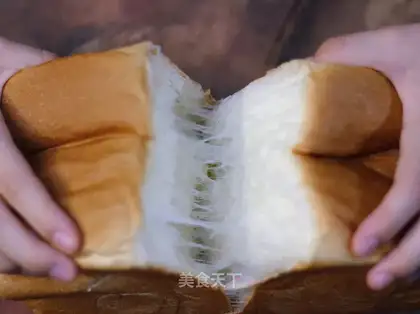
GOOD AND SWEET WHITE TOAST IS THE MOST COMMON AND POPULAR BREAD IN OUR LIVES. AND RECENTLY THE HOT JAPANESE RAW TOAST, WHICH LOOKS LIKE ORDINARY WHITE TOAST, TASTES EVEN BETTER. ITS SKIN IS THIN AND FRAGRANCE, ITS INTERNAL TOAST TISSUE IS WARM AND Q-BOMBED, IT SMELLS OF HONEY WITH SOFT MILK AND BAKED PERFUME, AND ITS MILKY SWEETNESS AND WHEAT COLLIDE, MAKING IT IMPOSSIBLE FOR PEOPLE TO EAT IT, NO WONDER THERE ARE ALWAYS DRAGONS IN FRONT OF SHOPS THAT SELL RAW TOAST. THE WORD "LIVE" FOR RAW TOAST IS THE SAME AS THE WORD FOR "LIVE" IN JAPANESE, MEANING "FRESH" AND "NATURAL". WHEN PRODUCING RAW TOAST, THERE IS NO NEED TO PREPARE YEAST IN ADVANCE, AND THE TEMPERATURE IS STILL SOFT FOR A FEW DAYS, AND THERE IS NO DRY TOAST SIDE, WHICH IS VERY GOOD FOR TOAST LOVERS. LET'S SEE HOW IT WORKS. TWO 450 GRAMS OF TOAST (CAPS) CAN BE PRODUCED WITH THE INDICATED AMOUNT, USING A COOKER'S 450 GRAMS OF TOAST BOX, WITH LIGHT AND RIPPLES。
Recipe Recommendations
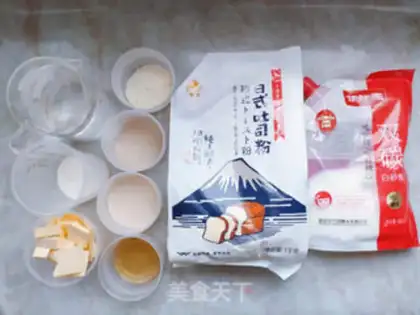
- Japanese toast powder
- salt 9 grams
- white granulated sugar 40 grams
- fresh yeast 15 grams
- skim milk powder 10 grams
- light cream 30 grams
- unsalted butter 60 grams
- honey 20 grams
- sweetened condensed milk 30 grams
- water
- sweetening
- baking
- several hours
- senior
Steps for Japanese raw toast
1
Prepare all kinds of material, butter slices soften at room temperature. Since the intake of different flour is different from the protein content, if other flour is used, adjust the amount as appropriate to the facial state。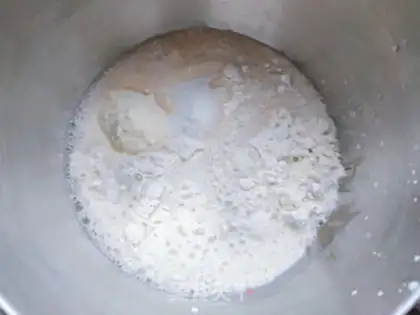
2
AND NOODLES: JAPANESE TOAST, SKIM MILK POWDER, SALT, LIGHT CREAM, LACTATION, HONEY IN THE KITCHEN MIXER. IT THEN POURS INTO THE ROOM TEMPERATURE WATER, AND THEN MIXS WITH FRESH YEAST (OR YEAST POWDER) AT A LOW RATE OF K OARS. LITTLE TIP: AS LIGHT CREAM AND REFINED MILK ARE GENERALLY STORED IN COLD STORAGE, COSMOPOLITAN WATER IS SUFFICIENT FOR THE FACE, AT WHICH TIME THE CONCOCTION TEMPERATURE IS NOT BELOW 16 DEGREES, WHICH AFFECTS YEAST. THE USAGE OF FRESH YEAST AND YEAST POWDER IS IN GENERAL 4:1。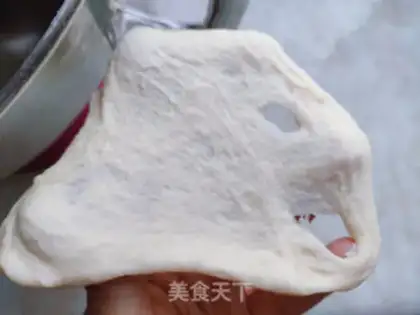
3
Switching the cook machine to a face hook, adjusting it to a high speed, and shattering the face to 50-60% of the band, i.e. pulling the thick film, but with a serrated state on the edge of the mouth。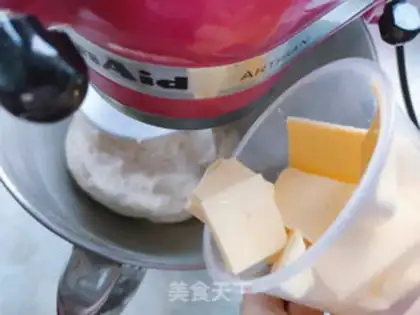
4
At this point, the sugar is poured into the white sugar, which is mixed at a low speed, which binds the sugar to the surface of the face of the face, which is mixed at a high rate of speed, and which does not reveal the degree of the granular sense of the sugar, which goes into soft butter。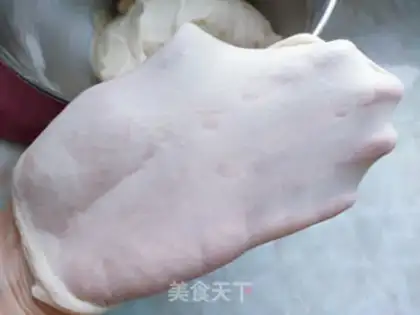
5
Low-speed mixing until butter blocks are not visible, then high-speed strokes to 90 knots, i.e. the degree to which the smooth and thin membranes can be removed and the face completed. Little tip: If you hit the face to 90, it'll be easier to bake, and there'll be no round corners or gold lines。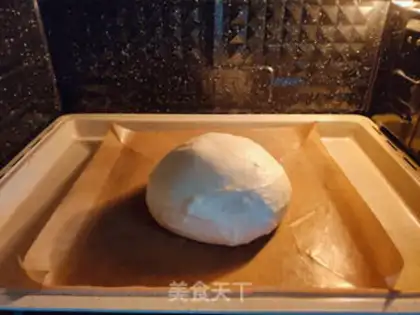
6
Flour jars, rounded, placed in a waking box (or fermentation function of a home oven). Set fermentation temperature of 28 degrees, humidity of 80 per cent and first fermentation of 60 minutes. Small tip: No more than 28 degrees of noodle temperature at the start of the tank so that the temperature does not ferment too high and affects the effects of the finished product. In order to ensure humidity, a glass of hot water could be placed in the oven。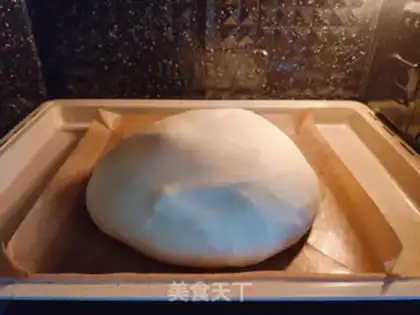
7
The noodles fermented twice as big, poked with their fingers, with clear fingerprints, and could be removed and the first fermentation ended。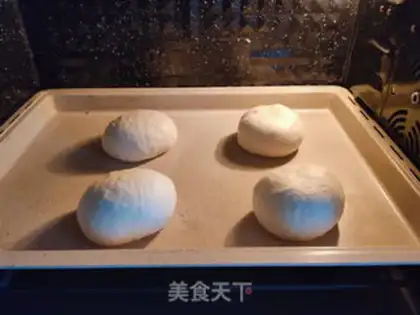
8
Split the large noodle into four 240-gram joints, then round it and put it back in the waking box for about 20 minutes. The lax temperature remains at 28 degrees and the humidity remains at 80 per cent。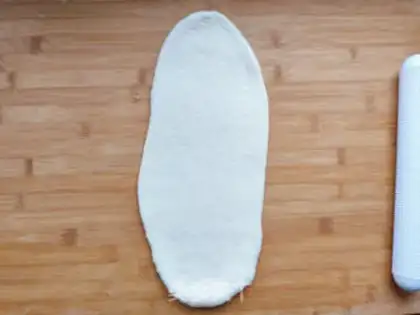
9
Wake up and take out the first roll. The circle is flattened, and the strips grow evenly from the middle with a scepter。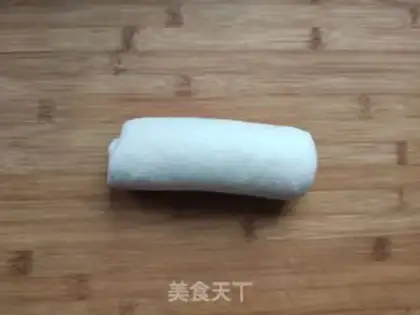
10
(b) Sliding down, starting from top to bottom, rolling up bars, returning to the hairbox and relaxing for 20 minutes (with no temperature change)。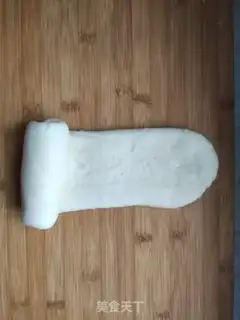
11
Second roll: Keep the long rolls gently flattened, grow into squares, slides down and rolls down into cylinders. Little tip: The laxity of the noodle process cannot be omitted and the impact on the finished organization will be described in detail after the text。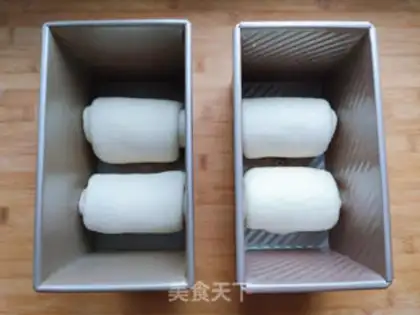
12
Model: Two 240 g cylinders placed in a 450 g toast box。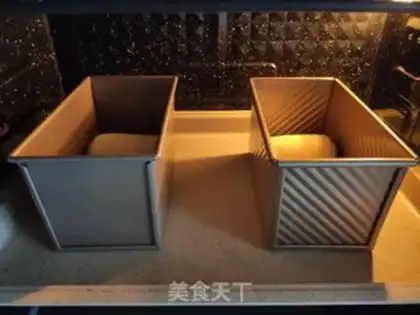
13
Final fermentation (second fermentation): Put both toast boxes in the oven, put them in the waking-box, set temperatures of 35 degrees, 80 per cent humidity and fermentation of about 50-60 minutes。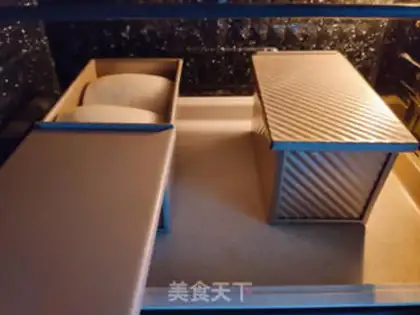
14
Baking: fermented to eight cents (about 2 cm from the edge of the mould) and baking with a lid. Small tip: If it's a commercial level stove: 170, 250, 30 minutes; if it's a domestic oven: 180 degrees, 30 minutes. Depending on the actual temperature of the oven, pre-heat ovens are required prior to roasting, 15 minutes for commercial flat stoves and 5 minutes for home ovens)。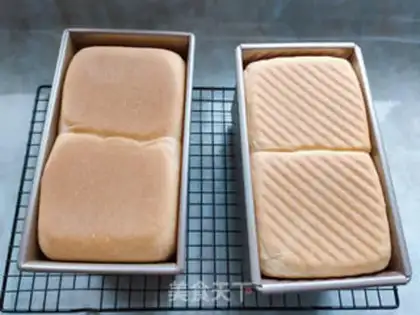
15
When it's done, take it out, cover it, shake it, and just hang it on the net。Japanese raw toast Make Tips
Toast preservation: once completely cooled, sliced, sealed, frozen and preserved. When you want to eat it, put it back in the oven (which can spray a little fog on the surface) or steam it for three to five minutes, you can restore the soft taste. Note: Refrigeration causes the starch to age rapidly and affects taste。