♪ ♪ Taste the pine bread ♪
By VicentaLakin

Making bread at home is more likely to be based on family tastes. It's like today's corny pine bread, full of food and mouth. I use ready-made cornbread flour, which is also very thick flour, with a variety of grains such as oatmeal, wheat, black sesame, rye and pistachio. There is no ready-made grain bread flour, which can also be added on its own, with a ratio of around 25 per cent of the condensed flour. In addition, I added two more ingredients — platinum and meat pine. It's called "Taiwan" and it's more common to say that foods made with milk and white sugar, like "Daifu" we usually eat, can be called "max" like snowmeisters. It's one thing to say, whether it's a platinum, or now it's all written. Take a bite, and there's a fragrance of fragrance in the corn bread outside, a fine and soft fragrance in the middle, and a little salty in the inside. This bread is so satisfying that it's hard to eat. I've made six of them. Everyone's eating for breakfast. Can't we have a roast every day
Recipe Recommendations
- multi-grain bread flour 250 grams
- cold water 165 grams
- butter 15 grams
- sugar-tolerant dry yeast 2.5 grams
- salt 2 grams
- white sugar 20 grams
- corn starch 20 grams
- milk 120 grams
- meat floss 80 grams
- glutinous rice flour 80 grams
Steps for ♪ ♪ Taste the pine bread ♪
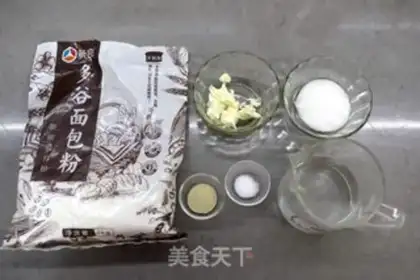
1
The main bread is ready: grain flour, high sugar-resistant dry yeast, salt, sugar, cool water, butter; no grain flour, with 10 to 15 per cent of its weight of dried nuts。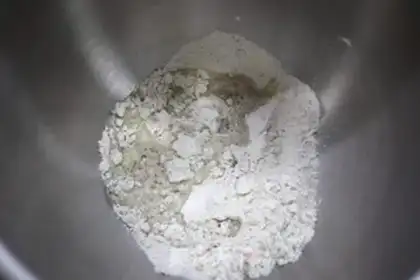
2
All the main materials except butter are placed in the scavenging drums; in the event of uncertainty as to the intake rate of flour, the amount of water may be set aside at 20 grams to determine whether the water should be added to the scavenger state。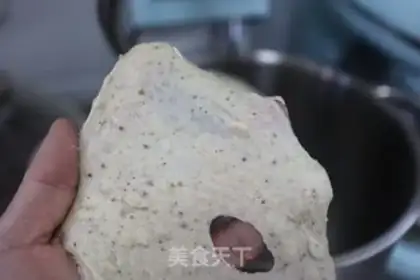
3
After a low-speed mix of one set, the second set is to be mixed for five minutes; the pasta can be pulled out of the thick film and added butter。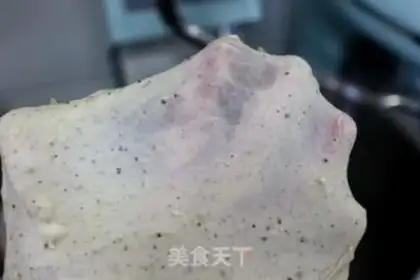
4
First, the butter is fully integrated into the noodles at a low speed of one, then the third, at a medium speed, stirs the noodles until they are soft and not sticky, so that transparent and flexible film can be easily formed, and if a hole is poked with a finger, there is or there is no small sawn teeth on the edge of the mouth。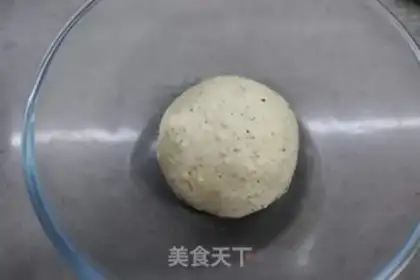
5
The rounding is in the deep basin, where the fermentation is based on warm and humid membranes; if the fermentation box is used, the temperature is 28-30 degrees, and the humidity is 70 hours, 2-3 hours, and the condition of the noodle is adjusted。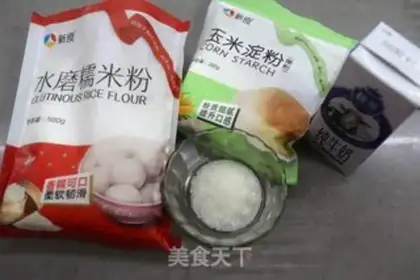
6
The fermented pasta handles the platinum piping; 80 grams of corn powder, 20 grams of corn starch, 20 grams of sugar and 120 grams of milk; if you like this taste, you can increase all usage accordingly; in addition, milk can be 1 - 2 times the amount of powder, with the least milk, and the platinum taste spreads thinner; and the milk is more soft。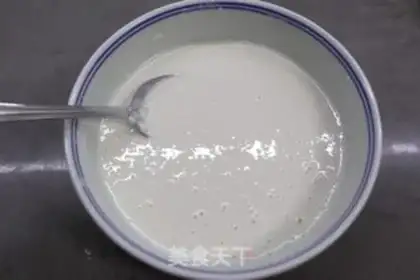
7
Mixed, dry powder-free, puss-free, thick paste。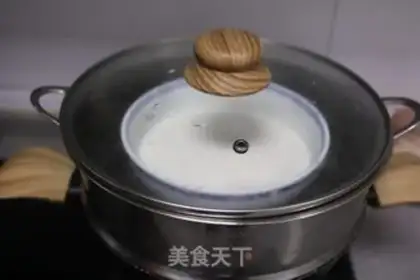
8
In the cooling pot, the fire steamed for about 15 minutes。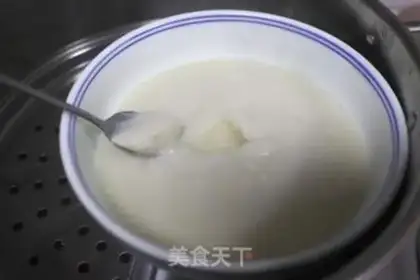
9
When the powder is fully condensed and transparent, a spoon is used to dig up the bottom of the congee, and if it is completely condensed, it is evaporated。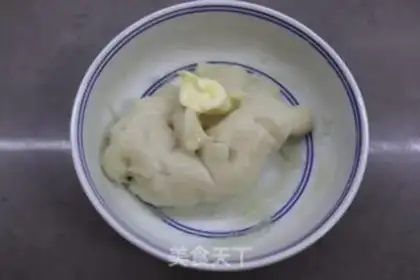
10
When the guacamole was dryed to a warmer hand, 10 grams of butter were inserted into the guacamole, and the butter was completely rolled into the guacamole with one-off gloves。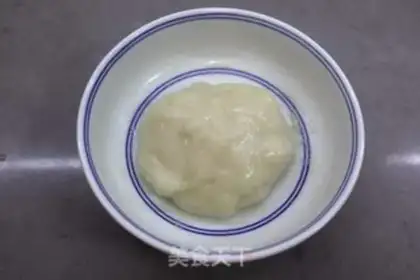
11
It is soft and smooth and flexible when it comes to butter; it is tight in the face to prevent water vapour。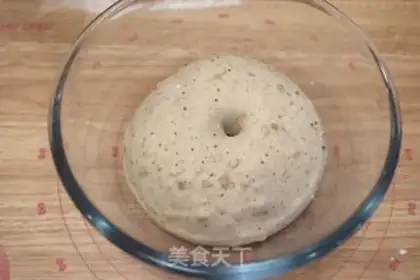
12
The plough is 2-2.5 times the size of the original, and the finger-tip flour is poking a hole in the top of the platter, and it does not collapse, and the fermentation is successful。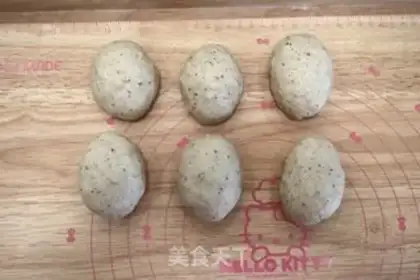
13
The noodles fell down on the board, gently beat the exhausts, weighing six equals, rubbing in an elliptical form, and laxing the film for about 15 minutes。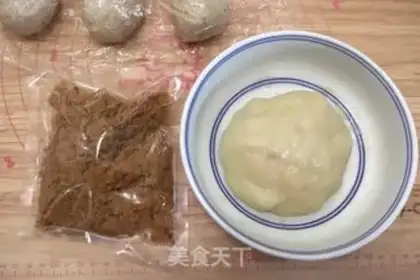
14
Take care of the pap when the noodles are loose. The meat pine and the milled rice turquoises are ready; meat pines are razed or turquoises are available。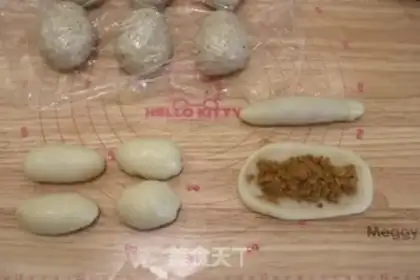
15
First, the mahjong is weighed into six equals, each of them in an elliptical shape; the mahjong is covered without waiting; it can be formed directly into an elliptical face of about 10 centimeters long, five centimetres wide, with a pine in the middle of the mahjong, with a light hand on the ground, and I leave around 13-15 grams on my finger; it can be adjusted as much as it pleases, as long as it can be wrapped in a mahjong; the two sides are grouped in the middle and condensed; and it is slightly adjusted into two sharp long olives。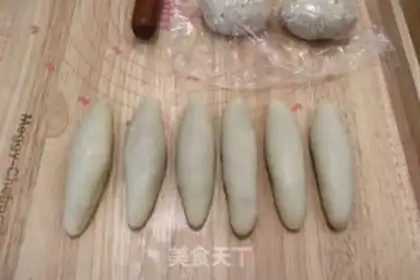
16
It's a sack of pine。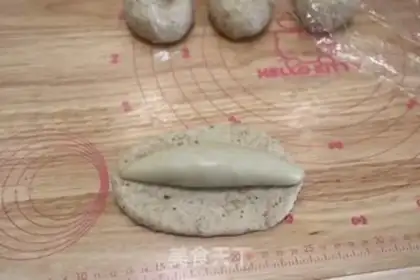
17
At this point, the noodles were loosed, and they were put in the middle of them as a piece of face compared to that of the Captain。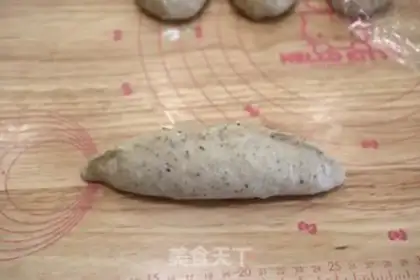
18
The sides were squeezed, the mouth closed down and slightly adjusted to a round olive shape。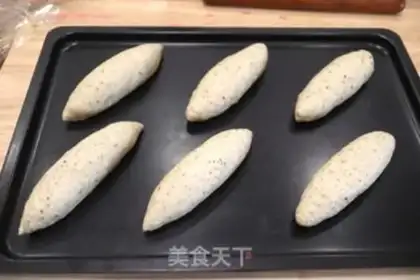
19
The cologne of the python pine pine is placed in a non-gluceous dish, leaving room for expansion; the warm fermentation is repeated; I put it in the oven, temperature 35 and a bowl of hot water for about 40 minutes。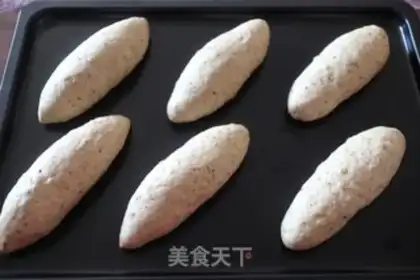
20
Bread is 1.5 - 2 times larger and the surface is so round that it comes out of the oven that the bread surface does not need egg fluid or milk, etc., and is baked in a more simple colour; the oven begins to preheat 190 degrees。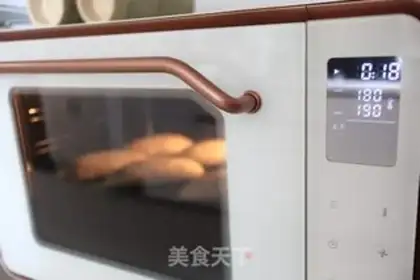
21
It is delivered to the middle of the preheated oven, with an upper and lower fire of 180/190 degrees for 18 minutes。
22
When the furnace is out, it is transferred to the hanger, which is stored in a bag when the hand is warm。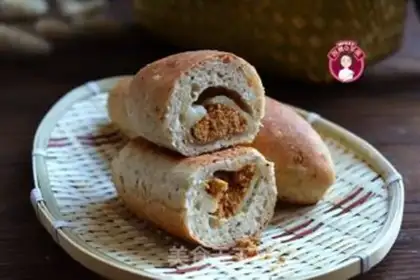
23
♪ Taste the pine bread, sweet and soft ♪♪ ♪ Taste the pine bread ♪ Make Tips
1. The direct fermentation method used here, with grain bread powder more likely to eat water, allows for a slightly larger amount of water and leaves 20 grams of water in front of the face; if milk is used instead of water, the amount of milk is increased by about 10 grams; 2. the amount of falcon is not much here and can increase at its own discretion; 3. The pine is used directly, and can also be fed with a proper amount of salad sauce, etc.; but the fat content in salad sauce is too high, so both health and mouth feel are chosen; 4. The temperature and time of the roast are adjusted to the actual situation in the oven, the size of the bread, the material of the oven, the personal preference of the mouth。