Polacks of corn bread
By VicentaLakin
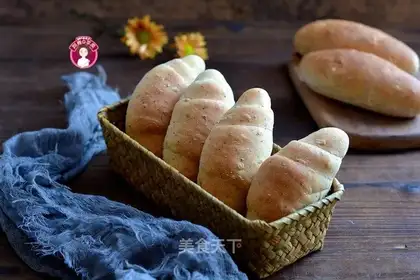
Today I made a couple of salt rolls with no sugar, especially a bite, and there's a lot of nuts, five grains of grub, less oil, soft skin, soft inside, salty, delicious
Recipe Recommendations
- high-gluten flour 50 grams
- dry yeast 1 gram
- cold water 50 grams
- sugar-tolerant dry yeast 2 grams
- butter 15 grams
- multi-grain bread flour 200 grams
- salt 5 grams
Steps for Polacks of corn bread
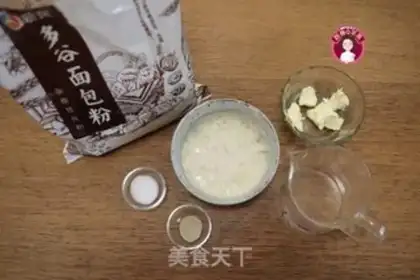
1
The main pasta material and the Polish pasta are ready: very little material, with only the most common grain bread flour, dry yeast, salt, cool water and a little butter。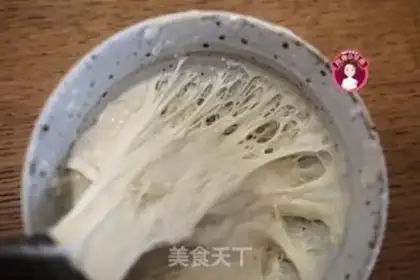
2
It takes hours for the Polish to make it to ferment it; it's done by strangling Polish materials. Flour 50 grams, dry yeast 1 grams, cold water 50 grams and into the bowl, evenly fermented, protected membrane fermented in warm and wet areas, two to three times larger, with large and small visible bubbles on the surface, a pleasant little fermentation sour, and a very beautiful tissue with long sticky laces and atmospheric holes。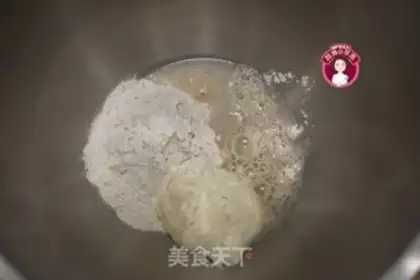
3
With the exception of butter in the main noodle, all materials and Polish scavengers are in the scavengers; different brands of flour have different rates of water consumption, allowing 20 grams of water to see the face of the noodle and decide whether to add it; grain bread flour contains a large amount of dry grain and dried fruit, which is more water than the usual high-strength flour。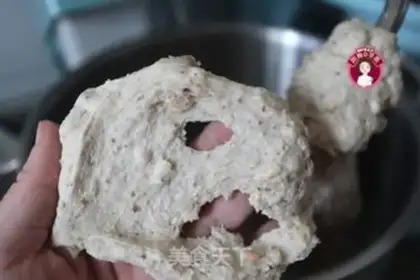
4
First, the material will be mixed in at a low speed in the first stage of the chef's machine, and butter will be added when the thicker noodles can be removed。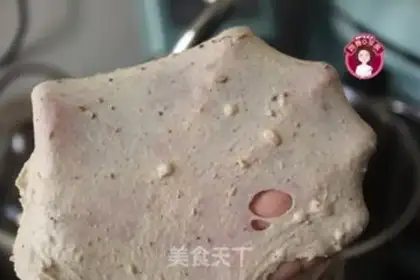
5
First, the butter is fully integrated into the noodles at a low rate of 1 and then, in three, the medium-speed mix; when it is soft and soft and does not touch the pellets, the face is drawn and the transparent and flexible film on the hand can be easily lifted and the face covered。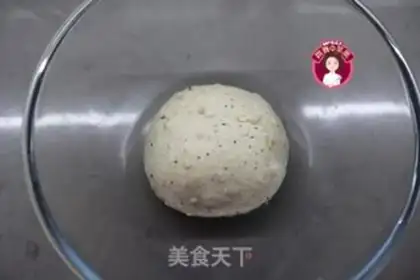
6
Noodles are rounded and placed in deep basins where the fermentation takes place at the base of the warm and wet zone; if using a fermentation box, the temperature is 28-30, humidity 70, time 2-3 hours to see the state of the noodle。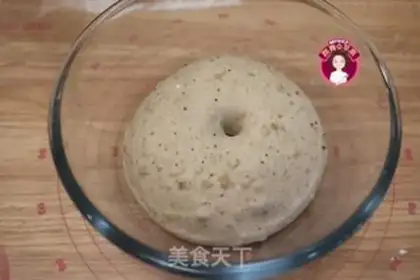
7
The pasta is twice the size of the original, and the finger-tip flour is poking a hole in the top of the flour, and it doesn't collapse, and it fermentes。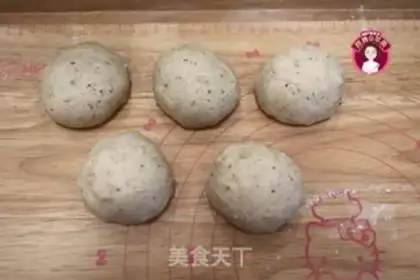
8
The noodles were removed from the panel, and the air was slashed gently, weighing five equals, and a small amount of flour was rounded up。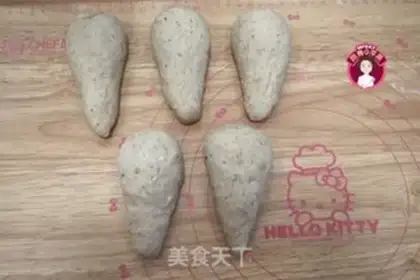
9
There is no need to wait, but the dome is soaked in the droplet, and the membranes are loose for about 15 minutes; when the finger is pressed in the thickest part of the dome, the finger print does not bounce, it is loose。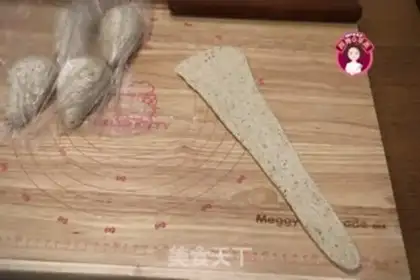
10
The loosely smooth face of the face was smoothed up, with a few soft slaps, and from the middle, with a separate upward and downward twig, a parallel back triangle, which was then turned back to the length required。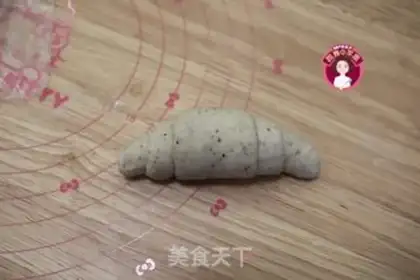
11
Scroll from top to bottom into a roll, with the end pressed under a roll。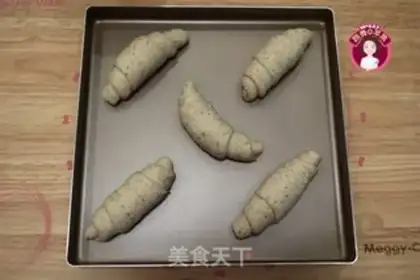
12
Rolled horned croissants are placed on a non-clause dish, leaving room for expansion。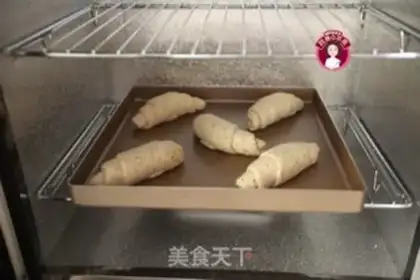
13
It is fermented twice in a fermentation box, at a temperature of 30-35 degrees and with a humidity of 75-85, for a period of approximately 40 minutes; there is no fermentation box for the oven and a bowl of hot water in the oven increases humidity。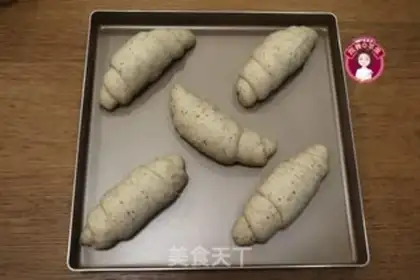
14
The croissants are twice as big, the ovens begin to preheat 190 degrees, and different ovens have preheats of 5 to 10 minutes, depending on the time they are preheated; grain rolls are so coarse that they don't have to brush egg fluids, either milk or nothing。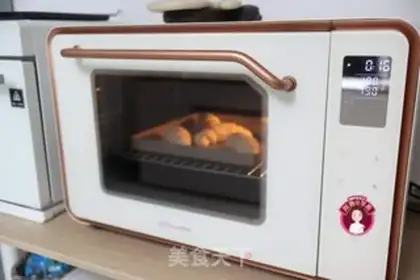
15
Bread rolls are delivered to the lower and middle of the pre-heated oven, with a fire of 180/190 degrees and 16 minutes; the temperature and time are adjusted to the actual situation of the oven, the size of the roll, the material of the oven, the personal taste。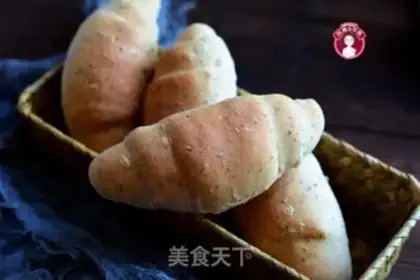
16
When the furnace is out, it is laid on a hanger, which can be kept in a bag when it warms up; the face and bottom of the bread roll are beautiful。Polacks of corn bread Make Tips
1. The four elements of bread: flour, yeast, salt, water, and other ingredients are intended only to increase different flavors. It's a little rough because of the grain, oatmeal, pistachio and other nuts, and I'm making it salty. There is no grain of bread that can be combined with high-strength flour (bread flour) with a small amount of nuts. Bread can be made in a variety of forms, different from these small horns; it can also be rounded or made with various small moulds; and the timing of roasting can be adapted to different circumstances, as detailed in the main points of step 15. 3. Polish is a French-language Poolish translation, and Poolish is a name of yeast, made of fermentation at a ratio of 1:1 with high-weather flour and water and mixed with 0.5-1% of flour. Because the word “Poland” in English is “Polish”, the fermentation in French is the same as it is, so it is. The amount of flour grown in Poland is 25 per cent of the volume of the main flour flour, and with this percentage, it is possible to make bread of its own materials。