Souffle
By VicentaLakin
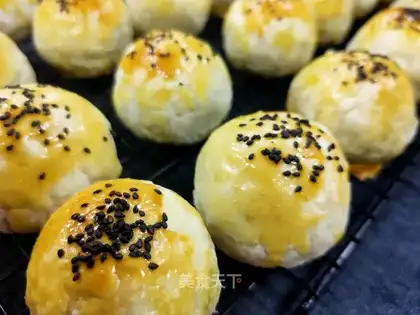
The history of reading drawings, learning and making delicious yogurts. From the beginning, there is an old Turkish snack called SuBrei, probably the Chinese “sweet” translation, which basically points to the earliest place of origin of the skin: Central Asia. In the seventh century, during the period of the Aberas dynasty, the soccer was in its infancy and, after taking over much of the Middle East, North Africa and West Asia, in 751 the Arabs defeated the mighty Tang Empire in the battle of Zoros, thus acquiring a considerable area of arable land and opening the door to the subcontinent of South Asia: India. Since then, wheat flour, originating in Central Asia, has come into contact with butter, syrup, nuts, cheese, cinnamon and spices, all of which were born during that period. In the 13th century, the Ottoman Empire inherited the garments of the Arab world and began its invasion of Eastern and Southern Europe in the Christian world, where the soothing was taken, and then Europe rose, and the wave of colonization of the great sea came and the soaks were brought to the world by Europeans. When the soot reached Macao, Hong Kong and Taiwan, where China was the first to accept the colonial culture, it developed souffles, carrots, forks, souffles, pineapple, and soufflés. Without exception, they combine the essence of traditional Chinese food products, and the Chinese have a history of making salted eggs for over a millennium. Soothing at the entrance, and the ointment of oil, and the collide of the two compartments, like the hymn of the Western food millennium, meet the heritage of the Eastern food millennium, and bring forth the sweetest sweetness of all. More importantly: the culture of the human diet, the culture of the family and the enrichment and upgrading of this tiny souffle
Recipe Recommendations
- medium-gluten flour 200g
- lard 90g
- white granulated sugar 20g
- water 110ML
- salt 2g
- black sesame appropriate amount
- egg yolk two
- low-gluten flour 180G
- bean paste a bag
- salted egg yolk of 20
- salty and sweet
- roast
- several hours
- divine level
Steps for Souffle
1
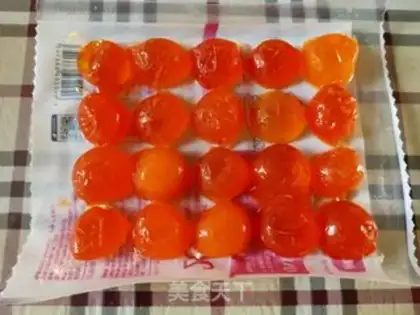
Let's start with the pie: 20 salted egg yolks, something that's ready for sale, and a better quality。
2
Open the drive。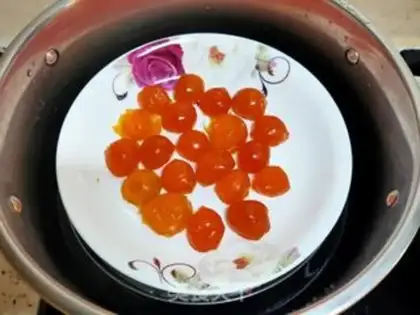
3
Fifteen minutes of evaporation in the pot, which is naturally cooled back up (which can also be covered with high white wine on the surface, 180° preheated in the oven and 5 minutes warmed up and warmed up)。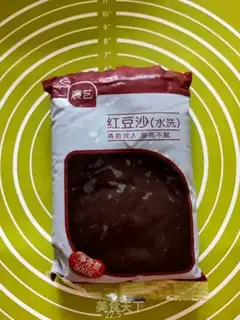
4
Water wash a bag of red bean sand. It's 500 grams, and there's 400 bags。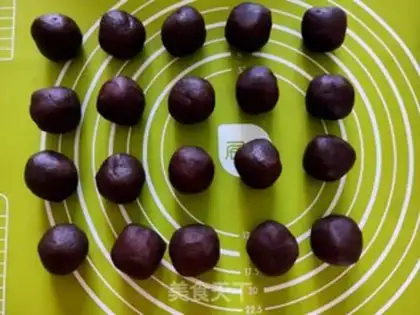
5
An average of 20 copies, weighing 25 grams each, can be used to draw a bowl of water fingertips if it is felt。
6
Take a soybean ball and flatten it and wrap it in a salty yolk。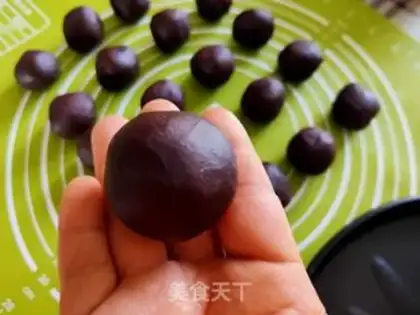
7
Tighten the bottom with the tiger's mouth, round the ball。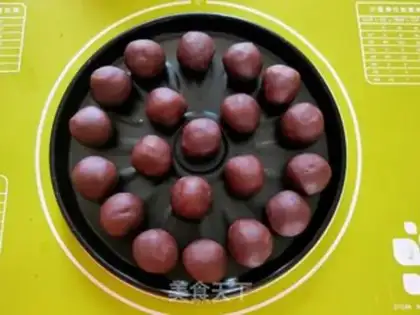
8
In turn, do all the bean sandbags with salted egg yolk, cover the surface, and put them in a freezer in the fridge, so that they can operate back there, if they have less time than a day before they are ready, they can be removed directly from the fridge when they are used。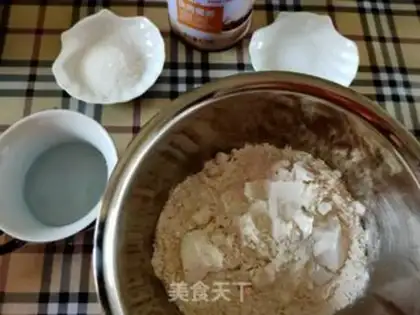
9
Let's start with the tarp, and if there's a baker that can be machine and face, I'm just handy and pasta。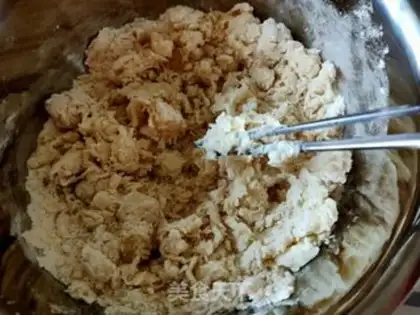
10
The other materials are put in, then a little water is added, and they are mixed with chopsticks。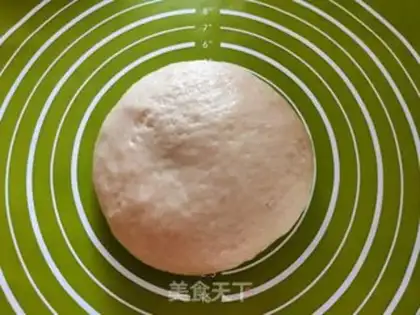
11
The process will take time and the better。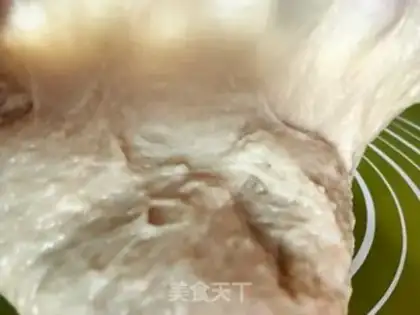
12
If it's the best thing to do, I'm almost done. I can't get my husband to help me。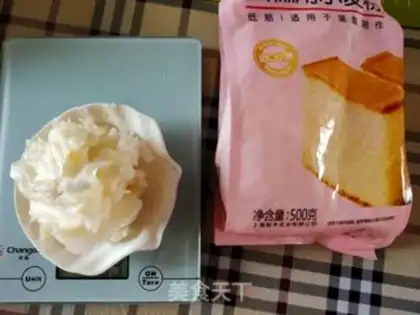
13
We're going to prepare a souffle: 90 grams of pig oil, weights of low-banded flour。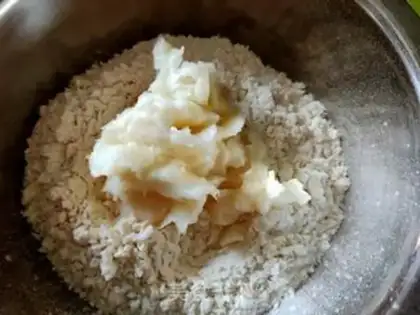
14
Put it in the pot, squeeze it with your hands。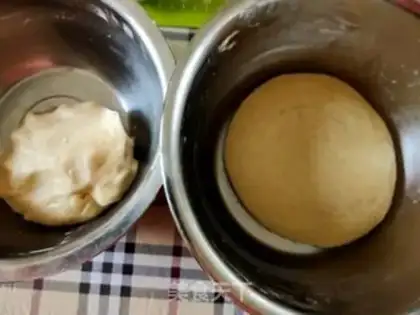
15
The oil coatings and soufflés have been put in the basin, covered with film or lids, and kept silent for 30 minutes, allowing them to have full hair。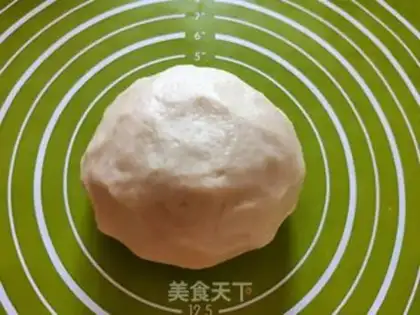
16
Look, time's up. The tarp's very smooth。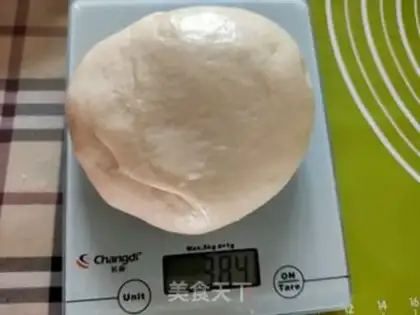
17
This is a live water and oil flounder called 384 grams。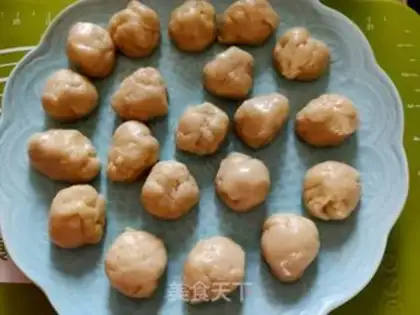
18
An average of 20 copies, each of 19.2 g, are covered with flavoured membranes to prevent surface drying。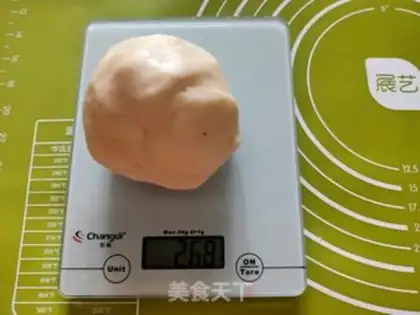
19
We'll weigh it again: 268 grams。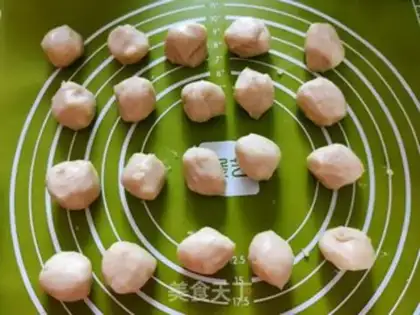
20
An average of 20 copies, each of 13.4 g, were rounded up and covered with protective film to prevent surface drying。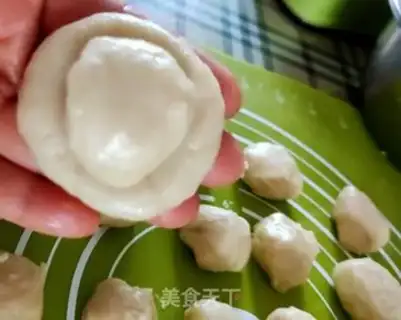
21
Take a tarp, wrap it in a soak。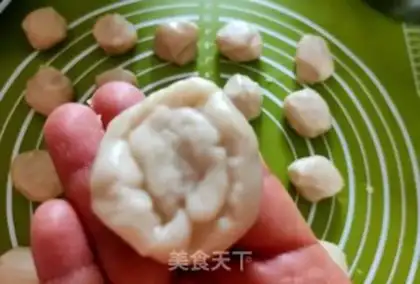
22
Use the extended nature of the tarp to open the noodles and wrap the soaks。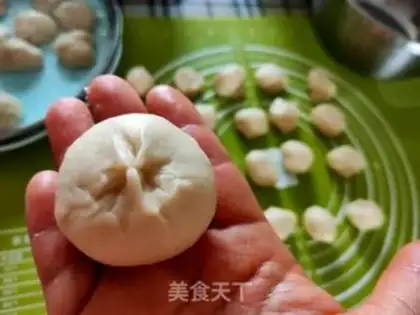
23
Bottom closing。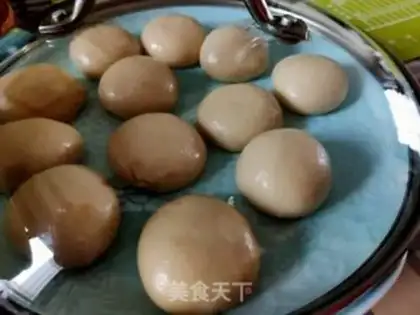
24
In turn, do all the soccer, cover the film or lid, and hold it for 15 minutes。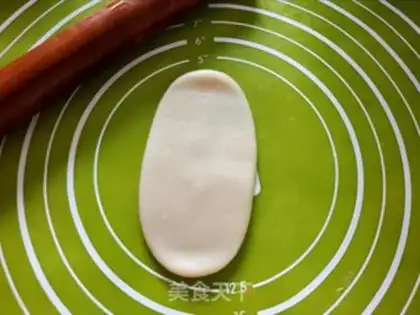
25
Take a soothing skin, flatten it, and open its tongue gently from the middle, with a scepter, to both of them, and do not push too hard to prevent the soak from coming out。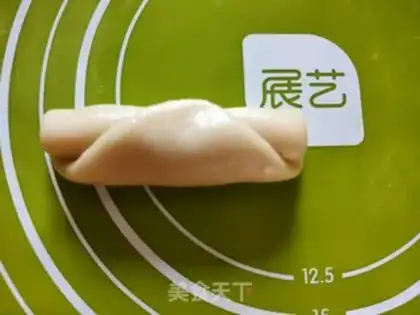
26
From the narrow bottom up, this step should not be too hard to avoid cracking。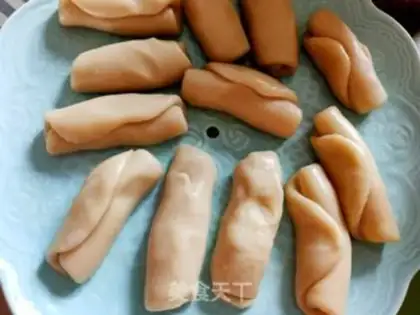
27
In turn, do all the rolls and cover the film for 15 minutes。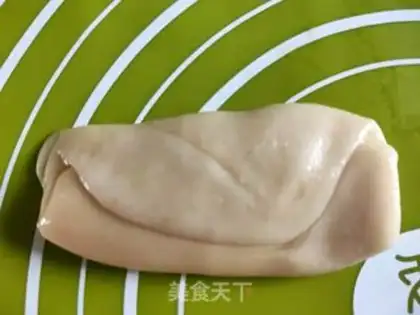
28
Time is up, a scroll is removed, the interface is flattened up, flattened, and with a cane, it is carefully opened from the middle to the opposite direction, i.e., up and down, then around。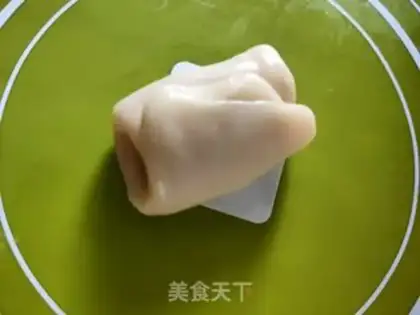
29
This time it'll turn fat。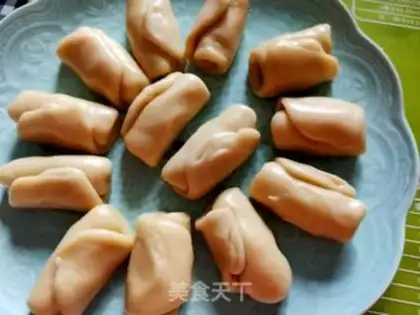
30
All the fat rolls in turn, covered with the shampoo, continued static for 15 minutes。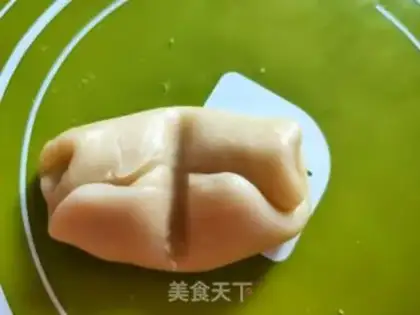
31
Time's up, take a fat roll and press it in the middle with chopsticks。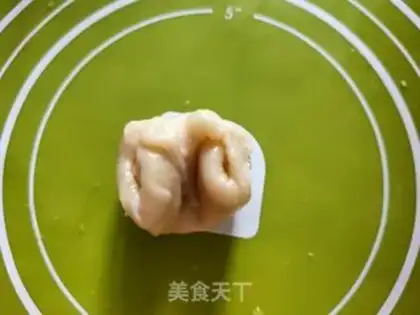
32
From both sides to the middle。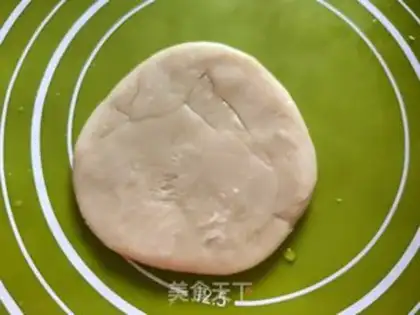
33
Press flat, round。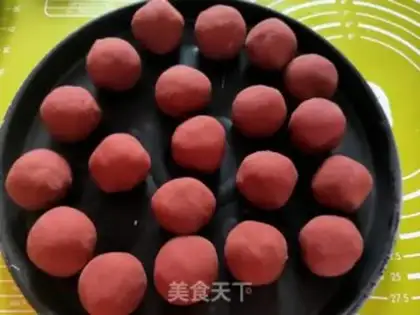
34
It's time to pick out the salty soybeans from the fridge。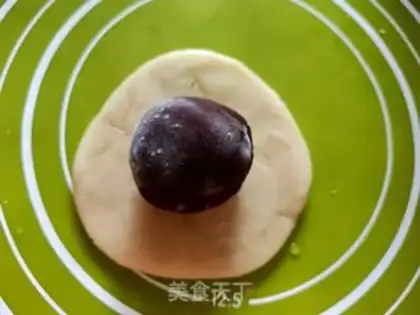
35
Take a pie and put it in the middle of the skin。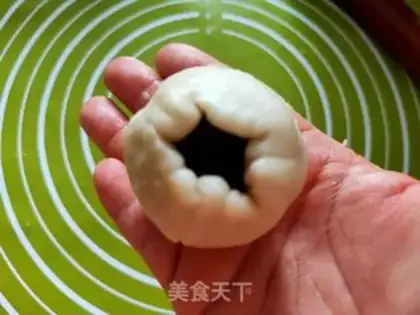
36
Squeeze slowly from the middle with the tiger's mouth and squeez the bottom。37
A soufflé will be ready. Don't worry, it will test your patience。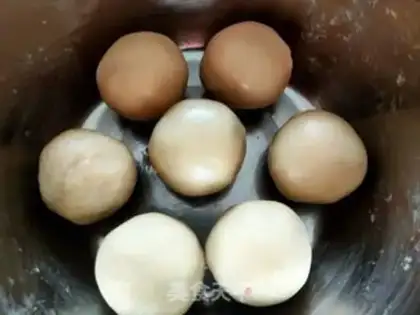
38
Then do all the soufflés, make sure the lids are covered or the shrouds are covered, and I'll just put the transparent glass caps in the pot。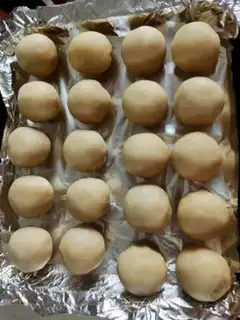
39
Put tin paper in the oven and code all yogurts in descending order, so the oven can be preheated 180°3 minutes。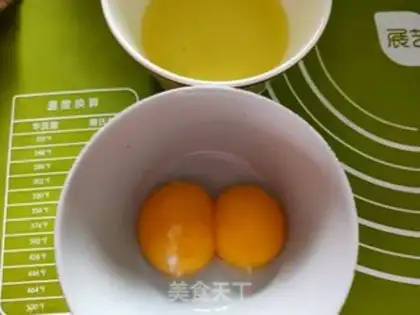
40
Two eggs separate the egg yolk and spread it。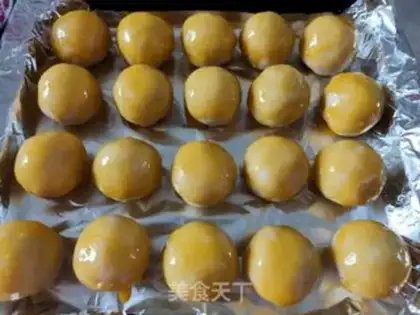
41
Take a silica brush and smooth the yolk。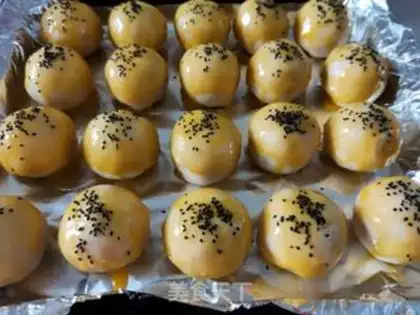
42
A little black sesame on the surface。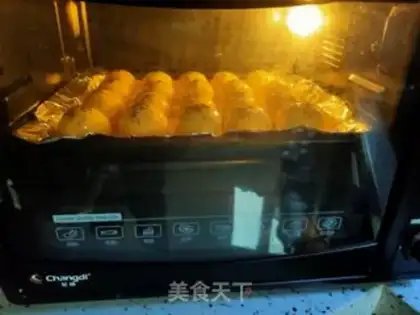
43
Put it in the middle of the oven, 180 degrees, for 30 minutes, and the sound of a ding means it's done。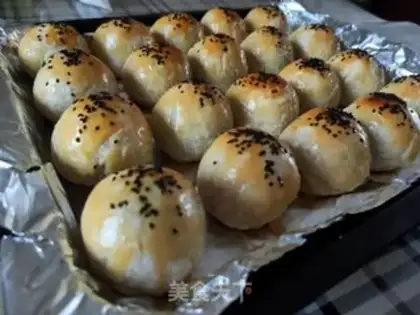
44
Take out natural cooling。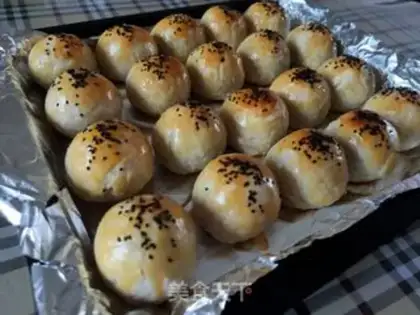
45
Can't wait to eat。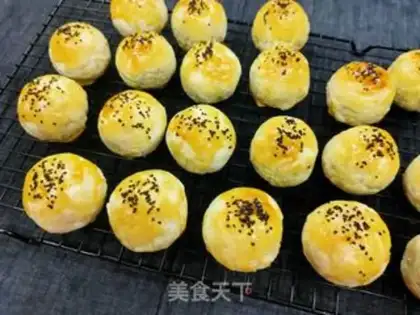
46
Get a little cooler and remove the tin paper and put it on the cooling shelf。
47
I can't help but eat。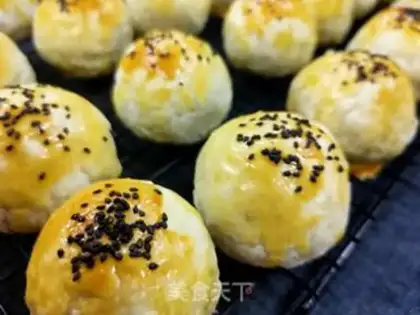
48
Photo time。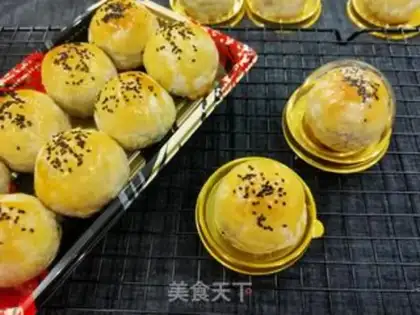
49
You can pack。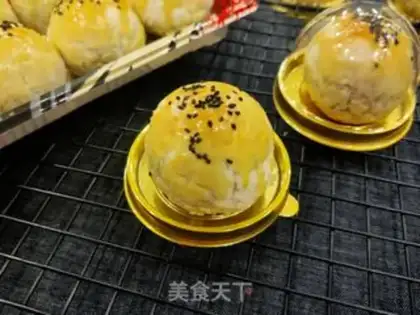
50
It's completely cooled and loaded into a box that you like。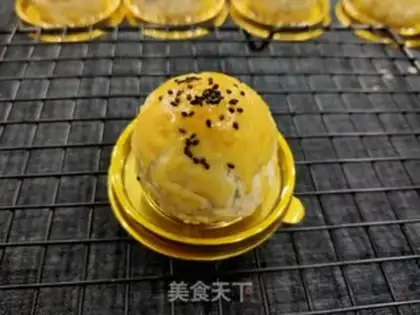
51
Wow, that's so tempting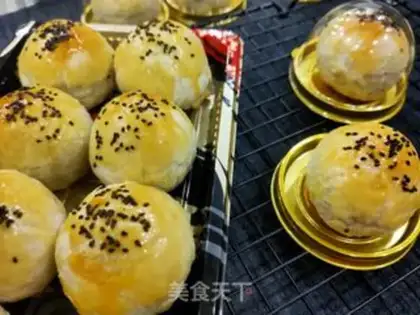
52
It's finished