These ingredients are enough to make six nuggets.
German beer is famous, and Brezel is beer's best bread partner.
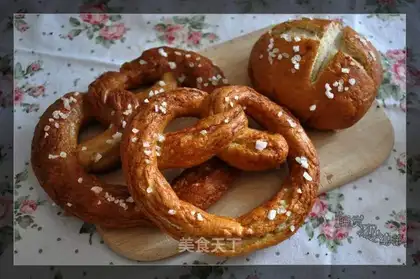
After going through an alkaline water bath, the taste is particularly fragrant. The taste on the surface is a bit strange, hard and crisp, but it feels soft. Inside is hollow honeycomb tissue, soft and fragrant. Salt grains are absolutely indispensable, depending on personal taste, they can be more or less. It is the inadvertent freshness of a grain of salt and the strange aroma of alkali that makes bread a classic in every bakery in Germany's streets and alleys. It is also the one I like to buy as a snack when waiting for a train at the train station.
That's right, this bread is not like bread, but more like a snack. Only by pulling it bit by bit, removing the salt grains bit by bit, and biting it in small bites can it get flavor.
Bavaria is a very devout Christian nation. Even saying hello to God is not saying "hello" or "good morning", but saying "hello to God". Every village, no matter how small it is, has its own chapel, and crosses stand on the top of every Alpine summit.
Another great enjoyment for Bavarians is to sit in the beer garden under the blue sky and white clouds, drinking their home-grown beer while chewing Brezel.
Beer is also pious in the eyes of Bavarians. Because German beer culture was derived from Bavarian temples. The reason was that monks looked for a nutritious and delicious drink to help them get through the fasting period. For medieval monks, drinks were allowed during fasting, so beer was also allowed and very popular. These monks can drink 5 liters of beer a day.
But what does all this have to do with Brezel?
Brezel is a very traditional Bavarian fermented snack that conveys pious faith. This is proved by the name and shape alone. "Brezel" comes from the Italian word "bracciatelli", which means about "small arm." "Bracciatelli" was used by Italian monks in the seventh century to call a baked snack, which was used to praise and encourage students. The shape is inspired by the student's posture. In the Middle Ages, when people prayed, their arms were crossed on their chests and their hands were placed on the other shoulder.
In the 13th century, Brezel began to enter Germany. At that time, it was called "Brezzitella", a sweet snack. Brezel, which was salty and soaked in alkali, first appeared in Bavaria in the 19th century. 1839 Wilhelm
Eugen owned a coffee shop that served breakfast at the time Duke Johann Eilles. Once, when he took a bite of Brezel, he discovered that it was salty. What happened? It was actually due to mistakes! The young apprentice in the coffee shop used the alkaline water used for cleaning as sugar water and brushed it on the Brezel. People find Brezel salty, overwashed with alkaline water to taste very delicious, especially when paired with beer. So soon, this Brezel spread in Bavaria.
I did it twice. The first shaping was not ideal. This time, the dough made with the bread machine will be rolled longer, which will be half a meter faster. After being so relaxed, Brezel's shape finally became clear.
And this time it was baked better than last time.
If it is in the shape of a bun, the surface can be drawn longer, so that a large flower can pop out.
German Newborn Bread
By AaliyahWeber
Recipe Recommendations
- high-gluten flour 400 g
- warm water 约210 g
- dry yeast 6 g
- baking soda 3 scoops
- salt 1 teaspoon
- sugar small amount
- coarse salt appropriate amount
Steps for German Newborn Bread
1
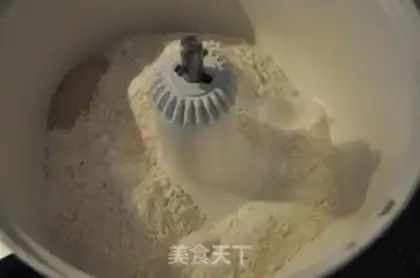
Mix flour, salt, sugar and warm water well and knead until smooth dough. Don't pour water in one go, because the amount required is different for different flour and environment. Just make it smooth dough.
2
The dough leavens in a warm place for about 1 hour.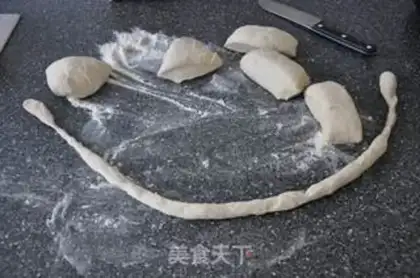
3
Divide it into 6 doses and rub it into a shape that is slightly thicker at both ends, thick in the middle, and thin near both ends.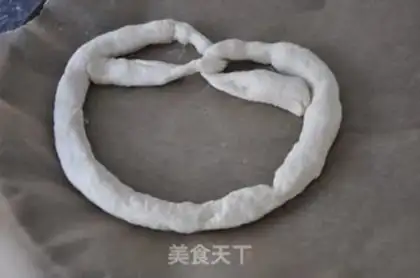
4
Tie a knot as shown in the picture. Place on a baking sheet covered with baking paper and continue to ferment in a warm place for 30-60 minutes.
5
Mix baking soda with 1L of water and bring to a boil.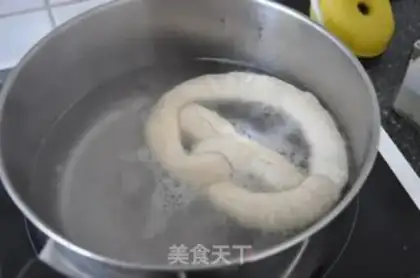
6
Use a colander and carefully place the bread into boiling water. Be careful to keep the water boiling a little, not too boiling. And pay attention to bubbles, which can easily overflow. Soak in both sides and cook for about 1 minute on each side.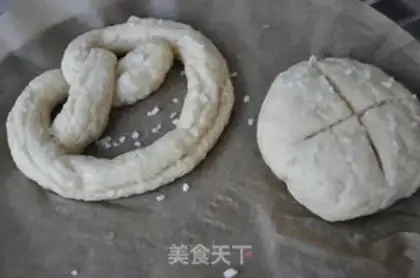
7
Use a sharp knife to mark the rough middle part of the cooked bread, sprinkle with coarse salt, and place it in the preheated oven at 190 degrees for about 20 minutes.German Newborn Bread Make Tips
1. The first time I had no experience. After cooking, it is found that the noodles in step 3 should be long and thin, because the bread will also undergo secondary fermentation and will rise very large. Otherwise, you'll come out with no nose or eyes. 2. After boiling in alkaline water, it will be very dark when baked. Brown color, or even dark brown color, is normal. 3. I make it at home, but I can't help it after going through the alkali bath. When I pick up the fermented bread, it will wrinkle. It can't be as beautiful as it looks in the bakery. If you want to avoid this, you can only make it into a bun shape and hold it more realistically to reduce the number of folds.