Bronze snails, double-coloured knife to cut the buns
By VicentaLakin
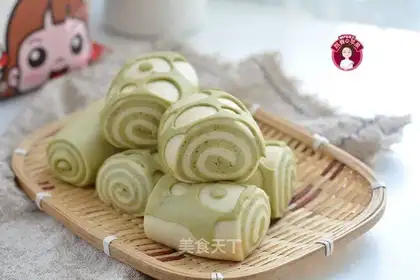
Today's double-coloured cleavages are more expensive than their own. The pasta, after a long period of pressure pressure, is smooth and sweet; it is fermented only once, thus saving much more time than the traditional secondary fermentation. I used to reject spontaneous powder, but I liked it today. The ordinary buns were too unchallenged, so I put on a light green dress — a wheat-slept green coat. It's beautiful after all this natural plant color
Recipe Recommendations
- Steamed buns self-produced flour 220 grams
- fresh milk 140 grams
- Barley seedling powder 2 grams
- sweetening
- steamed
- an hour
- ordinary
Steps for Bronze snails, double-coloured knife to cut the buns
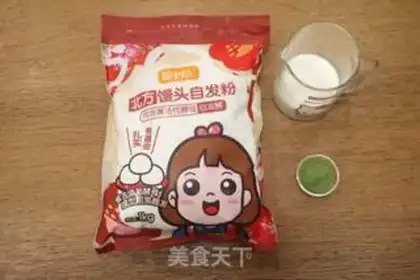
1
The material is ready: small-scale northern bun powder, fresh milk, barley powder, barley powder, with no limit on brand name, fresh milk being replaced with water and barley powder with tea powder, strawberry powder, etc。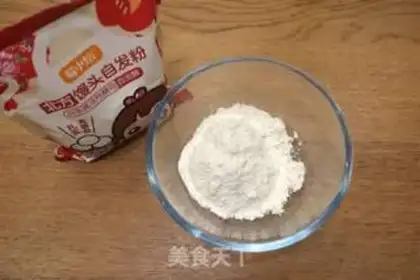
2
220 grams of buns are self-pumping。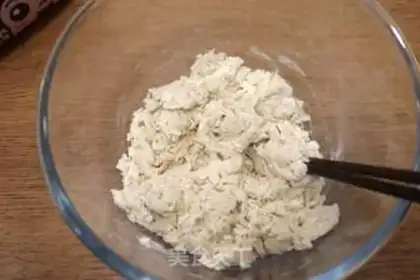
3
Fresh milk pours into the flour, with different water intake rates and the thinness of the milk, and can be added on a case-by-case basis to see the face of the face; first, the chopsticks mix into a swirl。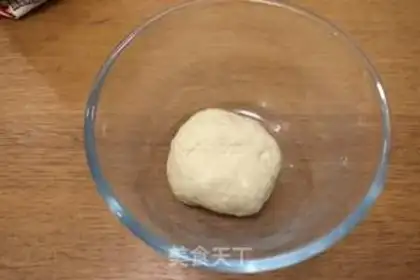
4
It's made of dry flour。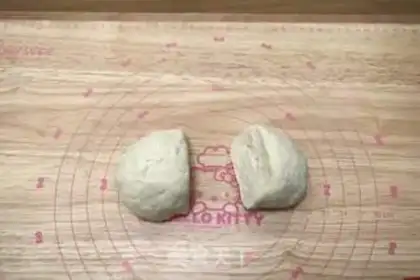
5
Split the dough into two, one 150 and the other 200。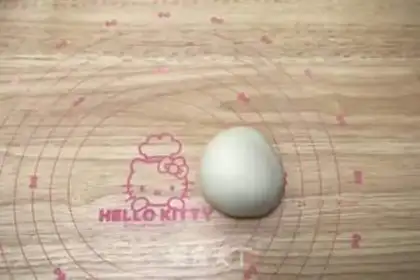
6
Some eight minutes of pressure pressure on the face, which can be adjusted by force until the surface of the face is smooth and the interior is thin; the other will be held in a tub to prevent the water from evaporating and drying。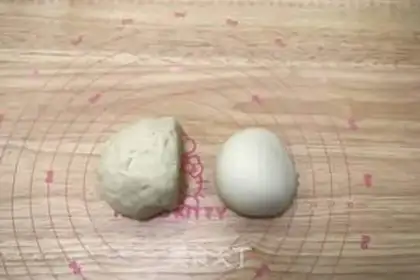
7
A comparison: the left is not covered, it's not smooth and it's yellow; the right is covered, it's fine and white。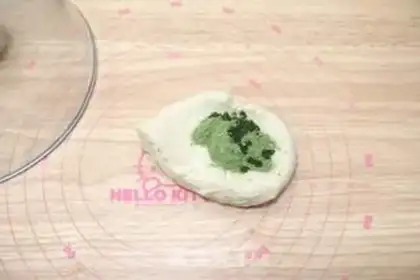
8
And the covered noodles were drawn with a pot, and the other was spread open, and the barley and a little cold water were poured over them。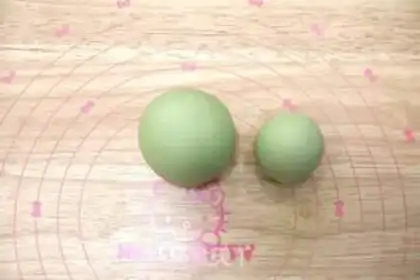
9
A step 6 method is used for approximately eight minutes, and the face is smooth and thin; the barley flounder is divided into 150 and 50 grams。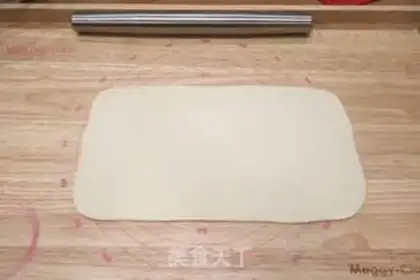
10
THE WHITE NOODLE IS GROWN BY APPROXIMATELY 35 CM AND THE RECTANGULAR FACE IS ABOUT 15 CM WIDE AND IS APPROXIMATELY 2 MM THICK。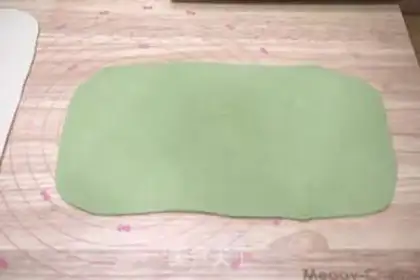
11
It's the same size of a barley noodle。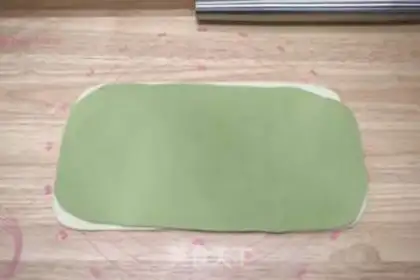
12
The white flour is in the bottom, sprayed with a little water with a cant, then covered with barley; the water is adhesive。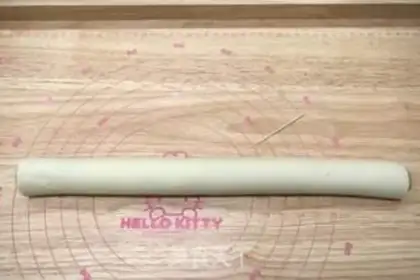
13
Scroll from top to bottom; smooth round and seal down; bubbles on the skin can be punctured with toothpicks。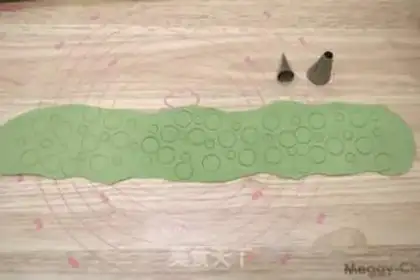
14
Scratch the small noodles into long strips, which are slightly shorter than the length of the two-coloured rolls, and then reach the length of the rolls; in order to prevent excessive lengths, they can be slashed, and the width of the skin can cover the surface of the rolls; they can be replaced by a round hole in the mouth of a flower, and other patterns can be used。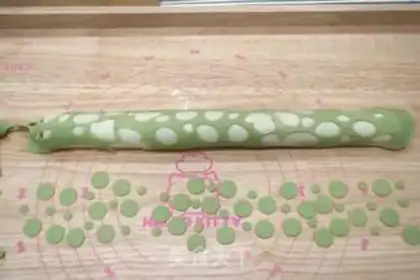
15
A small canteen is sprayed with water on a double-coloured roll, with a light lifting of the decorative skin, covered on the roll, and softly caressed and pressed to make the skin more solid。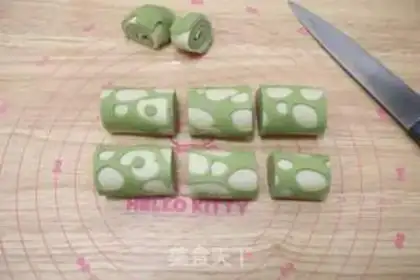
16
Cut off the frivolous rolls on both ends with a sharp knife and cut them into six equals; be careful not to cut them by pressurized force, cut them like a zipper, and keep them flat and flat。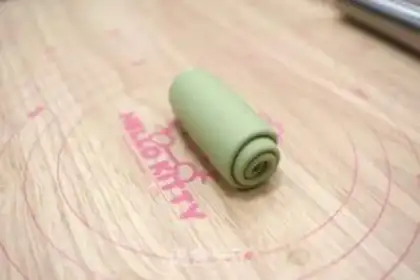
17
The rest of the accelerator is removed into smooth noodles, long strips and curls。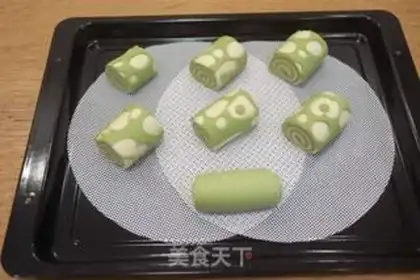
18
Steam cushions are laid in the steamer, the corsets are placed on top, leaving room for expansion between them; fermentation is 20-30 minutes natural in the evacuator, which is 1.5 times the size。
19
The buns go straight into the steam tank, with cold water heating 100 degrees, 20 minutes; this is also the time if the steam pan is used。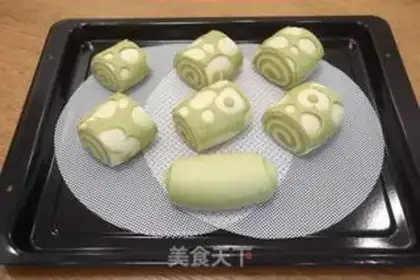
20
Don't rush out when it's evaporated, five minutes to take it out, and the surface is smooth and smooth。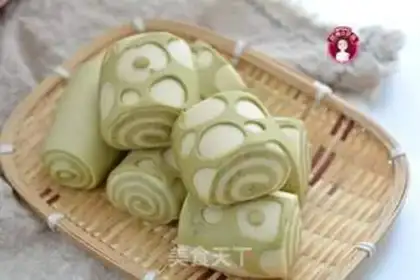
21
Bronze snails, double-coloured blades, fermentation, soft and sweetBronze snails, double-coloured knife to cut the buns Make Tips
One, in order to make the buns more plastic, the amount of liquid is not too large, so that the evaporated buns will not be too thin; two, the inoperable noodles will be held in a tub and the water will evaporate; three, because of the spontaneous powder used, the fermentation will not be necessary and the plastics will be capable of distillation up to 1.5 times the size; and four, if you are prepared, you will be able to use barbed flour of 220 grams, dry yeast of 2-3 grams, white sugar of 8 grams and milk of 140 grams。