I'll put on some soy sauce
By VicentaLakin

I'm just trying to make a little toast today, and I'm just doing the rest of the snacks, and I'm getting a little bit of "demon" in toast. Four 250 grams of small toast boxes were used, and a Polish seed was made after all. Because it's fermented with room temperature, the cone temperature is higher. When mixed with the main noodle material, the rate of fermentation was significantly accelerated and the nodes were not ideal, but the final product was saved through “verters”。
Recipe Recommendations
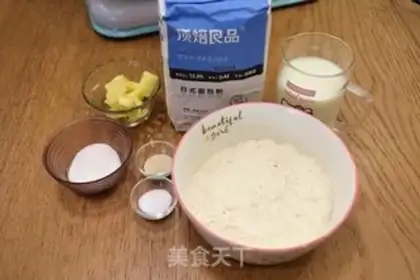
- high-gluten flour 50 grams
- Ordinary high-activity dry yeast 0.5 grams
- Room temperature water 50 grams
- milk 350 grams
- butter 35 grams
- salt 6 grams
- fine sugar 20 grams
- glutinous rice flour 100 grams
- corn starch 10 grams
- matcha powder 3 grams
- meat floss appropriate amount
- red bean paste appropriate amount
Steps for I'll put on some soy sauce
1
The main pasta and the Polish species have a large photo taken; the Polish pasta mixed the material several hours in advance, fermented to two to three times, fermented at room temperature, and fermented in the fridge after one hour at room temperature, for a total fermentation of not more than 14 hours。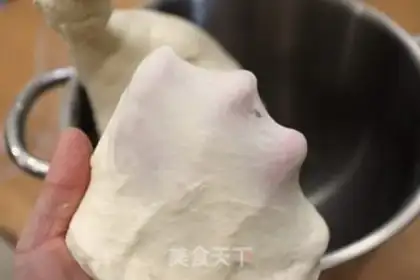
2
All the materials except butter were put into the scavenging drums, which were convoluted at a low rate and were then convoluted at a high rate, and softened butter when the scavengers were produced。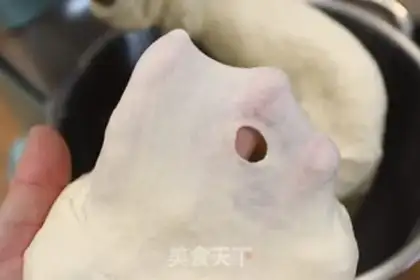
3
Low-speed stirs allow butter to be fully integrated into the noodles, turn high-speed stirs, soft, soft, non-combust walls, and produce transparent, flexible film, which is not ideal today because of the high temperature, the less optimal effect of the noodles, and the low elasticity of the noodles, which needs to be saved by “verted face” below。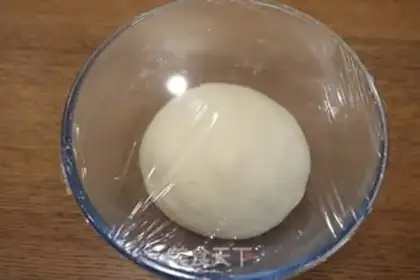
4
In the condensed condensation basin, the fermentation film is fermented for 30 minutes at the base of the warm and humid zone; the temperature of the fermentation box is 28 and the humidity 75。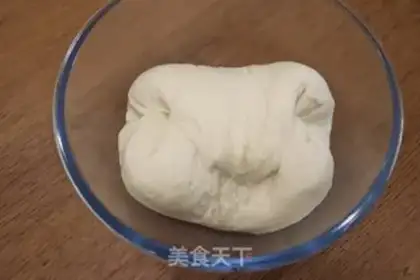
5
The face is turned upside down, the face is turned upside down, the face is folded to the right and left, then the face to the left is folded to the left and the face to the left, and the face is seen in the picture as having a poor band; if the face is not a good one, then the face is turned over to increase the face。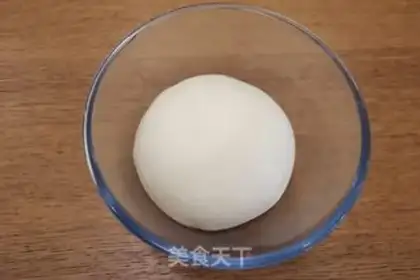
6
The noodles are rounded, smooth and upward, and the fermented membrane is twice as large。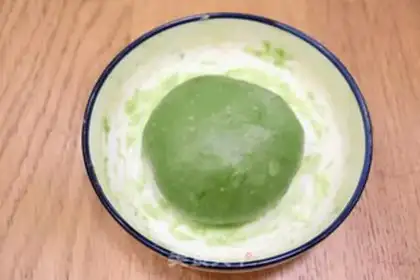
7
Flour fermentation comes with tea plaster: 100 grams of rice powder, 10 grams of corn starch, 120 grams of milk mixed into a deep disk, mixed into slurry, and the high-temperative membranes of Monnes melted into the steam pot for about 20 minutes; when it comes, it melts 6 grams of butter into the luminous lumber, and it cools a little 3 grams of tea powdered into a smooth linen。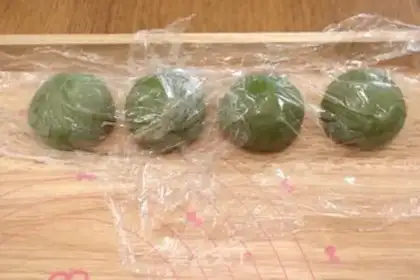
8
The plasters were divided into 4 equals, rounded up and flavoured for 10 minutes。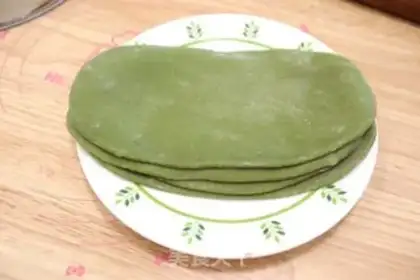
9
A proper amount of rice powder is distributed into a cow tongue similar to the size of the later toast skin, which is then protected against the water evaporation。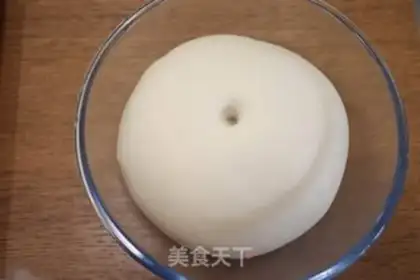
10
The noodles are twice as big, and the finger-tip flour is poked on the top of the flour, and it does not collapse and slightly recedes。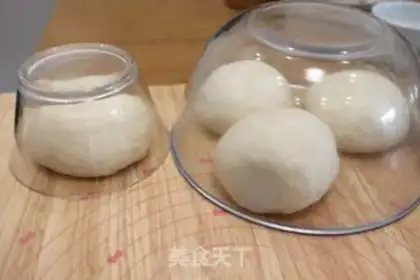
11
The face of the face is light-beated, weighing four equals, rounding, bulges or dyslexia for about 20 minutes, with a little pressure on the face of the finger, and the pointer is loosely placed without a bullet。
12
The face of the face was smooth and smoothed up into a cow's tongue, and the face was turned upside down。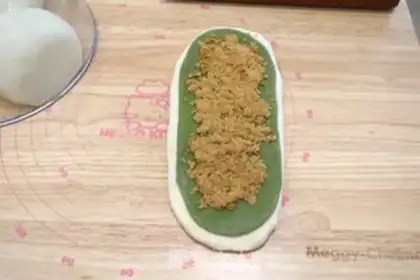
13
The pheasant noodles are adjusted to be slightly smaller than the toast noodles, and they are laid on them, excreted from the air between the two, with an appropriate amount of meat pine, and white on the bottom and on both sides。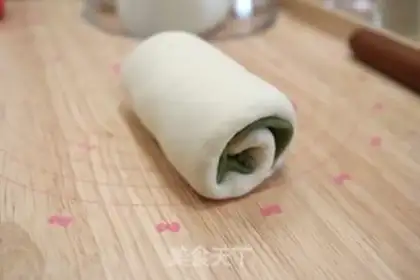
14
Volume from top to bottom。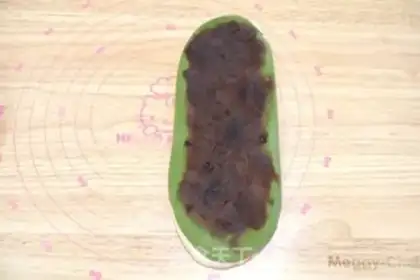
15
Replace meat pine with red bean sand in the same way。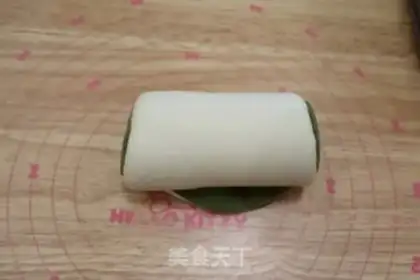
16
Volume from top to bottom。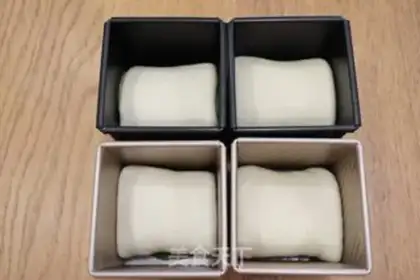
17
Toast rolls are placed in 250 grams of toast boxes or 2 450 grams of toast boxes; warm and wet fermentation is repeated; fermenters are at 36-38, wet 80 degrees。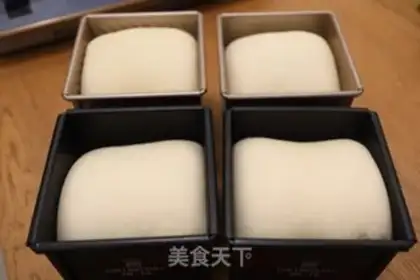
18
The face is full to 8, 9, and the oven starts preheating 180/195。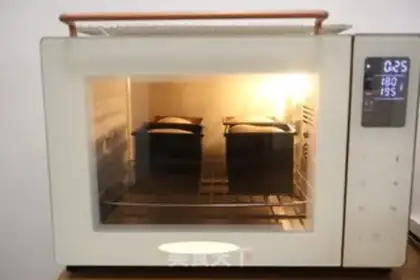
19
The temperature and timing are adjusted to the actual condition of the oven and the size and mass of the toast box。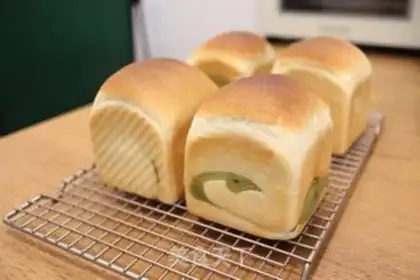
20
A few strokes of the molds at the end of the furnace, disemboweled, and pre-melted butter (outside the weight) when the heat is on the top; it can be eaten or stored in a bag after a little cool。
21
Scratch, fragrance, fragrance, and screechI'll put on some soy sauce Make Tips
1. The tea plaster can also be replaced by the original, cocoa-smelling, etc.; the amount used in toast can be small; 2. Because of its heavy weight and the absence of air into the inner layer, the roasted toast will have a layer, the better the face will swell and the more visible the layer will be; 3. The soft, chewy and a little rigid and inelastic after the cooling of the plume will be used the following day to heat up the 180-degree oven for three to five minutes, thus restoring the pallet ' s taste; 4. The pistol formula will also apply 450 grams; and it will also be suitable for making a variety of small breads。