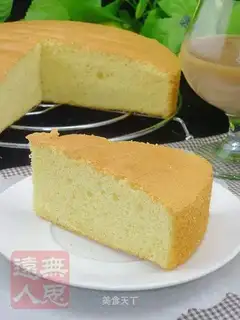
This is the simplest and most difficult cake. It is simple because the ingredients are simple (only the basic five elements of egg, milk, oil, sugar, and powder) and the process is simple (the basic four steps of beating the whole egg, mixing flour, mixing oil milk and then baking). It's difficult because it's a bit difficult to completely eliminate the whole egg, and the portable electric eggbeater takes about ten minutes to work. Therefore, many TXs don't wait until the last moment to rush to sift and cut and mix. Naturally, they get an egg cake instead of cake.
Be patient and do it step by step, you can do it well!
Basic whole egg sponge cake
By FordO'Reilly
- sweetening
- baking
- several hours
- ordinary
Steps for Basic whole egg sponge cake
1
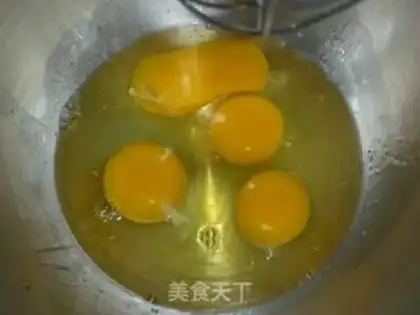
Pour the eggs into an oil-free and water-free container, and I pour them into the basin of the chef's machine. Note that the eggs are soaked in warm water at about 40 degrees in advance for a while to wash the eggshells and make the eggs warm and easier to beat. Dry the water on the eggshell before cracking the eggs.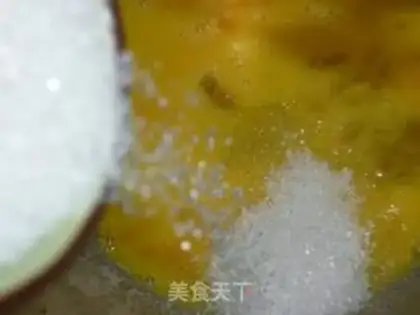
2
Beat the eggs on low speed, then add the fine granulated sugar.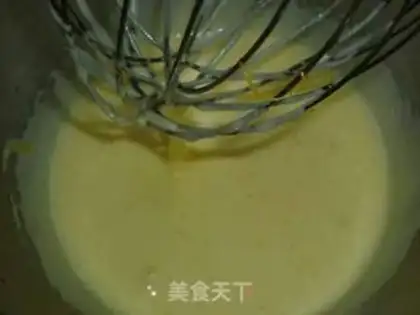
3
Start beating the egg mixture at high speed. If you are using a handheld electric eggbeater to beat, place the basin in which the eggs are placed in a basin filled with warm water of 40 degrees to maintain the temperature (but the temperature of the egg liquid cannot exceed 36 degrees), and first stir the egg liquid and sugar at low speed. Beat evenly until the sugar melts, then start beating at high speed. Stop the eggbeater at regular intervals to prevent the eggbeater from being too tired and striking. It is said that the electric eggbeater takes about 10 minutes to beat well. After stirring for a while, you need to stop and check the state of the whole egg. Like this, the color is still yellow, there are traces of dripping but the traces disappear quickly, and there are bubbles of different sizes on the surface, which means that there is still no stirring in place and still needs to be done. Work hard.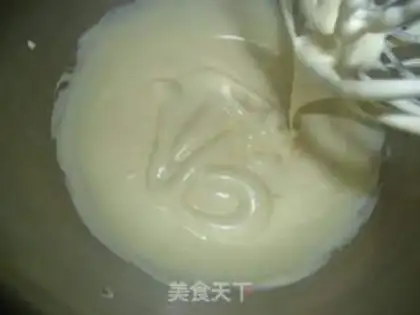
4
Until it is beaten like this: the color is white, the surface bubbles are fine, and there is a certain thickness. The dripping egg liquid takes the shape of a forged belt and flows from top to bottom. The falling marks slowly disappear within 5 seconds. At this time, the whole egg was completely eliminated.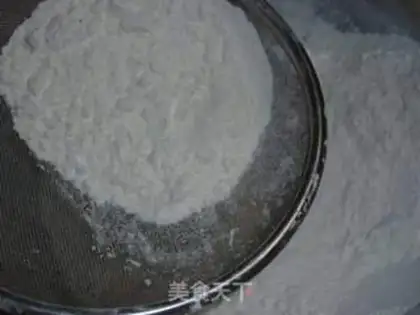
5
I sifted the low flour three times while beating the whole egg in the chef's machine. If you use a handheld electric eggbeater, sieve the flour three times in advance.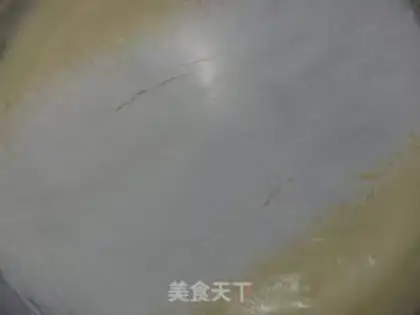
6
First use a flour sieve to sieve 1/2 of the flour into the egg mixture. Because the flour will sink to the bottom after sifting in, you have to use a rubber spatula to turn it up from the bottom and roughly mix the flour and egg mixture. Sieve in the remaining 1/2 of the flour again, and continue to use a rubber spatula to turn it up from the bottom until the flour and egg liquid are fully mixed and no granular flour can be seen. Pay attention to control the time, too long time will eliminate bubbles.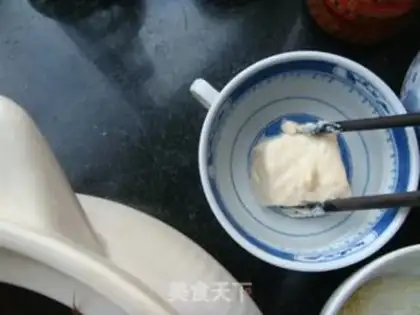
7
You can hear the rustling sound of bursting bubbles when you are cutting and mixing. Don't be afraid, cut and mix boldly. Not counting the sieving time, you should be ready in less than 2 minutes in total. The finally mixed paste is a little smaller than the beaten whole egg. It is thick and drips intermittently, with obvious traces and difficult to disappear. (Start preheating the oven at 160 degrees).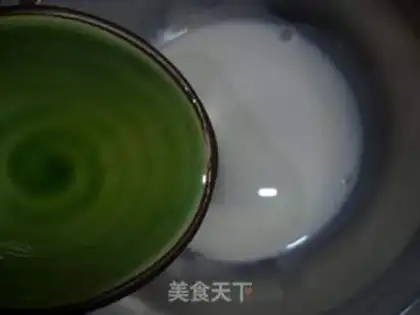
8
Mix the corn oil and milk in another small basin, use a manual eggbeater to stir until emulsified (the oil water melts evenly), and just make a few quick rounds, for a minute.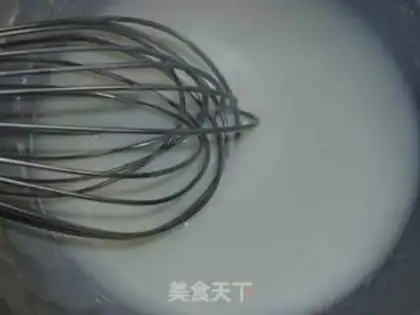
9
At this time, there was no oil floating in the milk and oil mixture at all, turning into a faint milky yellow color.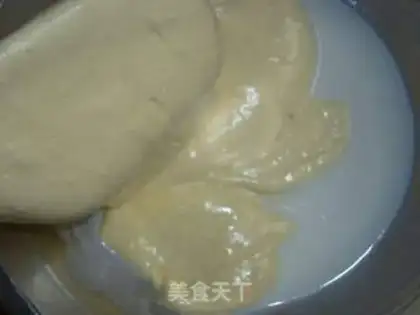
10
Take a large spoonful of the cake paste mixed in step 7, add it to a bowl, cut it with milk oil and mix well.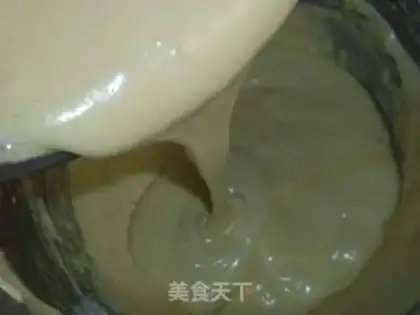
11
Mix well, pour back into the remaining cake paste, cut thoroughly with a rubber spatula and mix well. It can be seen that the cake paste mixed with milk and oil is very thin and fluid. It has traces when dripping but quickly disappears. Note: It is strongly recommended to emulsify the milk and oil and first cut and mix well with part of the cake paste, and then mix well with all the cake paste. Do not directly pour the oil and milk into the cake paste and mix it, because the specific gravity of milk and oil is different from that of the cake paste. The result of doing so is that it is very, very easy to defrost!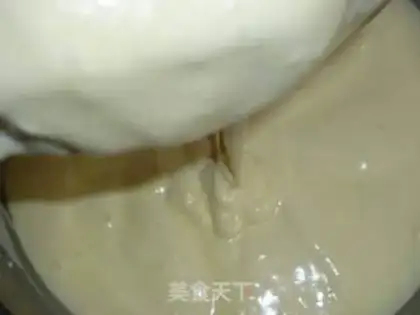
12
The mixed cake paste is smooth, and when dripping, it is like silk, continuous and smooth. There will still be traces when dripping and will not disappear quickly. There will be large bubbles on the surface, but not many. The finally mixed cake paste must be used immediately, otherwise it will be easy to foam.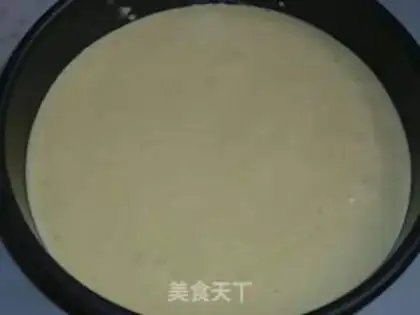
13
Pour the cake paste into an 8-inch baking mold, grab the edge of the mold and shake the cake mold down several times to break the large air bubbles on the surface. This step must be done. I am used to being Qi Feng and thought that it would be okay if there was no earthquake. As a result, when I finally cut it open, I found that there were uneven holes with stars inside and the organization was not delicate enough. Place it in the lower and lower layers of an oven preheated at 160 degrees for 60 minutes. After seeing the surface coloring, cover it with tinfoil to avoid excessive surface coloring.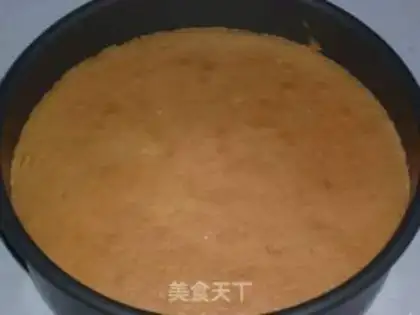
14
After roasting, remove the mold and place it on the grill to cool.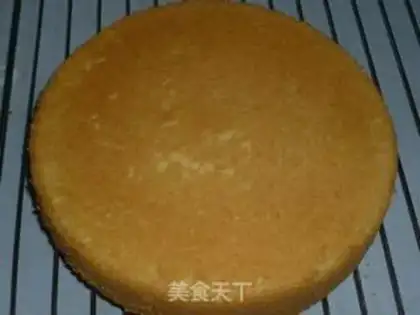
15
After roasting, remove the mold and place it on the grill to cool.Basic whole egg sponge cake Make Tips
1. The amount of sugar in the original recipe is 100g, but I have slightly reduced it. The sweetness is okay, and I don't recommend reducing it any further, otherwise it will not be easy to stir whole eggs. 2. Although the simplest raw materials are used and no essence or lemon juice is used, it has a completely egg-like smell and only a very pure sweetness. However, compared with Qi Feng, this most basic whole egg sponge is not as delicate and soft, tastes a little tough (but it is definitely not chewing tree bark, it is still very soft), and a little dry. It is suitable for making tall decorative cake bottom supports. It is also delicious to eat alone. It is a good afternoon tea with milk or coffee.