In my memory, the pasta made by my mother was very delicious. It was all naturally fermented and padded with fragrant leaves. It smelled of wheat and vanilla as soon as it was out of the pan. It was so delicious, and it always made me nostalgic. However, because it was too troublesome, I often used Angel yeast to make it. This time, I left a little dough left in making dumplings. I wanted to make breakfast cakes. I forgot about it and fermented it. It was a pity to throw it away and cultivated it into a starter. Then mix the dough and see if I can still make delicious and naturally fermented ones. It was difficult to think about it, but I felt okay after groping for kneading the dough bit by bit. I saw that there was still a small piece of ham sausage, so I casually made this [Scallion Flavor Ham Roll], not to mention Scallion Flavor and Ham plus Naturally fermented noodles, the aroma of wheat is so strong when it comes out of the pan, and the aroma is so overwhelming. It looks very appetizing!
Natural fermentation techniques:
Cultivate the starter:
For the first starter, we can first use warm water to mix the dough into a softer dough at room temperature or heat it for fermentation, and wait until it is soaked. In the future, we can leave a piece of dough each time and put it in the refrigerator as the next starter.
Ham rolls with onion flavor
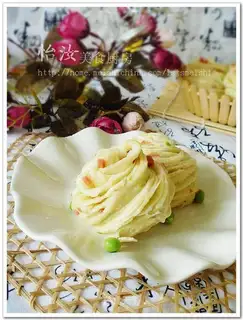
Recipe Recommendations
- flour 650 grams
- ham 120 grams
- onion a
- alkali noodles 5-6 grams左右
- salty and fresh
- steamed
- half an hour
- simple
Steps for Ham rolls with onion flavor
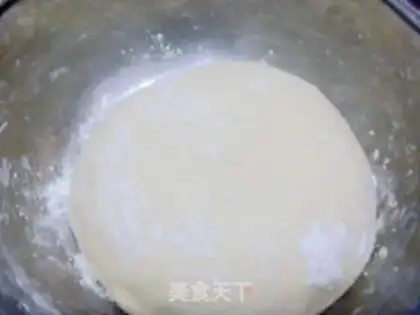
1
Soak the yeast in water, add warm water and flour, and knead until smooth. The current room temperature is about 16-48 hours. It's just perfect to mix dough at night and make it at noon the next day.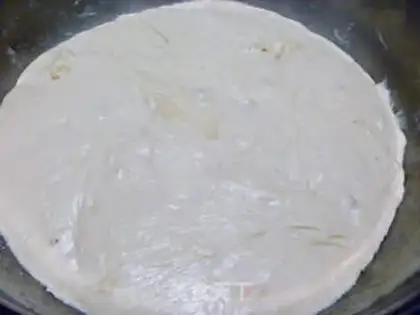
2
The inspection surface has grown about twice as large as a bubble.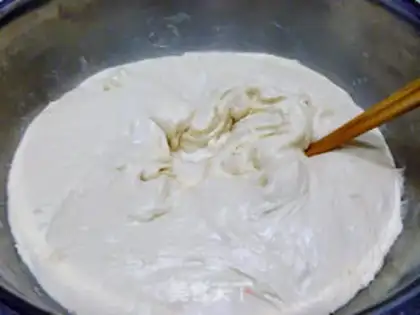
3
Then put the alkali noodles into a small bowl, add a little hot water to dilute, and then pour in more than half first.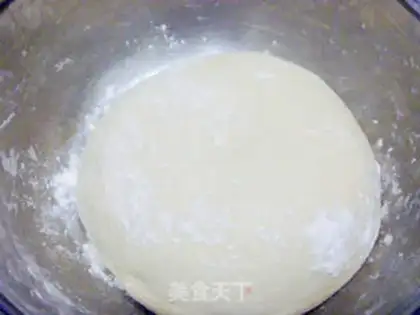
4
To knead the dough repeatedly, add a little flour to knead it. If it feels not enough, dip it in some with your hands and add it repeatedly until it is smooth and elastic. It smells neither sour nor alkaline, and makes a loud sound when patting. Wake up for about 2 minutes.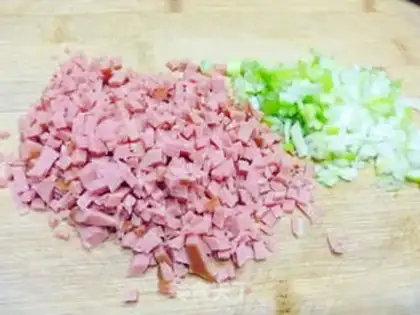
5
At this time, cut the ham and spring onions into small pieces and set aside.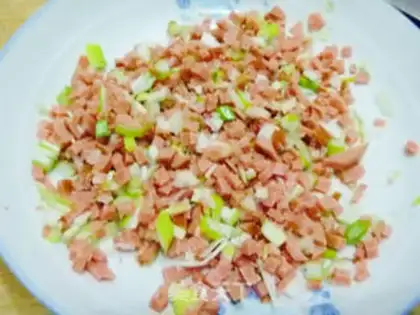
6
Mix the ham and spring onions on a plate and set aside.
7
Take half of the dough and roll it into thin slices.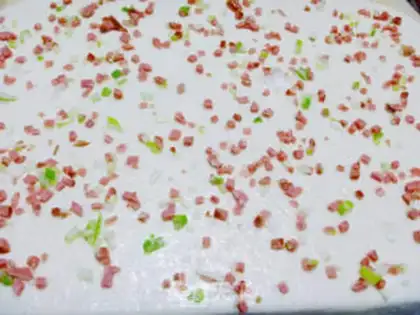
8
Then brush with oil, sprinkle with salt, and sprinkle with chopped green onion and ham.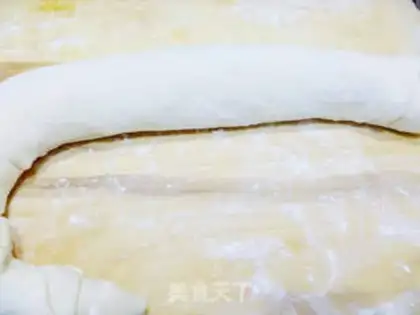
9
Then roll it into a roll along one side.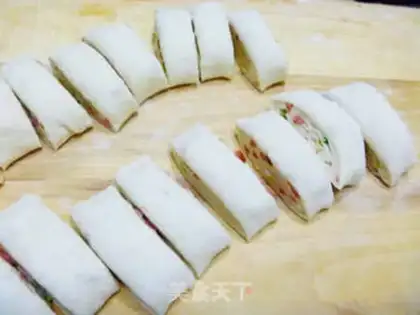
10
Use a knife to cut into evenly divided 8 or 16 pieces.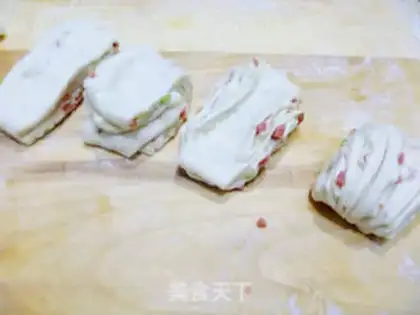
11
Then take the two pieces together and stretch them slightly, fold them in half, then stretch them slightly and use two thumbs to nest them, and nest them back on both sides and press them at the bottom.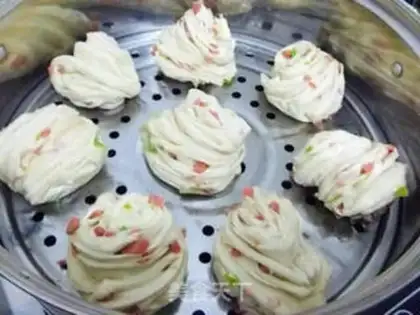
12
You can roll it into a bell shape at will, brush the drawer with a little oil to prevent it from getting stuck, and put in the rolls.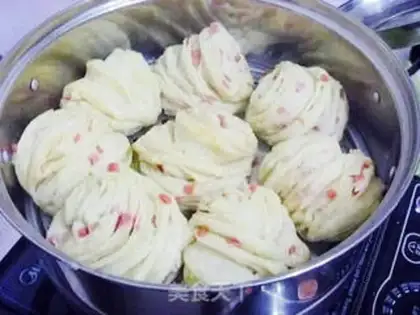
13
After a few minutes of awakening, add cold water to the pot or after awakening, add hot water to the pot, steam the water, boil, and then steam for 15 minutes to cease fire. Wait for a while to remove the pot.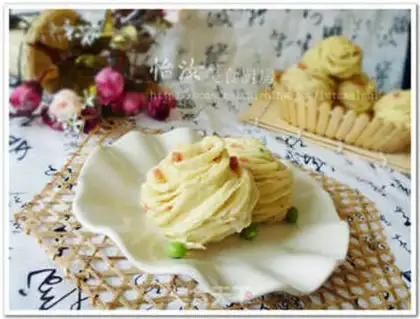
14
The steamed rolls made by natural fermentation smell very fragrant as soon as they are out of the pot. They are even more fragrant when eaten hot.Ham rolls with onion flavor Make Tips
How to check whether the alkali is suitable: 1. Smell the taste: If there is a sour taste, there is less alkali. You can add a small amount of alkali water. If there is an alkaline taste, it is alkaline and it is awakening. 2. Tap and listen to the sound: The tapping sound sounds crisp and cool, and it is appropriate if it is loud. 3. Check the pores: knead the dough and cut it open to see if the pores in the incision are even. 4. Taste the taste: It will be slightly sweet when the alkali is suitable. 5. Check the elasticity: After kneading it well, there will be some swelling. Pressing with your hands is elastic and the surface is smooth. If it is soft and sticky, it is less alkali. If it is hard and cannot feel it, it is more alkali. 6. Experiment: Take a small piece and place it in the pan and burn it over low heat. You can also check it.