Golden Sponge Cake
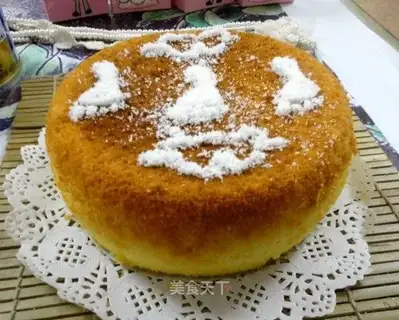
Healthy cake with no additives and no baking powder.
Recipe Recommendations
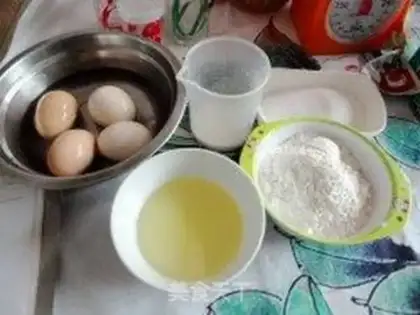
- eggs of 4
- low-gluten flour 120 grams
- milk 30 grams
- fine sugar 70 grams
- corn oil 40 grams
- sweetening
- skills
- an hour
- ordinary
Steps for Golden Sponge Cake
1
. Soak the eggs in warm water at about 40 degrees for a while to make the eggs warm and easier to beat.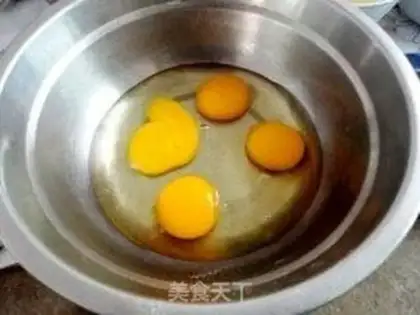
2
Beat the eggs into an oil-free and water-free container.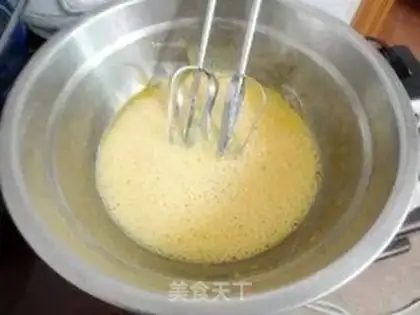
3
Beat the eggs on low speed, then add the fine granulated sugar.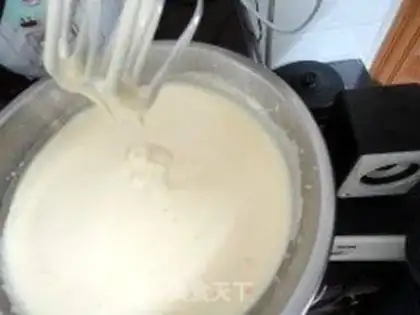
4
Place the basin in which the eggs are placed in a basin filled with warm water of 40 degrees to maintain the temperature (but the temperature of the egg liquid should not exceed 36 degrees). Beat the egg liquid and sugar evenly at low speed until the sugar melts, and then start beating at high speed. During this period, stop the egg beater at regular intervals to prevent the egg beater from being too tired and striking. There are traces of dripping but the traces disappear quickly, and there are bubbles of different sizes on the surface, which means that there is still no stirring in place and efforts are still needed.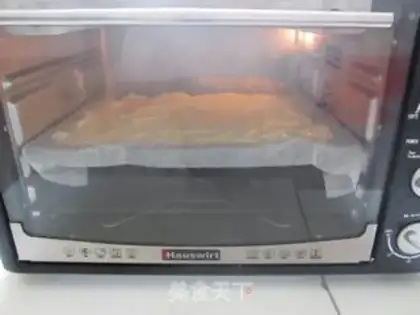
5
Until it is beaten like this: the color is white, the surface bubbles are fine, and there is a certain thickness. The dripping egg liquid takes the shape of a forged belt and flows from top to bottom. The falling marks slowly disappear within 5 seconds. At this time, the whole egg was completely eliminated. (My eggbeater is so hot that making a cake almost ruined the eggbeater. So you must have a good quality egg maker.)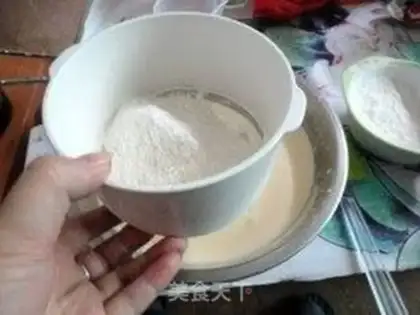
6
. Sift the flour twice before beating the eggs. This way the cake is more delicate. (I really can't be lazy. I've been screening it once before)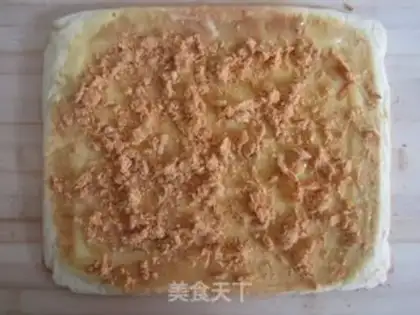
7
First use a flour sieve to sieve 1/2 of the flour into the egg mixture. Because the flour will sink to the bottom after sifting in, you have to use a rubber spatula to turn it up from the bottom and roughly mix the flour and egg mixture.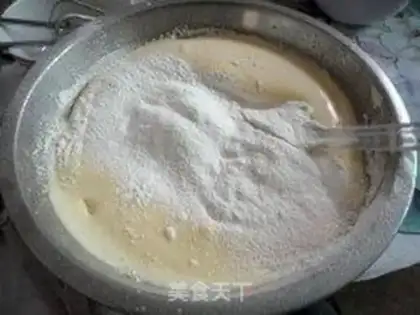
8
Sieve in the remaining 1/2 of the flour again, and continue to use a rubber spatula to turn it up from the bottom until the flour and egg liquid are fully mixed and no granular flour can be seen. Pay attention to control the time, too long time will eliminate bubbles.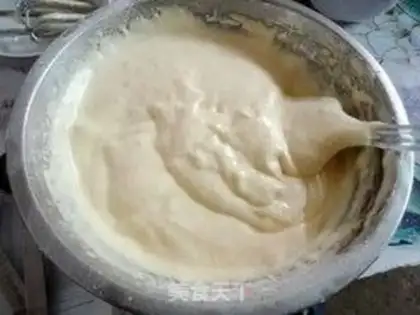
9
The finally mixed paste is a little smaller than the beaten whole egg. It is thick and drips intermittently, with obvious traces and difficult to disappear.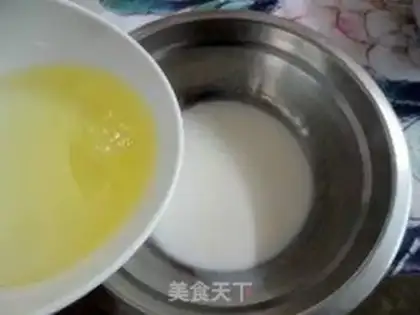
10
Combine corn oil and milk in a separate small bowl.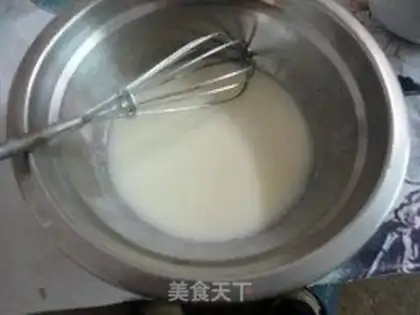
11
Use a manual egg beater to stir until emulsified (the oil solution mixes evenly), and quickly draw a few rounds. At this time, there was no oil floating in the milk and oil mixture at all, turning into a faint milky yellow color.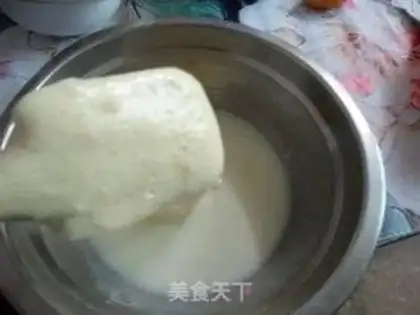
12
Take a large tablespoon of the mixed cake paste and add it to a bowl, cut it with milk oil and mix well.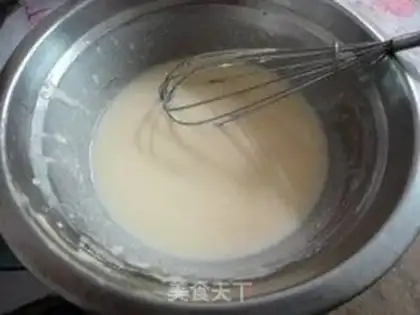
13
It can be seen that the cake paste mixed with milk and oil is very thin and fluid. It has traces when dripping but quickly disappears.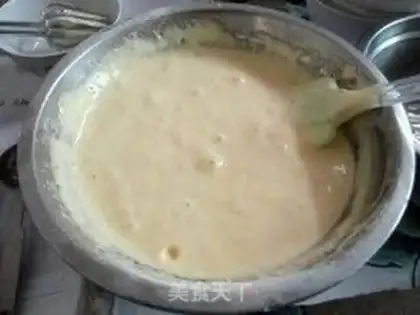
14
After mixing well, pour it back into the remaining cake paste, thoroughly cut with a rubber spatula and mix well. The mixed cake paste is smooth, like silk when dripping, continuous and smooth. There will still be traces of dripping and will not disappear quickly. There will be large bubbles on the surface, but not many. The finally mixed cake paste must be used immediately, otherwise it will be easy to foam.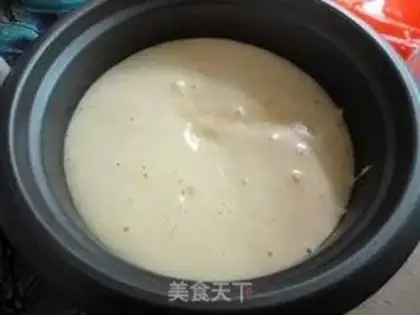
15
Pour the cake paste into the rice cooker, grab the edge and shake the rice cooker liner horizontally downward several times to break the large bubbles on the surface.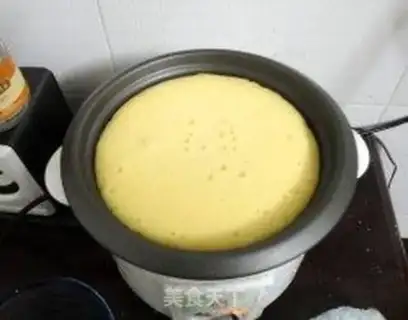
16
After tripping, press the rice cooker to heat after 5 minutes, press the rice cooker to heat after 10 minutes, and insert it with a toothpick 10 minutes after tripping. As long as there is no batter on the toothpick.(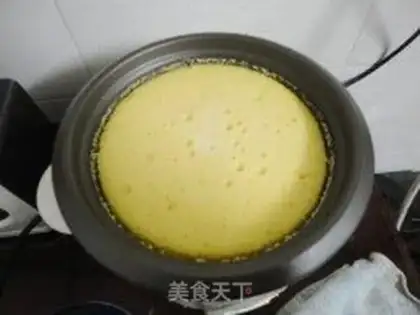
17
Press the power of my rice cooker. I pressed the low power 4 times because it was too high this time. After tripping 4 times, I still continued to keep the heat for 20 minutes before cooking)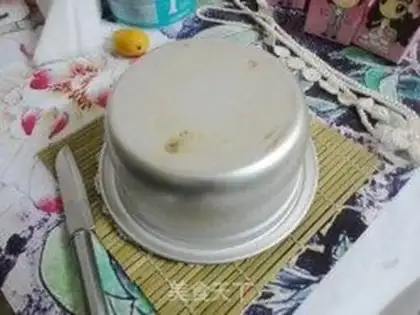
18
After removing, invert it for 20 minutes.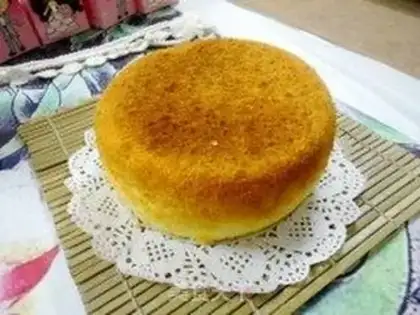
19
The pan is a little sticky, so you can easily remove the mold with a spoon.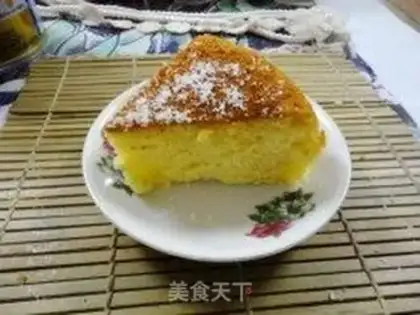
20
Isn't it perfect? It's golden and spongy. Wakaka...