Yanduxian
By AdaHeller
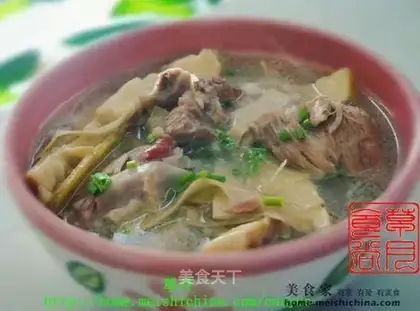
This dish can sometimes be too greasy, so you can also add a leaf knot. The leaf knot absorbs the oil and water inside and it is also very delicious.
Recipe Recommendations
- steak One catty
- bacon half a catty
- cooking wine appropriate amount
- onion appropriate amount
- Jiang appropriate amount
Steps for Yanduxian
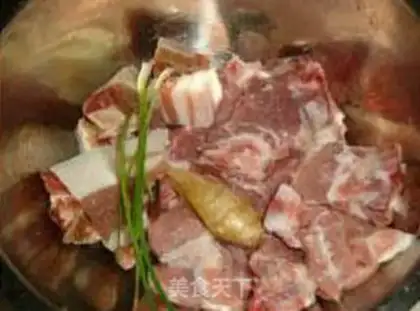
1
Put the two meats together in a large casserole and bring them to a water-proof boil. Remove the blood.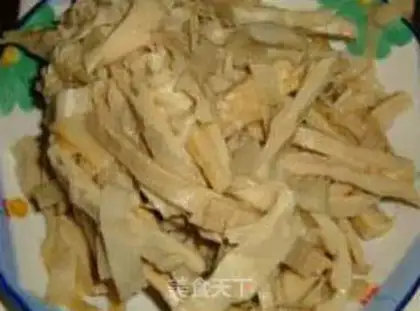
2
Add the chopped water bamboo shoots, add cooking wine, green onions, and ginger. Into a wide soup.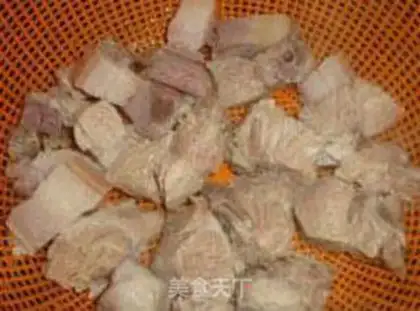
3
Rinse it with cold water and add water to the pan.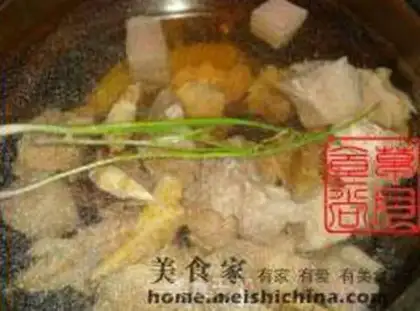
4
Turn on a large fire to boil the water. At this time, the fire must be turned down. Pay attention, to what extent should it be turned off? Only a little bubble can be seen in the water that is put in the pot.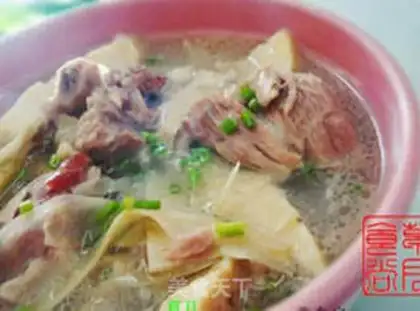
5
The soup cooked in this way is very clear (other clear soups with meat should also be cooked in the same way, such as stewing old hens). It is extremely important to control the heat. The natural blend is the highest state of marinating and fresh, among which there is no need to add salt. Because there is bacon, cover the lid and cook for two hours.Yanduxian Make Tips
Upon seeing the name of this dish, you might feel a bit puzzled; actually, this is an authentic home-style dish from the Suzhou, Hangzhou, and Shanghai regions. The dish originated in Ningbo. In Hangzhou, it is commonly called "Xian Du Xian," which seems somewhat easier to understand. It blends the aged aroma and fresh flavor of the secular world into one pot, thereby obtaining a rich, mellow fragrance born from the fusion of savory and fresh. The character "Du" specifically means to stew slowly. In the Shanghainese dialect, the phrase "Du You You" is often used to describe an unhurried, leisurely feeling. To use an intuitive analogy, it resembles the aesthetic appeal of Suzhou garden bonsai: old roots with new shoots, where enduring time and fresh growth enhance each other, merging into one. Cooking cured ingredients with fresh ones is not uncommon in Jiangsu-Zhejiang cuisine. Common examples also include braised spiced pork with fresh meat, steamed river shrimp with cured pork, and steamed egg custard with minced cured pork. However, the strengths and weaknesses of both cured and fresh ingredients achieve their perfect harmony in this pot of "Yan Du Xian." This scene of harmony within the pot can be hailed as the ideal realm of the unity of opposites.