cold rice noodles
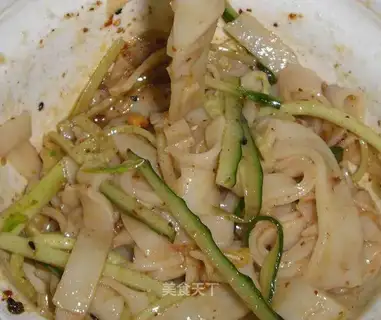
Ingredients: soy sauce,salt,lettuce,cucumber,mung bean sprouts,MSG,sesame oil,vinegar,jute juice,red pepper oil,high-gluten
Recipe Recommendations
- high-gluten appropriate amount
- cucumber a
- lettuce a
- mung bean sprouts appropriate amount
- salt appropriate amount
- sesame oil appropriate amount
- red pepper oil appropriate amount
- vinegar appropriate amount
- soy sauce appropriate amount
- MSG appropriate amount
- jute juice appropriate amount
Steps for cold rice noodles
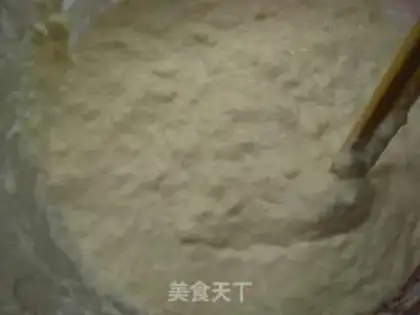
1
Take appropriate amount of dry flour, add a little cold water, and stir well with chopsticks.
2
When adding cold water, it is best to follow the principle of small amounts and multiple times. Stir until the dry flour turns into a thick batter. If you can't pick it up with chopsticks like in the picture, add a little more dry flour.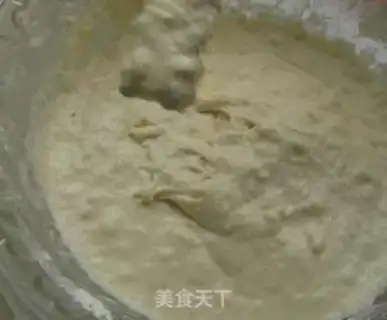
3
Leave the stirred thick batter for about 40 minutes. If there is enough time, it is best to leave it for more than 1 hour. This is called noodle laying. Wash and shred cucumbers, wash and shred lettuce for later use, put mung bean sprouts into boiling water and blanch, pour out to control the moisture for later use. Add MSG to a little cold boiled water, then add a little vinegar, stir well and set aside.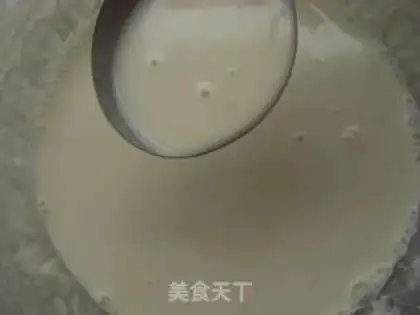
4
After the noodles are lined up, the noodles are broken. This step is very critical. Prepare appropriate amount of boiling water at about 80 degrees C, or leave the freshly boiled water for a while. Slowly add boiling water to the arranged noodles, and use chopsticks to stir in a circle in one direction. When the thick batter becomes thinner, use a large spoon to stir.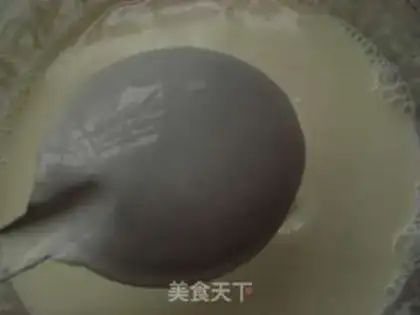
5
How much water to add when breaking the face and what extent is appropriate can be judged with a simple method. Put the opposite side of the large spoon used to stir the batter downward, completely deep into the stirred batter, stir in the batter a few times, and quickly take it out upward. When the spoon leaves the batter, turn the back of the spoon upside down. If the batter on the back of the spoon is uniform and the spoon itself cannot be clearly seen, it means that the batter is just as thick and thin. If the batter flows away quickly, the back of the spoon itself can be clearly seen, which means that there is more water. The broken batter needs to be stirred for a while longer to stir the small batter balls inside.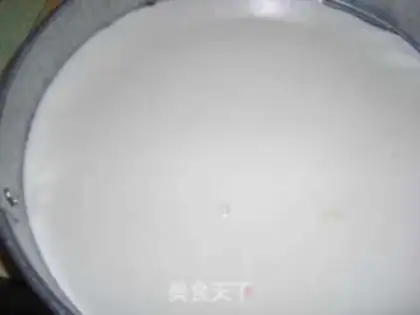
6
Clean the special tool for steaming cold noodles, called "gong" in Shaanxi dialect. You usually buy two when you buy it to save time. Take a steamer and add appropriate amount of water to boil, apply a thin layer of cooking oil to the bottom of the gongs (to prevent adhesion), pour in a proper amount of batter (how much you pour depends on the size of the gongs), hold the gongs 'two "ears" and place them on the boiling water, but don't leave your hands from the "ears" of the gongs, prepare to adjust the batter. The batter in the gongs will quickly condense when it is heated. At this time, shake the gongs at the right time to let the batter that has not yet condensed flow to a thinner place. After adjusting, cover the lid, heat on high heat until the pan is full, and steam for about two minutes.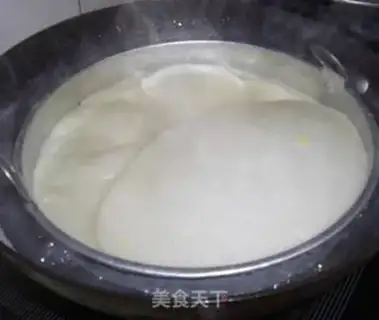
7
The moment the lid of the pot is lifted, one or several large bubbles appear in front of you, indicating that the cold rice has been steamed. After exposure to air, the bubbles will quickly disappear.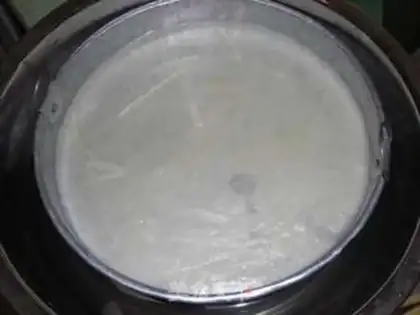
8
Prepare a basin two rings larger than the gongs, place half of the basin of cold water, hold the ears of the gongs, and place the steamed cold noodles together with the gongs in cold water. The purpose is to cool down quickly. If the water in the steamer becomes less and less, add water to boil it according to the situation, and then steam the next one.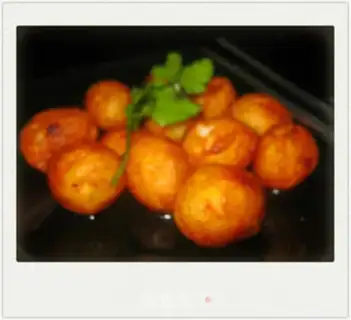
9
Grease another gong, pour in the batter, place it in a steamer with boiling water, turn the gong, adjust the batter, and cover the lid. Put it in cold water and freeze it is almost ready. Use your hand to lift it along the edge of the gong and remove the cold skin. It will be a complete picture.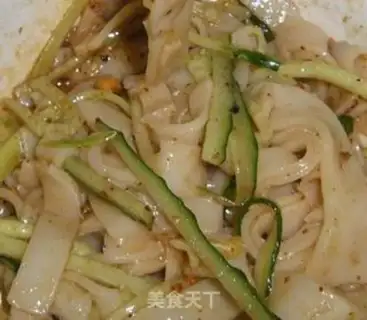
10
Fold the steamed cold noodles in half from both sides, cut into strips, put them into a bowl, add shredded cucumber, shredded lettuce, and mung bean sprouts, add sesame oil, mustard oil, sesame juice, pre-prepared MSG vinegar water, and soy sauce. If you like spicy food, pour on red pepper oil, or Laoganma, stir ~~~~ Start eating!!! If you want to add it to a roujiamo, in this weather in May, and a bottle of ice peaks. Wow, this is what I call unrestrainedcold rice noodles Make Tips
1. It is best to use high-gluten flour ground from winter wheat. After steaming, the somersaults are not easy to break. I use ordinary dumpling flour purchased in the supermarket, which is obviously not as effective as high-gluten flour. 2. When adding cold water and thick batter, if you can't grasp it, pour less water each time, add water based on the situation after stirring. Even if you add water a few more times, don't add more water at one time. This is the principle of small amounts and multiple times. The thick batter can be thicker than the one in my picture, as long as it does not mix into dough like steamed buns or noodles. 3. It is very important to use hot water at about 80 degrees to break the dough. When breaking the dough, you can also use the thing that breaks up the eggs to stir it up, which is easier to stir. 4. After the steamed cold rice noodles are cooled in cold water and taken down, it is best to brush them with a thin layer of oil before pouring into the batter again, so that the steamed cold rice noodles will not stick to the bottom of the gongs. 5. Side dishes and seasonings can be prepared according to your preferences. Generally, popular side dishes are shredded cucumber and mung bean sprouts. I only prepare lettuce sometimes during the season. I like cucumber strips. They taste crispy, so the cucumbers in my picture look crude. Don't laugh at me after reading them ^...^