Huancai Wonton
By VicentaLakin
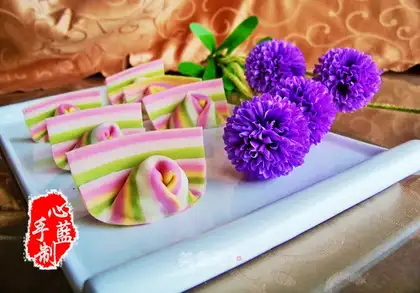
Recipe Recommendations
- salty and fresh
- cook
- several hours
- senior
Steps for Huancai Wonton
1
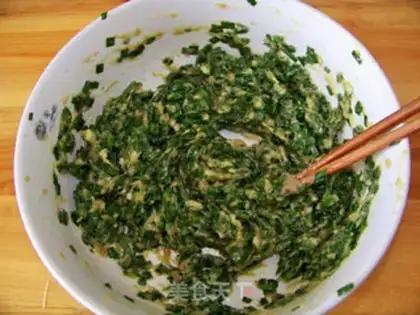
Remove the head, pinch the tail, wash the leeks, chop them into pieces, mix with the meat paste, water, salt, and five-spice powder and stir into meat filling.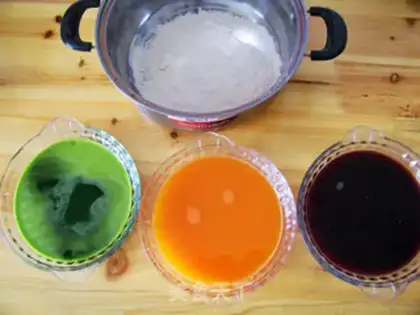
2
Juice carrots, spinach, and purple cabbage, filter for later use.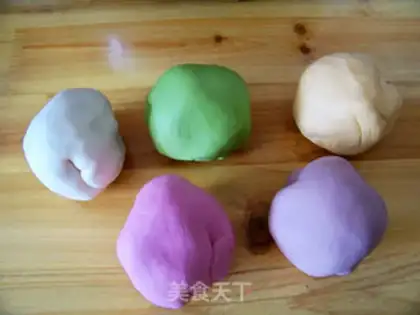
3
Divide the flour into four portions, add a little salt to each portion, mix three portions with vegetable juice to form a colored dough, and mix one portion with water to form a white dough. Knead until the hand is smooth and smooth.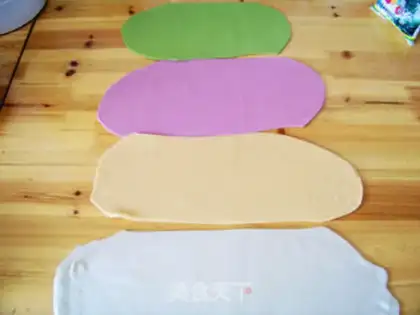
4
Roll out the 4 dough pieces into thicker dough pieces.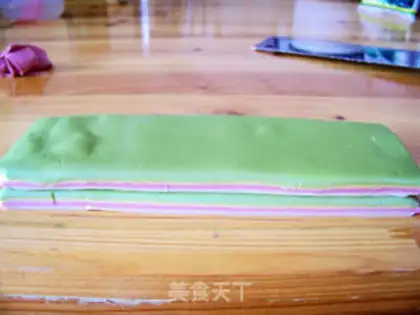
5
Cut the dough sheets to uniform size, layer them over each other, and let stand for half an hour.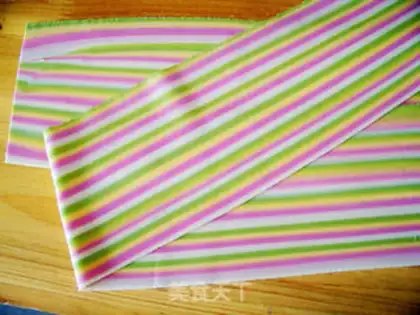
6
Stitching the overlapping dough sheets to the appropriate width and rolling them into a 0.1 cm thick dough sheet.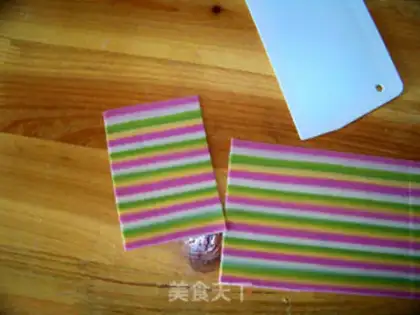
7
Cut the long dough sheet into wonton skins of appropriate size.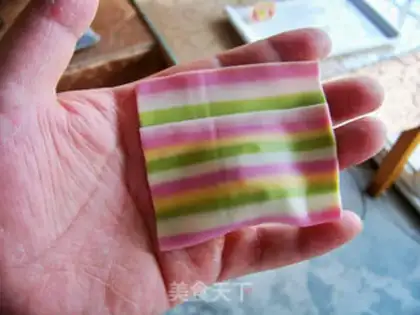
8
Wrap the meat filling into the wonton skin and serve.Huancai Wonton Make Tips
Luo Li Basu:
1. Make the dough harder. There should be less water for better shape. Try it.
2. Gently press with the palm of your hand when overlapping the dough to fully adhere it.
3. The color of the wontons will be brighter when green, and will turn lighter after cooking.
4. It is said online that the color turns lighter after cooking because natural pigments are afraid of high temperatures. After Xinlan observation and careful consideration, I feel that it is completely nonsense. If natural pigments are afraid of high temperatures, why do the orange color of carrots and green color of spinach not fade seriously during cooking?! Aren't they "natural pigments"?! I am afraid that the high temperature theory is completely untenable, so don't believe this nonsense, lest it be laughed at by experts.
5. Xinlan's conclusion is that the color fading of colored dough sheets during cooking has nothing to do with the temperature. Whether the color fades depends on whether the color is water-soluble! Spinach and carrots do not discolor the water when boiling water, while purple potatoes and amaranth will discolor the water when boiling water, indicating that the pigments contained in purple potatoes and amaranth are water-soluble, while the pigments contained in spinach and carrots are not water-soluble. This is the real reason why the color of the purple dough sheet disappears during cooking! It is precisely because of this that the orange and green dough sheets are still brighter after cooking, with less color loss!
6. According to the analysis of Xinlan, the pigments contained in carrots are oil-soluble. Everyone knows that when frying carrots, the oil will turn orange. As for the pigments contained in spinach that are water-soluble, Xinlan has not figured it out yet. I'll tell you if I figure it out, hey.
1. Make the dough harder. There should be less water for better shape. Try it.
2. Gently press with the palm of your hand when overlapping the dough to fully adhere it.
3. The color of the wontons will be brighter when green, and will turn lighter after cooking.
4. It is said online that the color turns lighter after cooking because natural pigments are afraid of high temperatures. After Xinlan observation and careful consideration, I feel that it is completely nonsense. If natural pigments are afraid of high temperatures, why do the orange color of carrots and green color of spinach not fade seriously during cooking?! Aren't they "natural pigments"?! I am afraid that the high temperature theory is completely untenable, so don't believe this nonsense, lest it be laughed at by experts.
5. Xinlan's conclusion is that the color fading of colored dough sheets during cooking has nothing to do with the temperature. Whether the color fades depends on whether the color is water-soluble! Spinach and carrots do not discolor the water when boiling water, while purple potatoes and amaranth will discolor the water when boiling water, indicating that the pigments contained in purple potatoes and amaranth are water-soluble, while the pigments contained in spinach and carrots are not water-soluble. This is the real reason why the color of the purple dough sheet disappears during cooking! It is precisely because of this that the orange and green dough sheets are still brighter after cooking, with less color loss!
6. According to the analysis of Xinlan, the pigments contained in carrots are oil-soluble. Everyone knows that when frying carrots, the oil will turn orange. As for the pigments contained in spinach that are water-soluble, Xinlan has not figured it out yet. I'll tell you if I figure it out, hey.