Crystal Knuckles
By AmayaLabadie
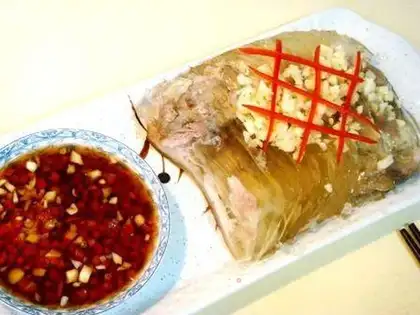
Today, I bring you a cool side dish with wine called "Crystal Knuckles". Although it is a meat product, it is not greasy. It is served with vinegar and mashed garlic. Hehe, it is delicious!
Recipe Recommendations
- pig's anterior elbow 一只500 grams
- green onions 150 grams
- Jiang 80 grams
- salt 5 grams
- octagonal 3 pieces
- geranyl 1 tablet
- chicken powder appropriate amount
- yellow wine 25 grams
- the gelatine powder 25 grams
- MSG 1 grams
Steps for Crystal Knuckles
1
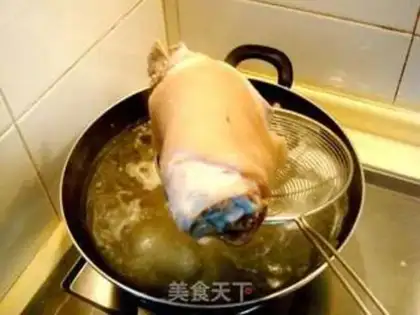
Wash the elbow and cook in a boiling pot for 15 minutes.
2
Then remove it and wash it.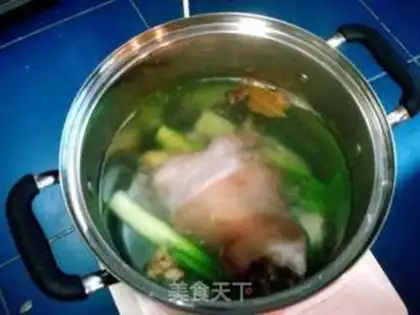
3
Use onions, ginger, star anise, fragrant leaves, salt, and rice wine chicken powder to make a stewed soup.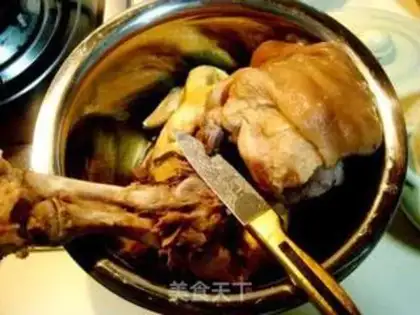
4
Put the elbow in the pot and cook it for two hours, take it out, let it cool and remove the bones.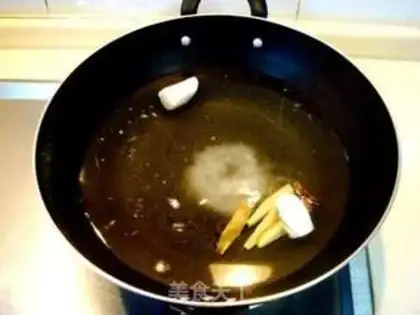
5
Boil water again in the pot, add spring onions, ginger, rice wine, and salt when boiling, and cook the boned pork knuckles for another half an hour.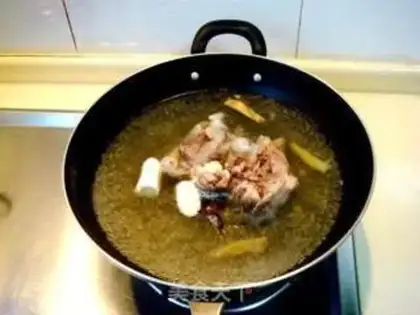
6
Because the pork knuckle is overcooked after being processed by hand, it must be boiled again to disinfect and remove excess fat.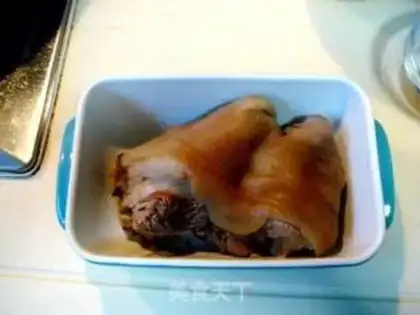
7
Half an hour later, remove the bones after being boned and boiled twice, place them into a disinfected deep disk and flatten them out. It is best to use a square mold.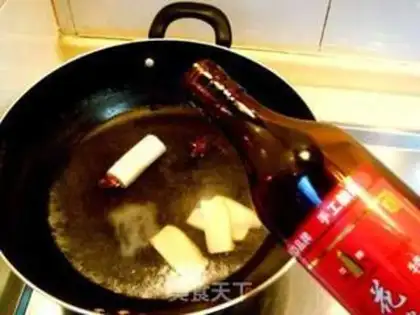
8
Start another soup pot, pour in 200ml of water and bring to a boil. Add two star anise, spring onion segments, ginger slices, and a little yellow wine into it, and season with salt and 1 gram of MSG.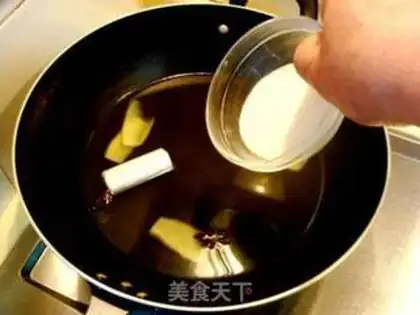
9
Boil the seasoned soup and turn off the heat.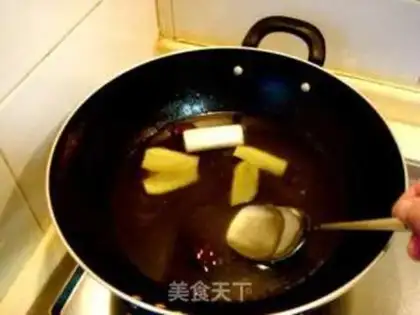
10
Pour in 25 grams of fish glue powder and quickly stir well with a spatula and spoon until there are no particles.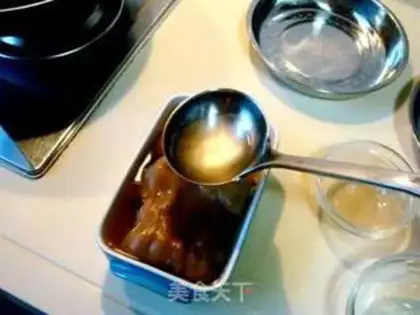
11
Use a spoon to scoop the soup and slowly add it to a porcelain plate mold to cool, then place it in the refrigerator and refrigerate it for two hours, take out the slicing tray, and serve with a flavored plate filled with mashed garlic, shredded fresh peppers, dipped in soy sauce and balsamic vinegar. Serve.Crystal Knuckles Make Tips
1. The pork hock must be cooked long enough until it is very tender; a light, slightly salty taste is sufficient.
2. Pay close attention to sterilizing containers; any meat touched by hand during deboning must be boiled again—firstly to sterilize it, and secondly to remove excess fat.
3. Use gelatin powder in appropriate amounts: use more if there is a lot of water, and less if there is little water. If there is a lot of meat and the gaps in the mold are small, use less; if the gaps are large, you can add more appropriately. 25g of gelatin powder for 250g of cooked meat is suitable, but this also depends on the quality of the gelatin powder.