Milk toast
By VicentaLakin

Recipe Recommendations
- high-gluten flour 320 grams
- low-gluten flour 80 grams
- improver 5 grams
- dry yeast 10 grams
- fine sugar 30 grams
- salt 5 grams
- water 160ml
- whipped cream 40 grams
- whole egg 40 grams
- cream 20 grams
- milk fragrance
- roast
- several hours
- ordinary
Steps for Milk toast
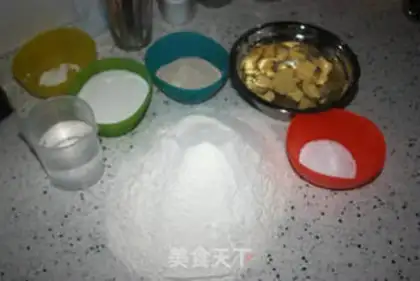
1
Weigh all materials and prepare them.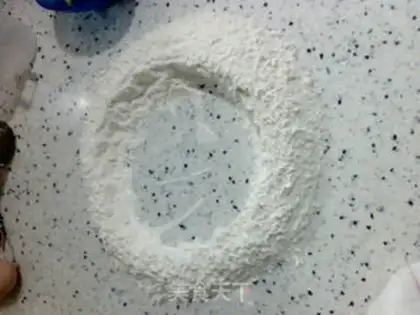
2
Sift the flour on the console and make a circle.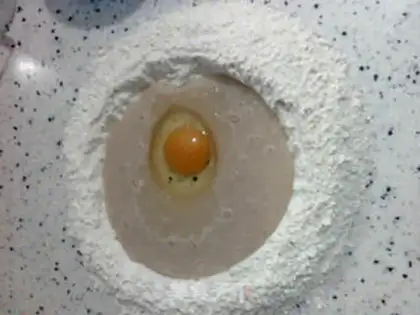
3
Stir the ingredients (except whole eggs, butter) well and let stand for about 5 minutes. Pour into a circle and add whole eggs.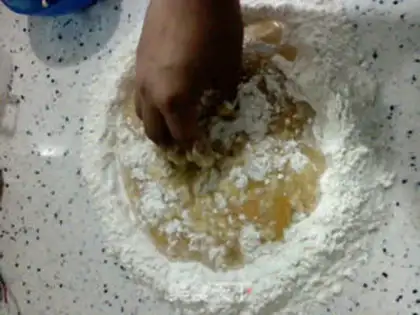
4
Mix the flour ingredients little by little with your fingers.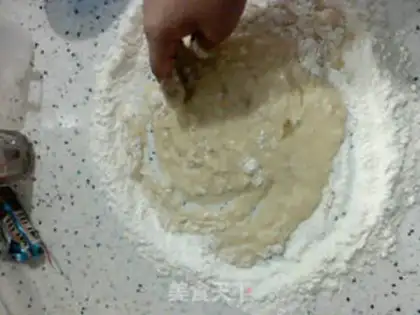
5
When it is in a dry paste, you can use a scraper to match it.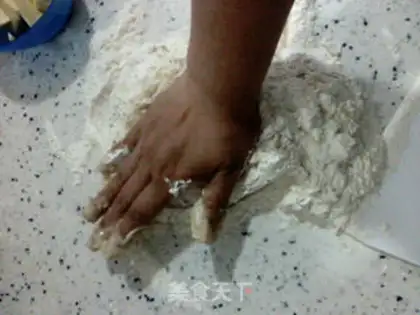
6
Hold the scraper in one hand and use the palm of the other to knead the dough; then check the water absorption of the dough and add the remaining water as appropriate.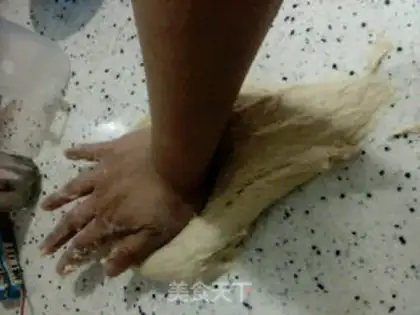
7
Rub until it does not stick to the console and hands, and then knead for about 10 minutes; I knead the dough by pressing it with my fist and folding it in half, which saves time and effort. When kneading until the dough is smooth, add butter.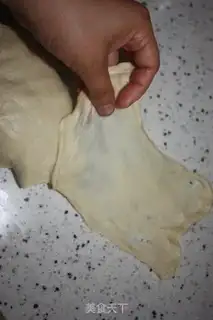
8
After adding butter, knead for about 6 minutes. The dough begins to become smooth and soft and does not stick to your hands and the table. At this time, you can press the dough with your fist. Each time you press the dough to a size of about 20*40 cm, fold it in half, and about 8 times. After the dough becomes smoother, you can take a piece of dough and spread it out to see if it has reached the expansion stage. (Every time I reach this point, I have reached the expansion stage)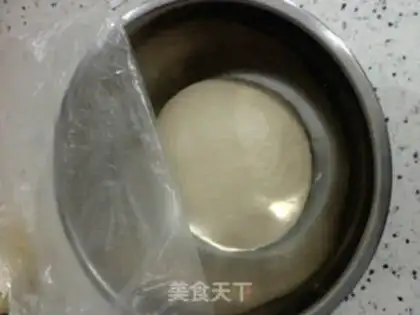
9
Put the dough into an oiled container, cover with plastic wrap and ferment at room temperature of about 25 degrees for about 1 hour.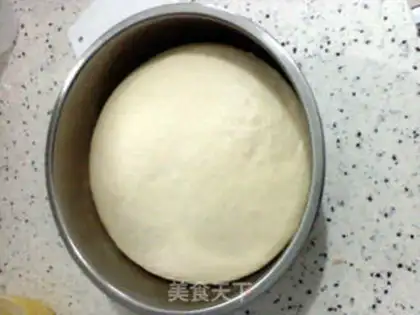
10
Make dough twice as big. (You can rub a hole with flour with your fingers. As long as the dough around the hole does not rebound or retract, it will be ready.)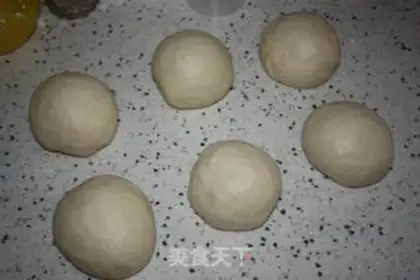
11
Round-relax for 3-5 minutes-round again-relax for 3-5 minutes.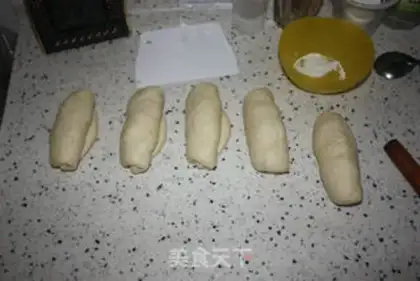
12
Roll the strip-roll it about 2 times-relax for 3 minutes-roll it again-roll it about 2.5 times.
13
Put the dough into the toast mold and ferment for a second time (room temperature 25 degrees for about 1 hour). When the dough has fermented to 8- 90% of the toast mold-preheat the oven-wash the egg on the dough surface-put it into the oven. (I wanted to make a covered one, but I like the look of the dome hill)
14
The creamy toast is baked!
15
The heat is just right.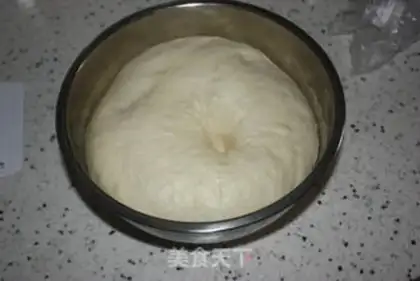
16
Look at the dough that fails to ferment: overfermentMilk toast Make Tips
1. You don't need an improver. I have tried it and the difference is not big.
2. Mix dough: The dough should not be too thin or it will stick to the table and hands, nor should it be too dry or it will not be easy to produce muscles. This ingredient has been made nearly ten times to shape bread, and it will not be so sticky that it cannot be extricate itself. No matter what formula you use, do not add all the water at once, but add it based on the water absorption of the flour.
3. Kneading dough: It takes about 30 minutes from dough kneading to expansion, not too long. Once, I kneaded the butter I added for half an hour and then kneaded it for another twenty minutes. If I kneaded it too much, it didn't taste good. It turns out that expansion can be achieved in less than half an hour.
4. Fermentation:
a. The dough is not fermented enough: the dough around a hole will rebound;
b. If the dough is excessively fermented, the dough around the hole will retract, and the surface of the overfermented dough will not look smooth. The baked bread will be rigid, not fluffy, hard, and has a poor taste;
c. The dough leavens just right, there is no change in the dough around the hole you rub, and the dough is also very smooth.
5. Heat: The dough mixing, kneading, and fermentation are all done well. Remember the time and don't overcook it.
2. Mix dough: The dough should not be too thin or it will stick to the table and hands, nor should it be too dry or it will not be easy to produce muscles. This ingredient has been made nearly ten times to shape bread, and it will not be so sticky that it cannot be extricate itself. No matter what formula you use, do not add all the water at once, but add it based on the water absorption of the flour.
3. Kneading dough: It takes about 30 minutes from dough kneading to expansion, not too long. Once, I kneaded the butter I added for half an hour and then kneaded it for another twenty minutes. If I kneaded it too much, it didn't taste good. It turns out that expansion can be achieved in less than half an hour.
4. Fermentation:
a. The dough is not fermented enough: the dough around a hole will rebound;
b. If the dough is excessively fermented, the dough around the hole will retract, and the surface of the overfermented dough will not look smooth. The baked bread will be rigid, not fluffy, hard, and has a poor taste;
c. The dough leavens just right, there is no change in the dough around the hole you rub, and the dough is also very smooth.
5. Heat: The dough mixing, kneading, and fermentation are all done well. Remember the time and don't overcook it.