cold rice noodles
By VicentaLakin
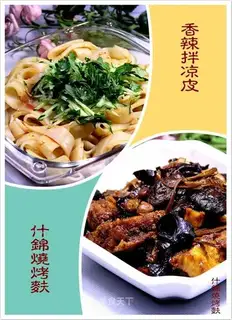
Recipe Recommendations
- flour 350 grams
- refined salt 2 grams
- alkali noodles 0.2 grams
- qingshui appropriate amount
- cucumber silk appropriate amount
- cilantro appropriate amount
- Water-blooming mushroom 70 grams
- Water blooming yellow flower 40 grams
- water fungus 100 grams
- water-grown peanut 70 grams
- sesame sauce appropriate amount
- garlic juice appropriate amount
- fresh soy sauce appropriate amount
- rice vinegar appropriate amount
- pepper oil appropriate amount
- Oil poured chili appropriate amount
- white sugar appropriate amount
- sesame oil appropriate amount
- octagonal appropriate amount
- cooking oil appropriate amount
Steps for cold rice noodles
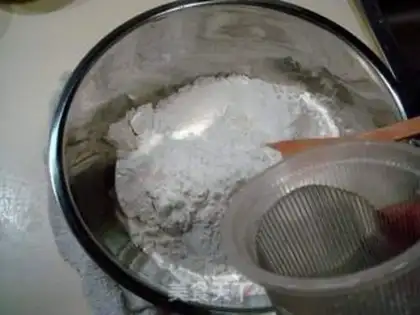
1
Mix the flour with water to form a dough.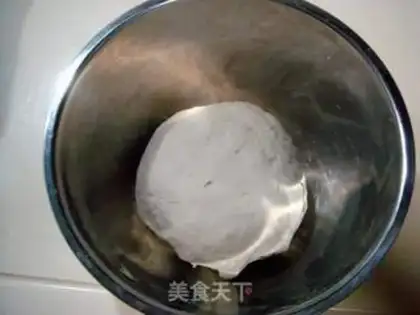
2
The hardness of the dough is about the same as that of the dumpling dough in the north.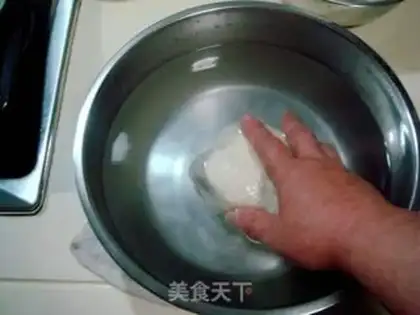
3
After kneading the dough, place it in a clear basin and squeeze it back and forth with both hands.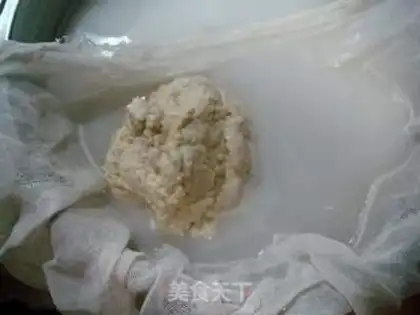
4
Squeeze the dough several times and place it in a piece of clean gauze. Wrap up the corners of the gauze and tie it firmly.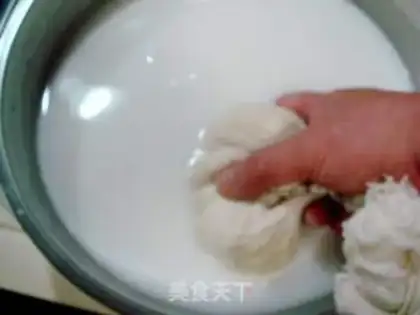
5
Then repeatedly squeeze the dough wrapped in gauze in water with your hands, with even force so that it can overflow the pulp powder until the dough becomes thin and the dough starts to soften and wash the dough.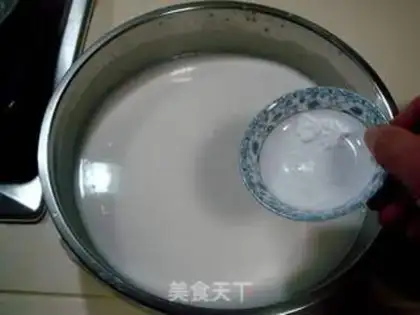
6
What is left in the gauze is gluten, so take out the gluten and use it for another purpose. Put a little bit of salt and alkali flour into the flour paste. Don't have much alkali flour. The flour paste made from 350 grams of dry flour only needs 0.2-0.3 grams. If it is too much, the color will turn yellow. The alkali flour mainly plays a role in making the dough smooth and not prone to deterioration. After stirring well, let the flour slurry stand for 4-5 hours.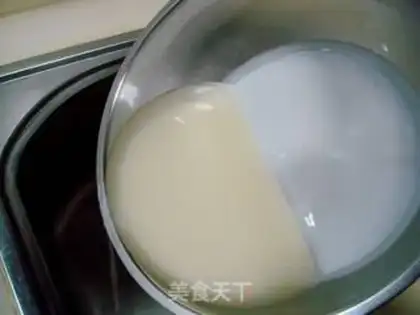
7
Decant the settled flour slurry and remove the clear water above it.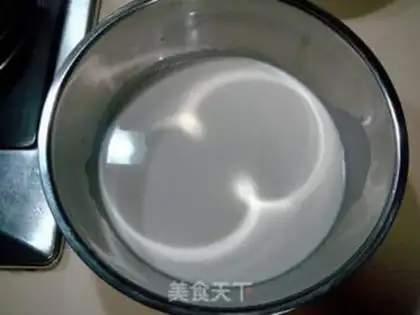
8
Leave only the thick flour paste at the bottom of the basin for use.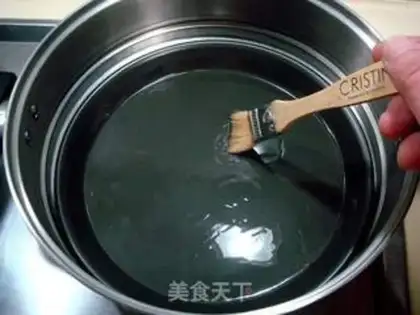
9
Boil the water in the steamer, place a metal plate in the steamer. Any metal plate can be used. I use a pizza plate. After placing the metal plate, apply a layer of cooking oil to the plate.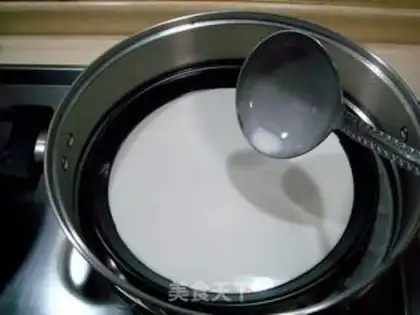
10
Then stir the flour slurry well, add appropriate amount of flour slurry and pour it into a metal plate.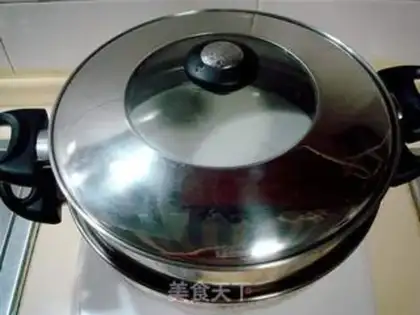
11
Cover the lid and steam for 30 seconds to about 1 minute.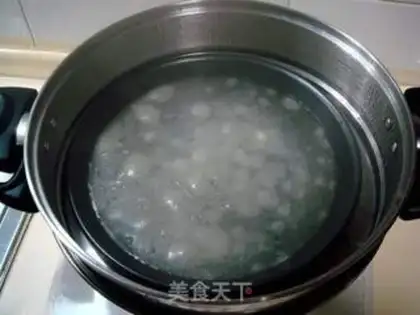
12
Steam until the leather solidifies and blisters before taking out.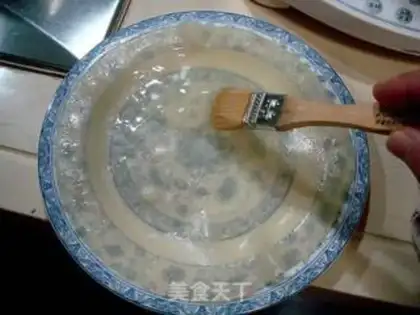
13
Remove the leather from the metal plate and place it in a porcelain plate. Apply a thin layer of cooking oil with a brush to prevent the leather from adhering when stacked.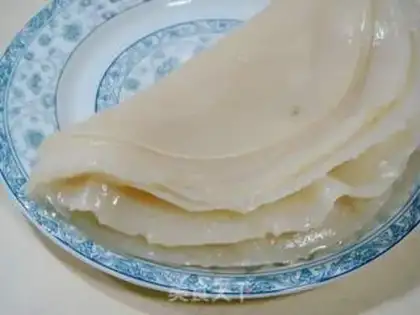
14
The leather is made one by one according to the above method, and then stacked neatly and let it cool for later use. At this time, the cold noodles are ready, and when eating, you can cut them into strips and mix them with food.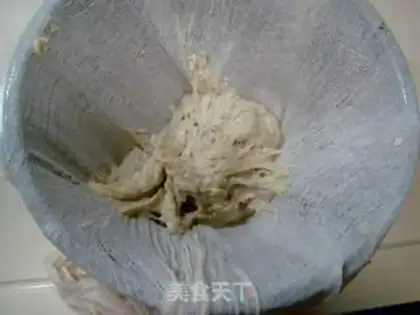
15
Take out the gluten from the washing of the cold noodles.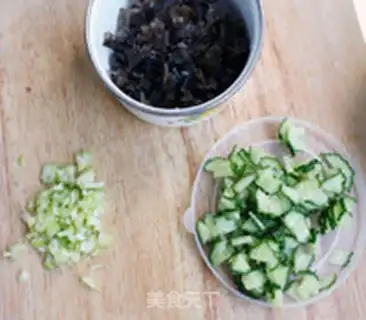
16
Open the gauze and pour the gluten into a clean basin and sprinkle with a little dry yeast (about 2 grams of dry yeast).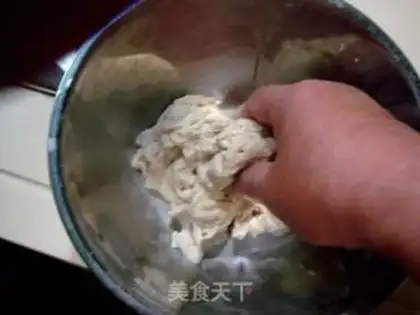
17
Sprinkle dry yeast into the gluten and knead well with your hands.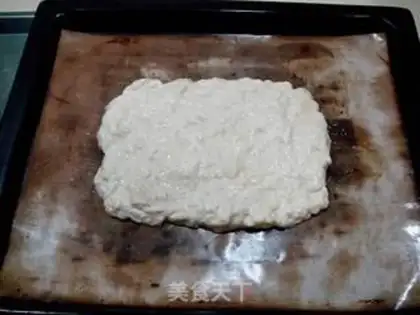
18
Then place the gluten spread on a baking sheet and let stand and ferment.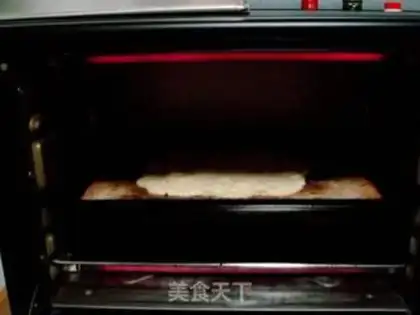
19
After the gluten has slightly expanded and the inside becomes a honeycomb shape, put it in the oven and bake it at a low temperature, at a temperature between about 130-150 degrees.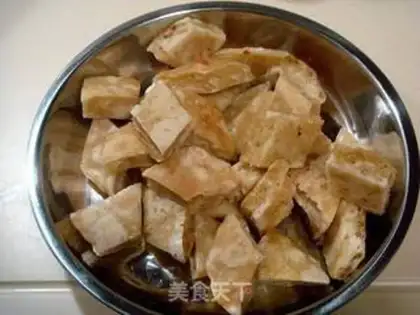
20
Take out the gluten and cut it into diamond-shaped pieces for later use. If you don't use it for a long time, you can dry and preserve the grilled gluten. Home-made roasted bran is ready.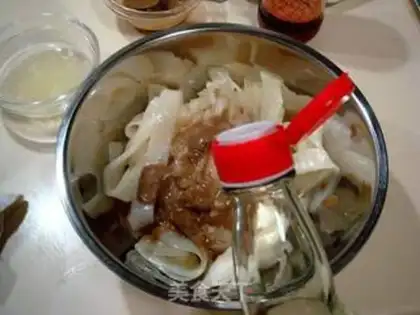
21
Cut the cold noodles into strips and place them in the cooking basin, sprinkle with garlic juice, and add sesame sauce juice, fresh soy sauce, rice vinegar and pepper oil into the cold noodles.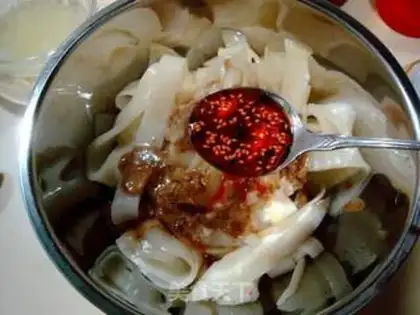
22
Finally, sprinkle in appropriate amount of oil and spicy pepper and mix well.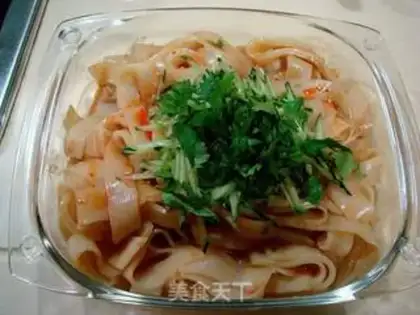
23
Put shredded cucumber and shredded coriander on the cold noodles and serve.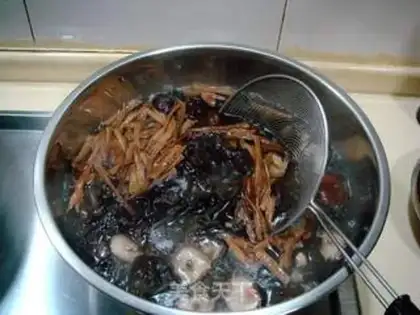
24
Make mixed roasted bran; bring water to the boil, add ingredients and blanch water, cook for 2 minutes, remove and control the water.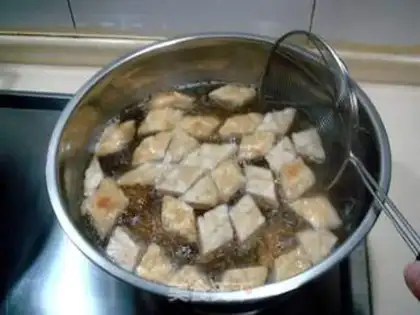
25
Then blanch the roasted gluten in water, boil the gluten until soft and remove it for later use.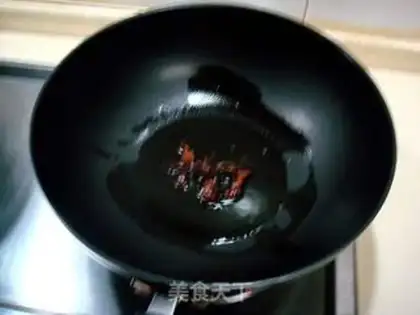
26
Heat the wok on heat, add the base oil and stir-fry the star anise until fragrant.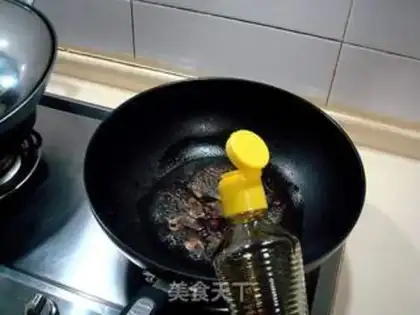
27
Then add soy sauce and cook for a while.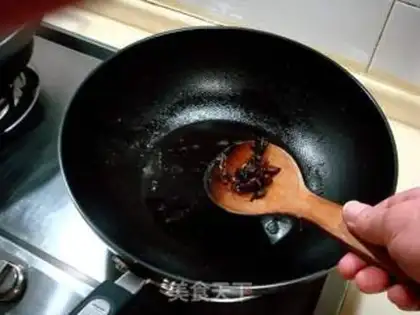
28
Remove the star anise. No.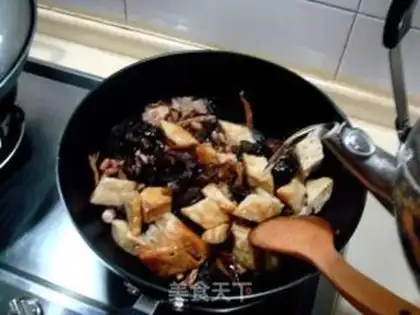
29
Add gluten and ingredients and stir well, add appropriate amount of boiling water and simmer for 3 minutes.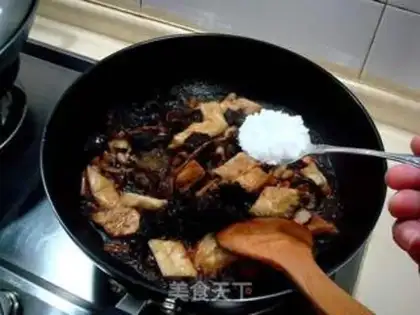
30
Boil the gluten for 3 minutes, sprinkle with appropriate amount of white sugar and stir-fry well, then collect the juice over high heat.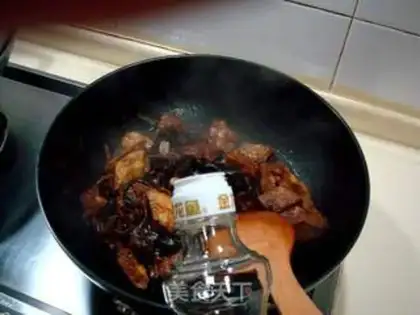
31
Remove the soup, add appropriate amount of sesame oil and stir well before serving.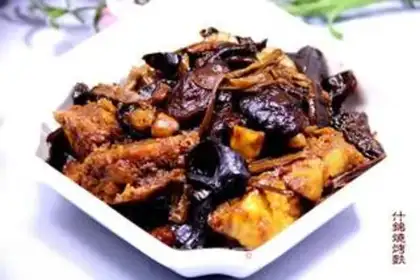
32
The assorted roasted bran is then prepared.cold rice noodles Make Tips
Warm reminder;
1. When making cold noodles, wheat starch is placed at the bottom of the basin after the flour paste has been precipitated. The water should be decanted until the same amount of water as the wheat starch is left. Stir well again, scoop it into an iron plate and gently shake it into a liquid state. Just flow. The dough must not be too thin, otherwise the strength will not be enough. Don't put too much alkali flour. Only 0.5 grams of alkali flour can be put in the flour paste made from one pound of flour, and 0.2-0.3 grams of alkali flour should be put in 350 grams of flour paste. Otherwise, the cold rice noodles produced will be yellow. Alkali and salt play a role in making the cold rice noodles chewy, and they are not easy to deteriorate when left for a few hours.
2. When making roasted bran, try to wash the gluten. The higher the purity of the gluten, the more resistant it will be to cooking and the better the taste. Add gluten to dry yeast and add 2 grams of dry yeast to 250 grams of water gluten. The more honeycomb gluten is fermented, the more evenly the better. Roasted gluten can be roasted raw or cooked. Cooked is to steam the gluten and then roast it at low temperature. The roasted gluten can be stored for a year without deteriorating easily. When eating, soak it with warm water. You can cook it when you eat.
These two private delicacies,"Spicy Mixed Cold Noodles" and "Assorted Roasted Bran", are ready for friends 'reference!
1. When making cold noodles, wheat starch is placed at the bottom of the basin after the flour paste has been precipitated. The water should be decanted until the same amount of water as the wheat starch is left. Stir well again, scoop it into an iron plate and gently shake it into a liquid state. Just flow. The dough must not be too thin, otherwise the strength will not be enough. Don't put too much alkali flour. Only 0.5 grams of alkali flour can be put in the flour paste made from one pound of flour, and 0.2-0.3 grams of alkali flour should be put in 350 grams of flour paste. Otherwise, the cold rice noodles produced will be yellow. Alkali and salt play a role in making the cold rice noodles chewy, and they are not easy to deteriorate when left for a few hours.
2. When making roasted bran, try to wash the gluten. The higher the purity of the gluten, the more resistant it will be to cooking and the better the taste. Add gluten to dry yeast and add 2 grams of dry yeast to 250 grams of water gluten. The more honeycomb gluten is fermented, the more evenly the better. Roasted gluten can be roasted raw or cooked. Cooked is to steam the gluten and then roast it at low temperature. The roasted gluten can be stored for a year without deteriorating easily. When eating, soak it with warm water. You can cook it when you eat.
These two private delicacies,"Spicy Mixed Cold Noodles" and "Assorted Roasted Bran", are ready for friends 'reference!