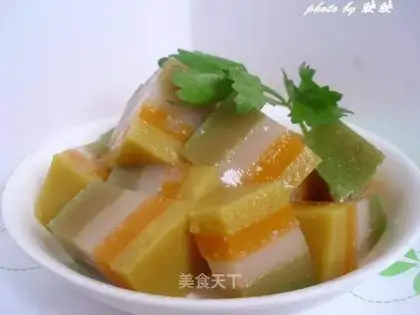
Colored pig skin jelly
By VicentaLakin
Recipe Recommendations
Steps for Colored pig skin jelly
1
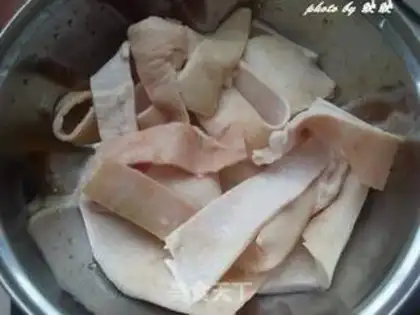
Wash the pig skin and place it in the pan.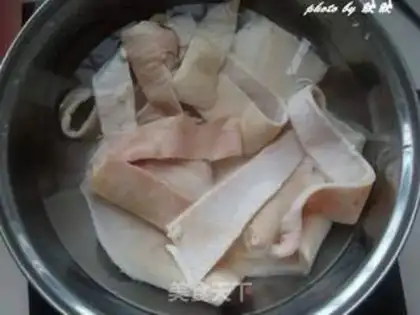
2
Add the water that has submerged the pig skin and bring to a boil.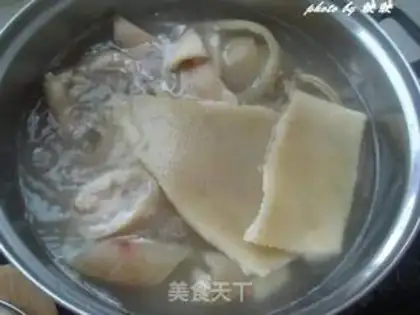
3
Bring to a boil and cook for 5 minutes, turn off the heat, remove and wash again, carefully pull off all hairs, and use a spatula to scrape off the grease.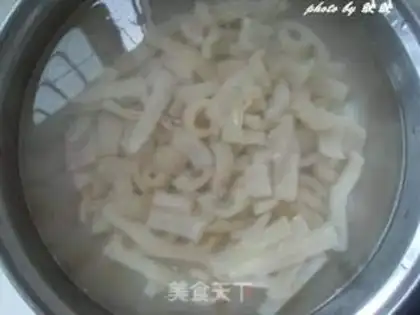
4
After the pig skin is cleaned, cut it into small pieces, add a pot of water again, and bring to a boil.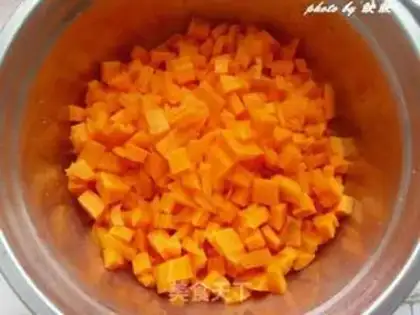
5
During the cooking process, prepare carrots, wash and dice.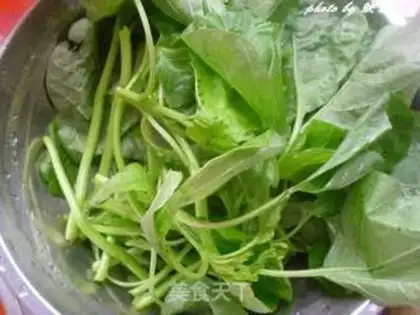
6
Wash amaranth.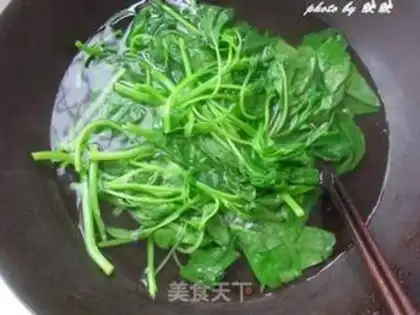
7
Blanch amaranth with boiling water.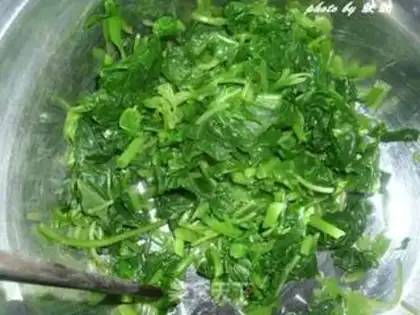
8
Cut the blanched amaranth into thin pieces.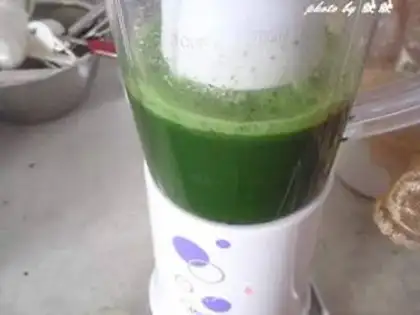
9
Add amaranth and a small amount of water in a mixing cup and minced.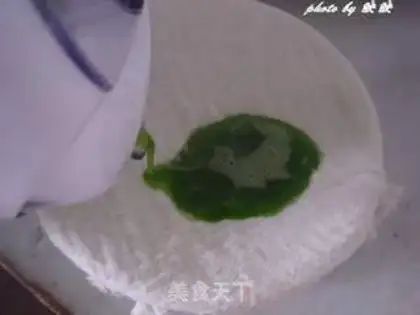
10
Filter the minced amaranth juice with filter cloth.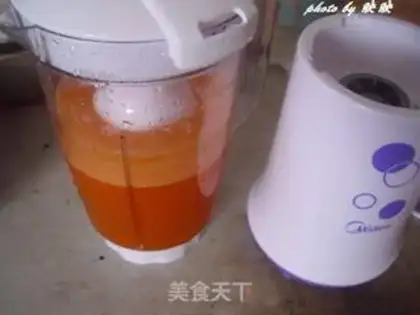
11
Mince diced carrots in the same way.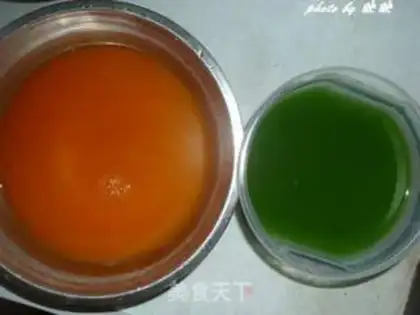
12
Filter again to obtain two vegetable juices.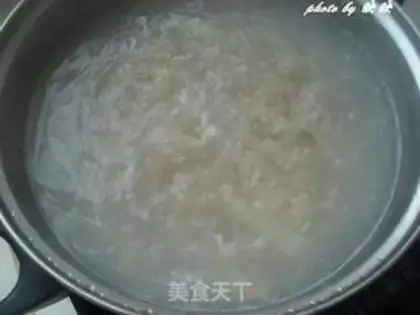
13
Cook the pig skin for half an hour, turn off heat and cool.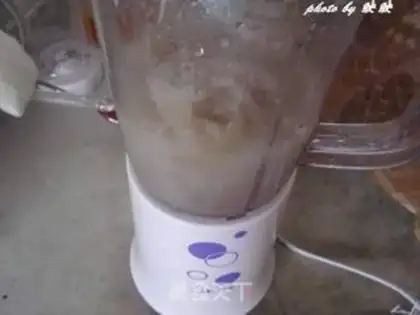
14
Remove the pig skin, place it in a mixing cup in portions, and stir with appropriate amount of soup to form pig skin paste.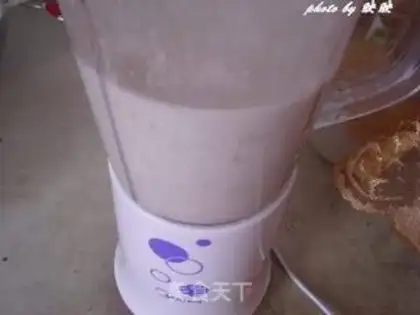
15
Pour the stirred pig skin paste back together.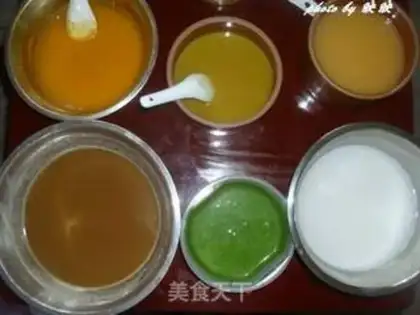
16
Reboil the vegetable juice and pig skin puree at a ratio of 1.5:1, and season with salt. Corresponding relationship between color and vegetables: orange-red-carrot juice, khaki-curry, light orange-barbecue sauce, sauce color-soy sauce, green-amaranth juice, white-no additives. (Curry, barbecue sauce, soy sauce and original flavor, add the same amount of water to the meat paste)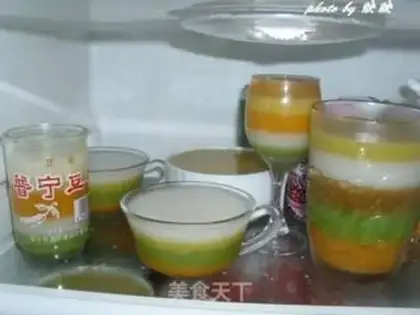
17
Take any container, add 1-2 layers of meat paste to it, refrigerate until frozen, then add another soup, add in turn until full. Refrigerate all the remaining soup in the refrigerator.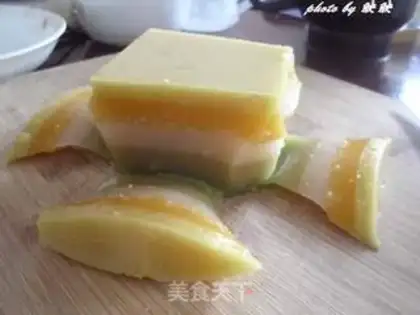
18
Refrigerate for one night, and serve it in slices the next day. You can dip it in garlic vinegar sauce or any kind of dip, as long as you like.Colored pig skin jelly Make Tips
1. Processing timing of pig hair: Practice has proved that it is best to treat pig hair after the pig skin has been cooked. At this time, the pig skin is a little soft, and the connection between the hair and the pig skin is not as tight as when it was raw. Pull it out according to the growth direction of the hair. Very easy.
2. The amount of pig skin used this time was slightly more, so there was a problem in the middle. When stirring the pig skin paste, there was an effect of beating the protein. After adding water to boil, there was still a thick layer of whisper-like bubbles. The reason was that the amount of pig skin was too much and the water was too little. However, just remove the bubbles and re-add water to boil. (The most suitable ratio of pig skin to water needs to be proved by practice in the future)
3. During the formation process of pig skin jelly, pay attention to one layer. You must wait until the previous layer is frozen before adding the next layer. When adding the last layer, it must be slow and not too hot. Juice, otherwise the previous layer will melt and mix the layers.
4. If some soup has frozen during this process, it can be heated and melted slightly, and then added after cooling slightly, but remember to add hotter soup slowly.
5. You can combine the colors you add at will, as long as you can find seasonings of different colors.
2. The amount of pig skin used this time was slightly more, so there was a problem in the middle. When stirring the pig skin paste, there was an effect of beating the protein. After adding water to boil, there was still a thick layer of whisper-like bubbles. The reason was that the amount of pig skin was too much and the water was too little. However, just remove the bubbles and re-add water to boil. (The most suitable ratio of pig skin to water needs to be proved by practice in the future)
3. During the formation process of pig skin jelly, pay attention to one layer. You must wait until the previous layer is frozen before adding the next layer. When adding the last layer, it must be slow and not too hot. Juice, otherwise the previous layer will melt and mix the layers.
4. If some soup has frozen during this process, it can be heated and melted slightly, and then added after cooling slightly, but remember to add hotter soup slowly.
5. You can combine the colors you add at will, as long as you can find seasonings of different colors.