Little red-flower twilight roll
By VicentaLakin
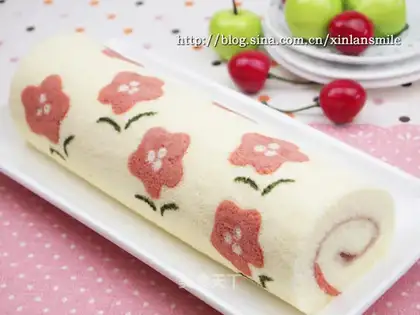
Recipe Recommendations
- eggs of 4
- low-gluten flour 80 grams
- fine sugar
- milk 65 grams
- salad oil 50 grams
- salt 1 gram
- lemon juice 5 drops
- red rice flour
- matcha powder a little
- strawberry jam 30 grams
- milk fragrance
- baking
- an hour
- ordinary
Steps for Little red-flower twilight roll
1
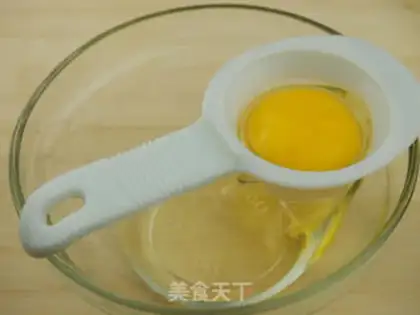
Separate proteins and yolk with an egg breaker (Figure 1) and be careful not to touch a thread of yolk with the egg split。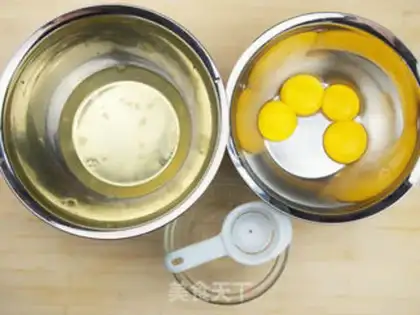
2
PROTEIN AND YOLK ARE POURED INTO THE EGG BASIN (FIGURE 2) TO ENSURE WATER AND OIL. THE POT OF PROTEIN IS A LITTLE BIGGER. THIS TIME, THE PROTEIN BASIN IS 20CM STAINLESS STEEL DEEP-DEEP, AND THE EGG YOLK BASIN 18CM。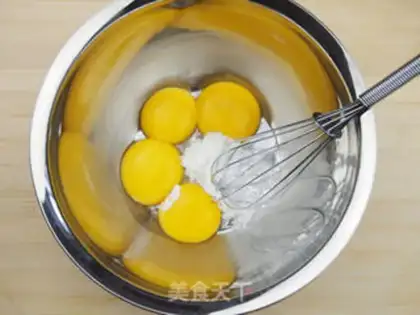
3
1 gram of salt in the egg yolk basin (figure 3). Salt makes sugar taste less sweet. Add 10 grams of fine sugar. It's even with a hand-beater。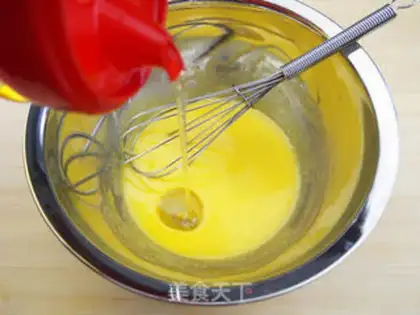
4
The 50-gram salad oil was added three times, and each addition was evenly mixed with a manual egg-beater (figure 4)。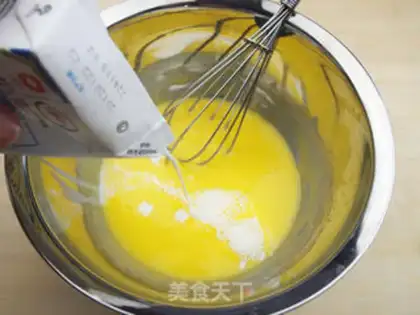
5
Sixty-five grams of pure milk were poured into the egg yolk basin (figure 5), and the mixing was even to oil and water integration。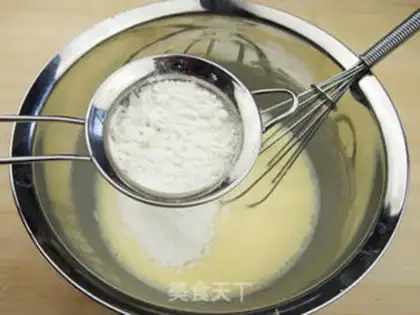
6
80 grams of low powder sift into the yolk basin (figure 6)。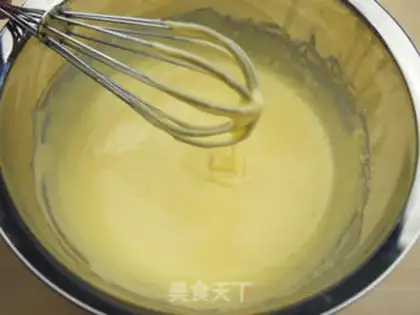
7
Slurry paste is even to the point where no particles are present (figure 7)。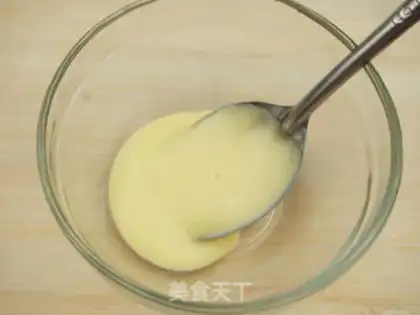
8
12 grams of egg yolk from a spoon in a bowl (figure 8)。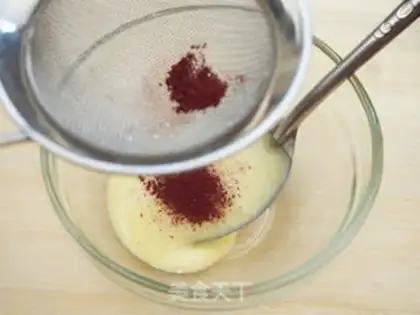
9
Sift 1/16 small spoons of red powder into small bowls (figure 9), evenly mixed with spoons。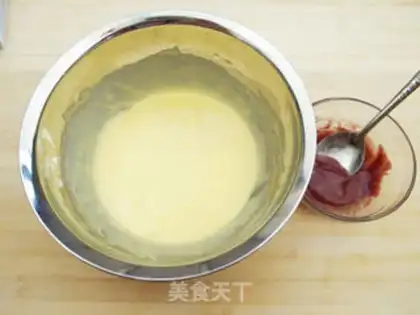
10
So we get two different colours of yolk paste, and we put them on the side side。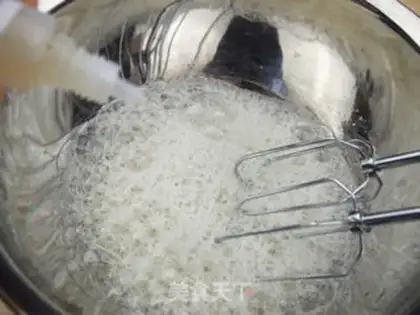
11
The protein was dispersed with an electric omelet, adding five drops of lemonade (figure 11)。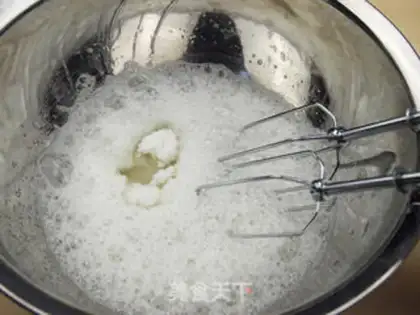
12
A THIRD (17 G) OF THE FINE SUGAR IN MATERIAL A IS ADDED TO THE FISH EYE BUBBLE SHOWN IN FIGURE 12。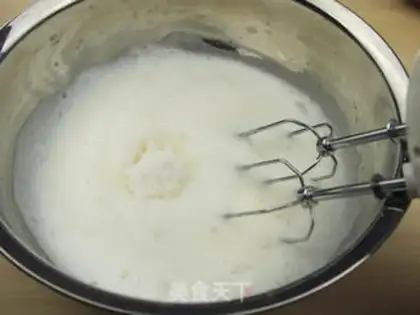
13
A third of the fine sugar (17 g) is added to the fine foam shown (figure 13) when the protein starts to become dense and double the volume。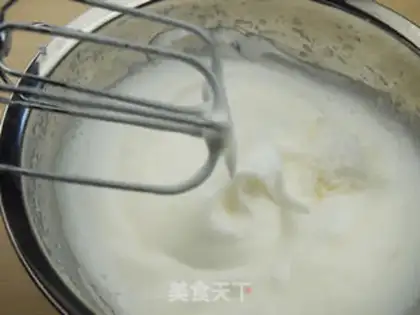
14
Continue to stir up the proteins to a thicker point, with the surface stripes, and add the remaining fine sugars (16 g) when the point of the protein is down (figure 14)。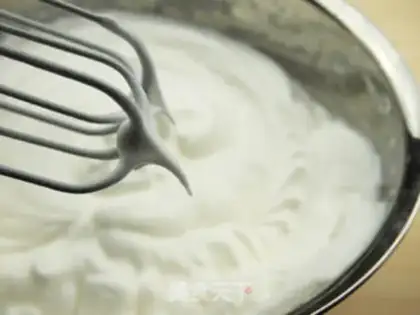
15
The continuation of the convulsion, with proteomic peaks on the egg-beater growing rather than standing (figure 15), indicates that it has reached the level of wet hair, that is, nine distributions. Make a twilight roll, the protein's on it。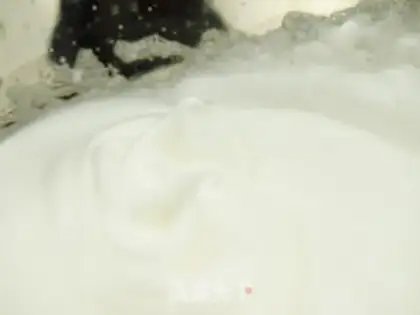
16
At this point, the protein is texture, but it is lighter and softer. Protein in the basin has a bent angle (figure 16)。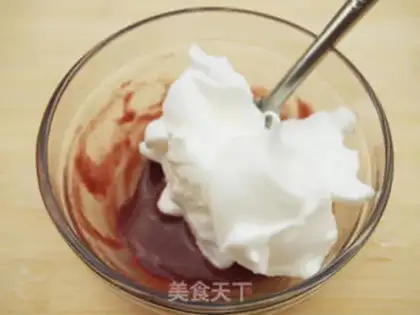
17
About twice as much protein as in a bowl (figure 17)。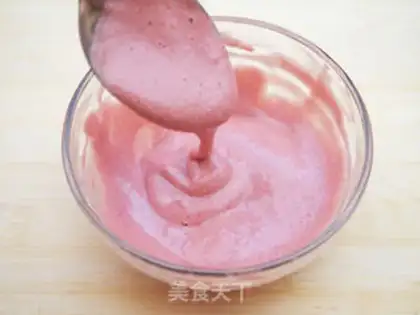
18
Crushing and cutting with spoons until the proteins are fully integrated with the red chord yellow paste (Figure 18). The mixed paste is a relatively thick, even light red。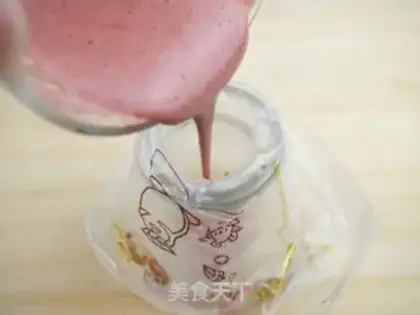
19
A small bouquet is taken and placed in a wide-mouthed glass bottle, which is partly higher than the mouth of the bottle and is thrown outside the bottle. Put red-coloured cakes in the bag (figure 19) and put them aside。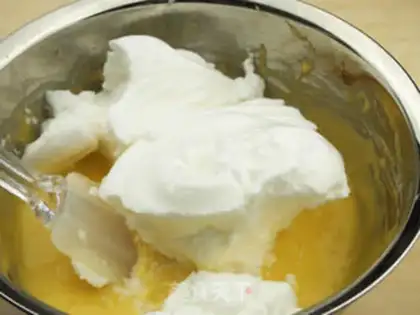
20
One third of the distributed protein is taken to the original yolk paste (figure 20)。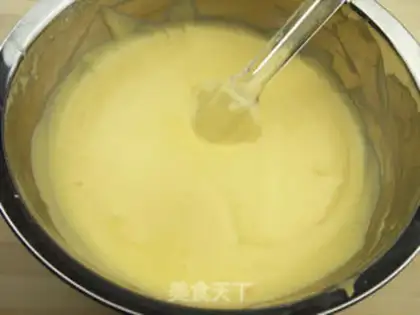
21
It's even with a rubber razor (Figure 21). Be careful to flip it up from the bottom, like screech, and don't circle it in order not to melt the protein. It can also be tangled。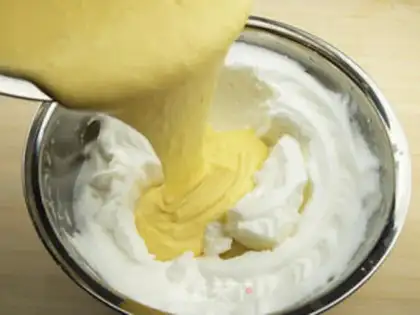
22
Pour mixed noodles into the protein basin (figure 22)。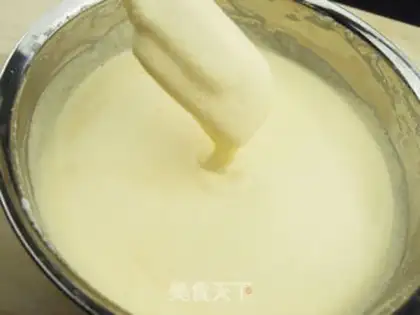
23
The same technique is used to flip and tow until the protein is fully integrated with the yolk paste (Figure 23), and the mixed paste is relatively thick and evenly yellow。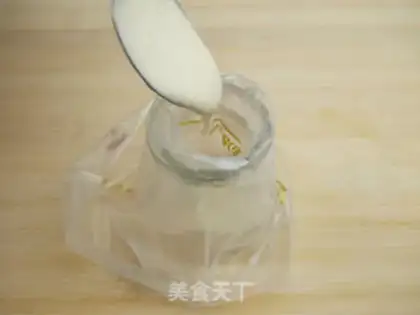
24
A small bouquet is taken and placed in a wide-mouthed glass bottle, which is partly higher than the mouth of the bottle and is thrown outside the bottle. Put a spoonful of original cake in the bag (figure 24)。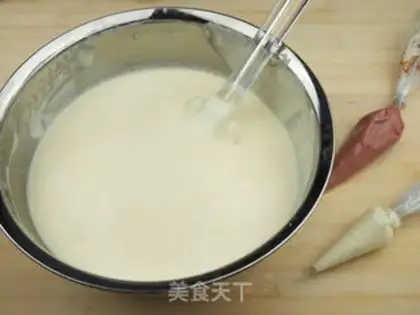
25
So we'll get three cakes。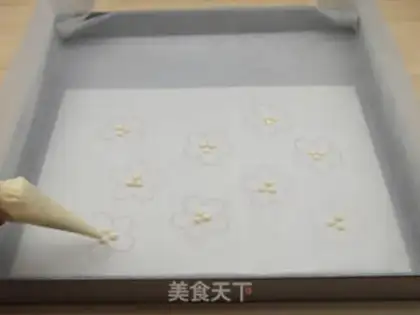
26
Paper (printing or hand-drawing, clear enough) with pre-painting of small flowers in the oven, and oil paper. Cutting a small mouth with scissors at the end of the original cake and drawing each small flower's white nectar (figure 27). Put the grill in a pre-heated oven at 180°C, bake for one minute, model。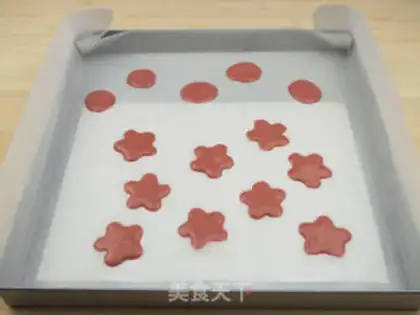
27
Cutting a small mouth with scissors at the end of a red-coloured cake bag, drawing the red petals of each flower according to pattern (figure 27), the rest of the paste can draw a few dots at random in uncharted areas. After extracting the small flower pattern paper, the oven is placed in a pre-heated oven at 180°C, baked for one minute, patterned。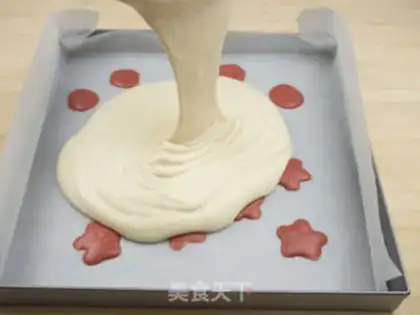
28
Scrambled the original cake in the egg basin on a stylish little flower pattern (Figure 28)。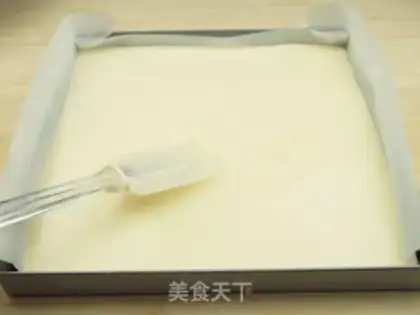
29
Scratch the cake with a rubber razor (figure 29)。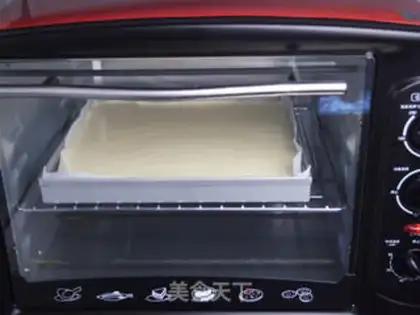
30
Hands on the grill, fall a few times, shake off the bubble. Put it in the lower and middle of the preheated oven (figure 30), 180 degrees for 21 minutes。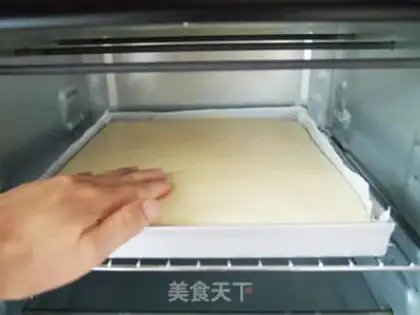
31
Light-cut cake skins, elasticity, not sticky hands (figure 31)。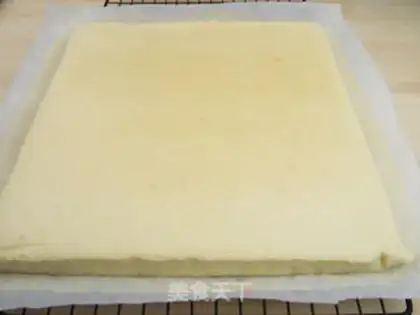
32
Take the oven out of the oven. Hands on both sides of the sheet, carrying the cake out of the oven, placed on the cool web, and carefully stripping the sheet around it (figure 32)。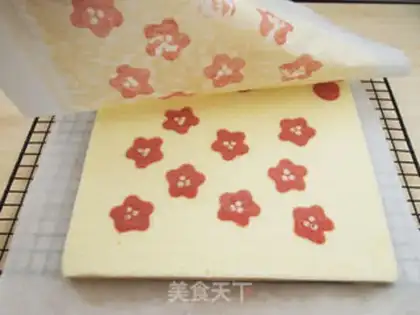
33
On another cool web, a piece of oil paper was placed, the cake was put upside down on the new one and the original one was removed (figure 33)。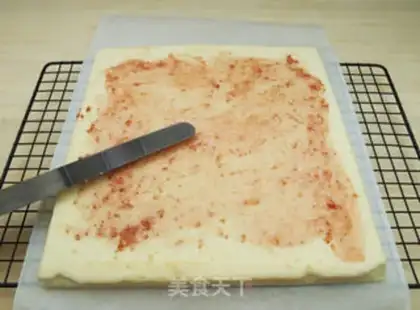
34
A new oilpaper was laid on the first cool net, and the cake that had been thrown out was once again on the new oilpaper. Strawberry jams are evenly painted on the face of the cake, so that one layer of the tungsten can (figure 34)。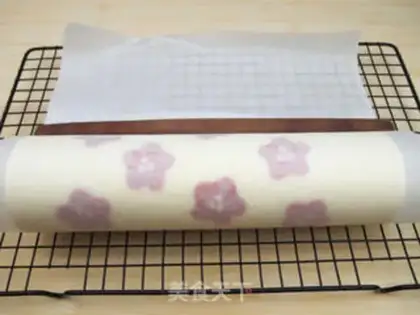
35
Rolling up the cake with a stick of crutches. The scepter rolls back, and the cake rolls forward. Ten minutes after the scrolling (figure 34)。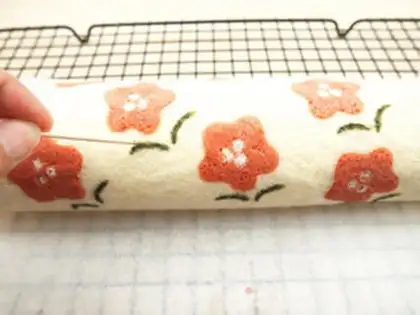
36
A small amount of tea powder is dripped into a small amount of hot water and mixed into liquid. With toothpicks covered with tea to paint leaves for small flowers, it is done by cutting off two irregular parts (figure 36)。Little red-flower twilight roll Make Tips
1. Figure 26. Be careful not to cut the hanging bag too big when cutting it. If the cutting is too big, too much cake paste will flow out at one time, which is not easy to control and it is difficult to draw beautiful graphics. Cut the small mouth first, and cut it again if it feels too small. If you cut it big the first time, you can only change it to another decoration bag.
2. Figure 31. If you tap with your finger and leave a gravure on the surface of the cake, it means that the cake is not cooked. If the surface of the cake breaks when tapping with your fingers, it means that it is overbaked and will break when rolled. Only by tapping with your fingers can the gravure left on the surface of the cake quickly bounce back, return to its original shape, and do not stick to your hands, can it be said that the baking is just right. Because the temperatures of household ovens vary, naked eye observation and hand touch must be used to judge whether the cake is baked well. This step is very important.
3. Take a little matcha powder and drop a little hot water, and mix until liquid. Add less at a time when adding water. If you feel too thick after stirring, you can add a little more. Open the oil paper, use a toothpick dipped in matcha water and point it on the irregular parts of the cake roll (the last edge to be cut) several times to test whether the concentration of the prepared matcha water is suitable, and practice stippling techniques. After everything is satisfied, use a toothpick and dip it in tea to draw leaves on the flower.
2. Figure 31. If you tap with your finger and leave a gravure on the surface of the cake, it means that the cake is not cooked. If the surface of the cake breaks when tapping with your fingers, it means that it is overbaked and will break when rolled. Only by tapping with your fingers can the gravure left on the surface of the cake quickly bounce back, return to its original shape, and do not stick to your hands, can it be said that the baking is just right. Because the temperatures of household ovens vary, naked eye observation and hand touch must be used to judge whether the cake is baked well. This step is very important.
3. Take a little matcha powder and drop a little hot water, and mix until liquid. Add less at a time when adding water. If you feel too thick after stirring, you can add a little more. Open the oil paper, use a toothpick dipped in matcha water and point it on the irregular parts of the cake roll (the last edge to be cut) several times to test whether the concentration of the prepared matcha water is suitable, and practice stippling techniques. After everything is satisfied, use a toothpick and dip it in tea to draw leaves on the flower.