Cake roll
By VicentaLakin
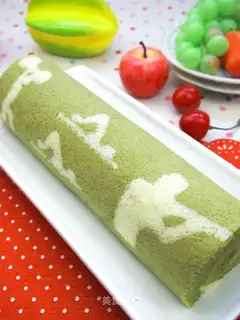
In the summer of 2012, there was an abnormally hot and sweaty day, even in the coastal city of Weihai, the most suitable for human habitation. It's one of China's coolest cities in the summer. It's been half a month since the last red flower cake roll, and I've been waiting until the weather cools. Following the opening of the Olympic Games, the day watched athletes sweating and fighting for money and silver, and finally managed to make a cake roll of the sports project. I'm going to paint it with tea, make it a green field and paint the Chinese gold project, thereby congratulating the Chinese delegation for opening the door
Recipe Recommendations
- eggs of 4
- low-gluten flour 80 grams
- fine sugar 10 grams 50 grams
- salad oil 50 grams
- milk 65 grams
- salt 1 gram
- lemon juice 5 drops
- matcha powder 1 tablespoon
- milk fragrance
- baking
- an hour
- simple
Steps for Cake roll
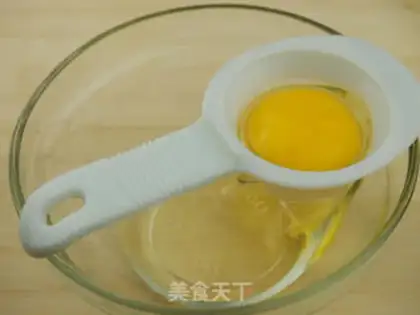
1
Separate proteins and yolk with an egg breaker (Figure 1) and be careful not to touch a thread of yolk with the egg split。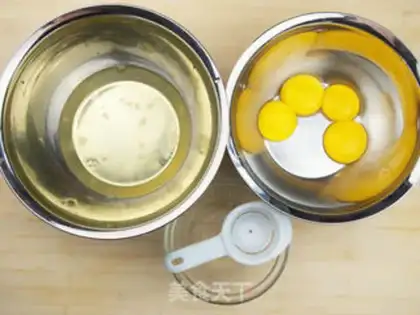
2
PROTEIN AND YOLK ARE POURED INTO THE EGG BASIN (FIGURE 2) TO ENSURE WATER AND OIL. THE POT OF PROTEIN IS A LITTLE BIGGER. THIS TIME, THE PROTEIN BASIN IS 20CM STAINLESS STEEL DEEP-DEEP, AND THE EGG YOLK BASIN 18CM。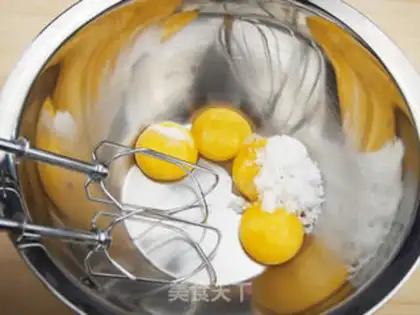
3
1 gram of salt in the egg yolk basin (figure 3). Salt makes sugar taste less sweet. Add 10 grams of fine sugar. It's even with an electric omelet。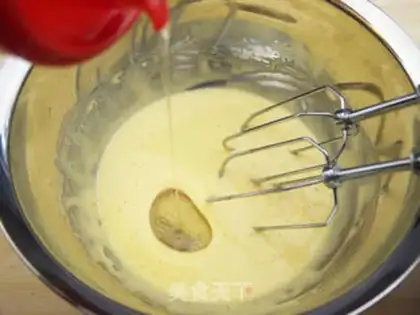
4
50 g of salad oil was added three times, each with an electric omelet (figure 4)。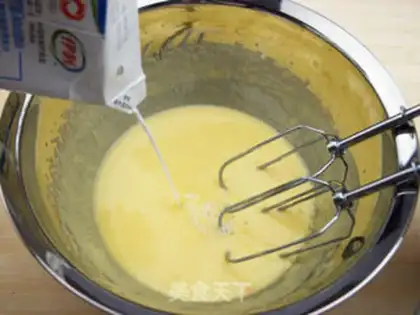
5
Sixty-five grams of pure milk were poured into the egg yolk basin (figure 5), and the mixing was even to oil and water integration。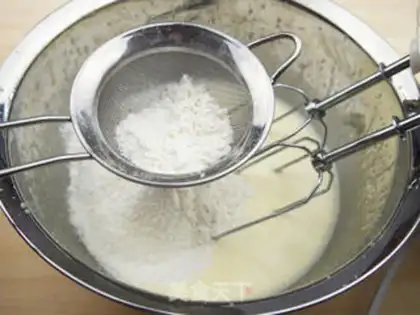
6
80 grams of low powder sift into the yolk basin (figure 6)。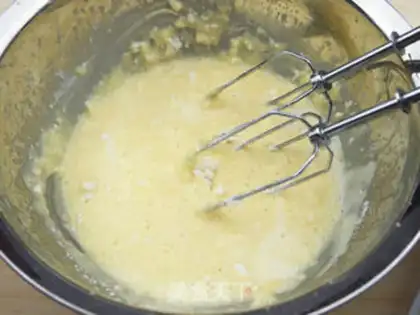
7
The Electro-Eggser is non-electrified, mixing to a state of virtually dry flour (figure 7)。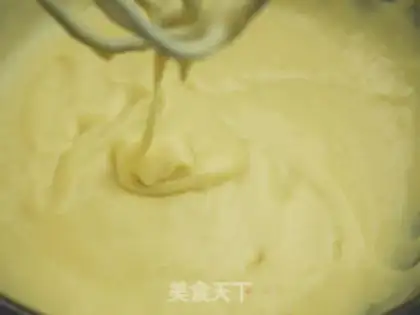
8
An electric egg-pumper is electrified and mixes into a granular-free slurry paste (figure 8)。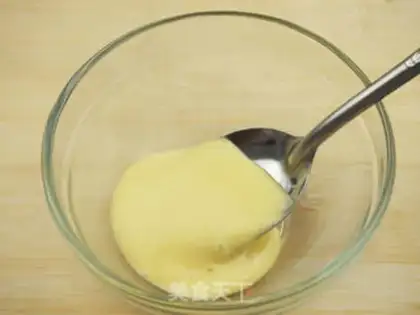
9
16 grams of egg yolk with a spoon in the bowl (figure 9)。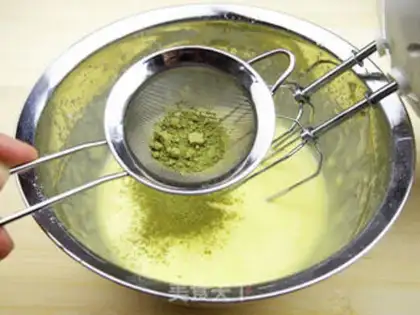
10
A large spoon of tea powder is sifted into the egg yolk basin (figure 10)。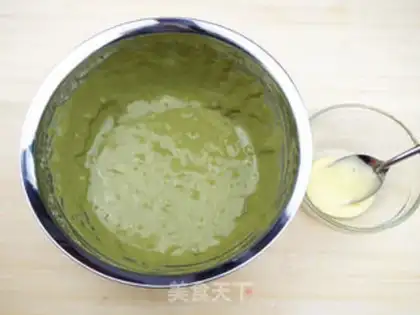
11
The electro-eggers are not electro-broken to the basic dry powder state, and the electro-broken mix is even to the non-particle-free slurry paste form (figure 11). So we get two different colours of yolk paste, and we put them aside。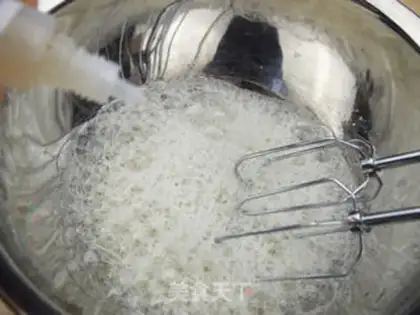
12
The protein was dispersed with an electric omelet, adding five drops of lemon juice (figure 12)。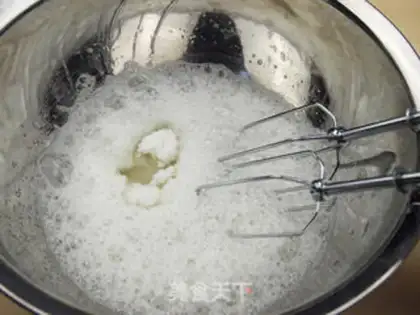
13
A third of 50 grams of fine sugar (17 g) was added to the fish eye bubble shown in figure 13。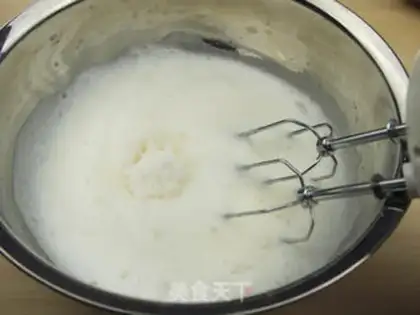
14
When the protein starts to get thicker, the volume doubles, and the thin foam (figure 14) shows, a third of the fine sugar (17 g) is added。
15
Continue to stir up the protein in a thick, surface-tangled manner, and add the rest of the fine sugar (16 grams) when the point of the protein is down on the omelet (figure 15)。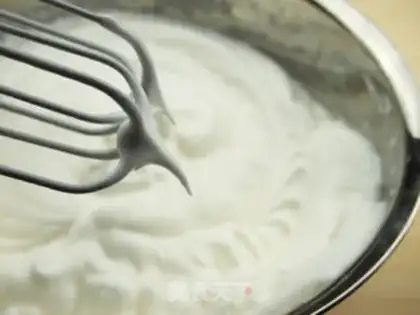
16
Continuing to stir up, the protein peaks on the egg-beater are long rather than standing (figure 16), indicating that it has reached the point of wet hair, that is, nine distributions. Make a twilight roll, the protein's on it。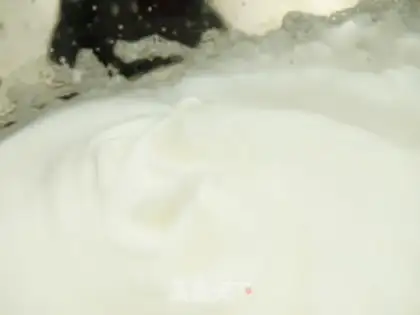
17
At this point, the protein is texture, but it is lighter and softer. Protein in the basin has a curved angle (figure 17)。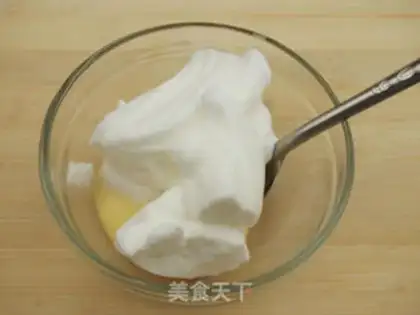
18
About twice the original yolk paste is taken in the bowl (figure 18)。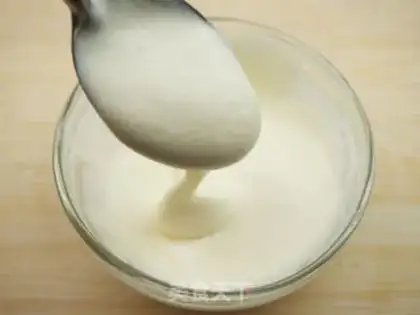
19
Crushing and cutting with spoons until the protein is fully integrated with the original yolk paste (figure 19). The mixed paste shows a relatively thick, even moon white。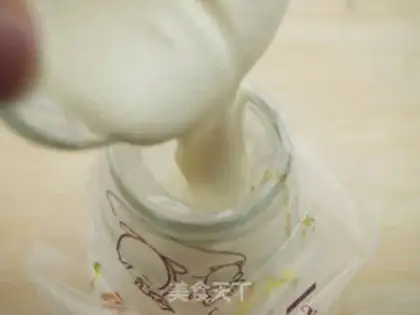
20
Take a small bouquet and put it in a wide-mouthed bottle of glass, which is partly higher than the mouth of the bottle. Pour the original cake into the bag (figure 20)。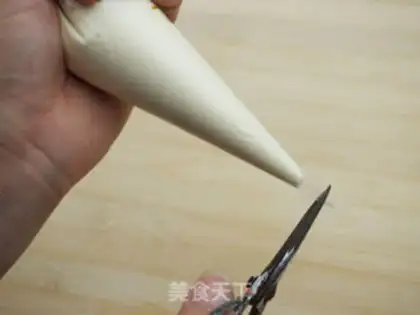
21
An open mouth of the bouquet is closed and a small mouth is cut with scissors at the end of the bouquet (figure 21)。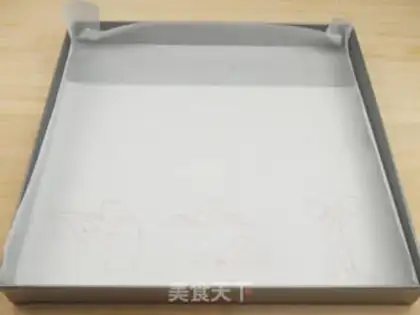
22
Paper (printing or hand-drawing, clear enough) is prepared in the oven and oil (figure 22)。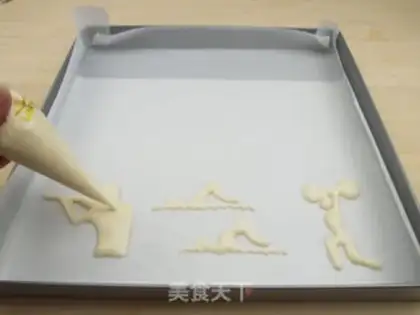
23
Hand-held bouquet (figure 23), drawings on the oil sheet。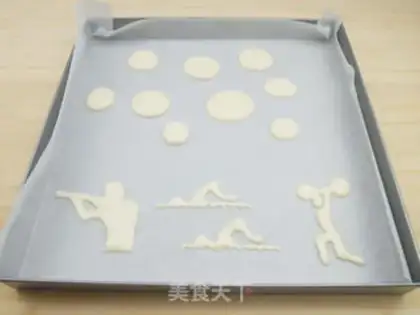
24
When the pattern is completed, the white paper with the sports project pattern that is attached to the oil sheet is extracted. The rest of the paste is free to draw a few dots in uncharted areas, which does not cause waste. Put the grill in a pre-heated oven at 180°C, bake for one minute, model。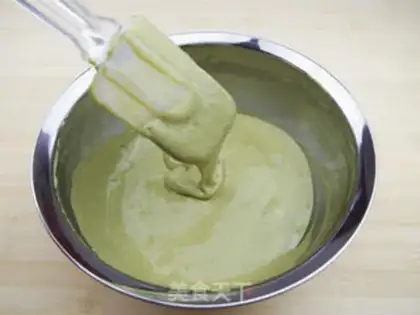
25
The baking of the sports project is accompanied by the production of tea cakes. Take a third of the distributed protein into the tea and egg paste basin. It's even with a rubber razor (Figure 25). Be careful to flip it up from the bottom, like screech, and don't circle it in order not to melt the protein. It can also be tangled。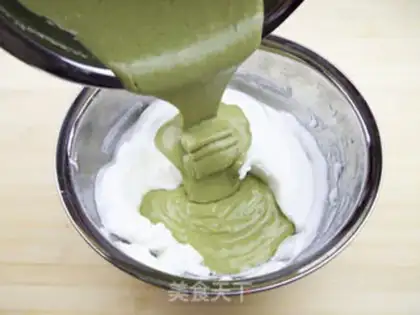
26
The condensed paste falls into the protein basin (Figure 26), flipping and cutting with the same hand, until the mixed faces of the protein and the yolk paste are fairly thick and evenly green。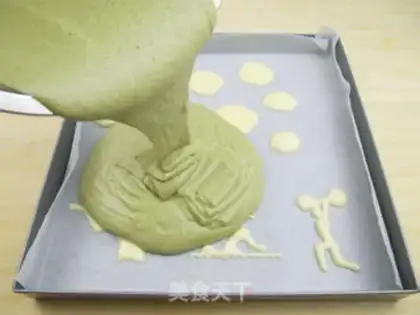
27
Sliced tea cakes are poured over the stylish sports project (figure 27)。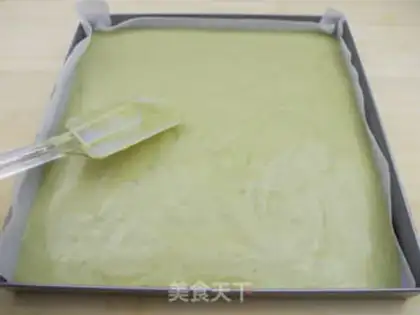
28
Scratched the cake with a rubber razor (figure 28)。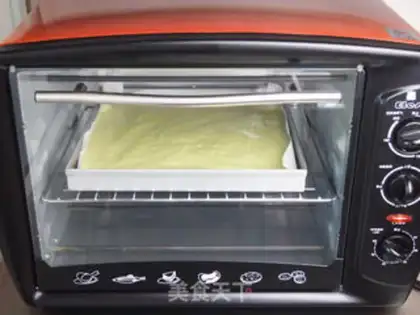
29
Hands on the grill, fall a few times, shake off the bubble. Put it in the pre-heated lower middle of the oven (figure 29), 180 degrees for 21 minutes. Scratch the skin of cake, elasticity, not sticky hands。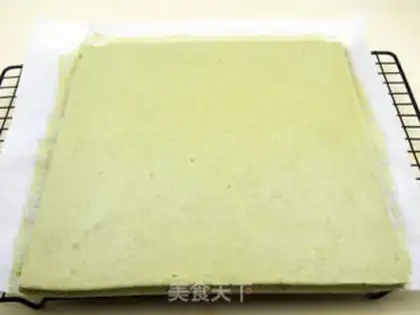
30
Take the oven out of the oven. Hands on both sides of the sheet, carrying the cake out of the oven, on the cool web, and carefully stripping the paper around it (figure 30)。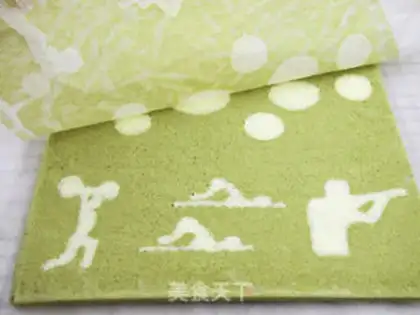
31
A piece of oil paper was placed on another cold web, and the cake was put upside down on the new one and the original one was removed (figure 31)。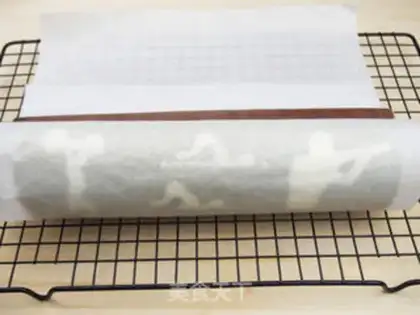
32
A NEW OILPAPER WAS LAID ON THE FIRST COOL NET, AND THE CAKE THAT HAD BEEN THROWN OUT WAS ONCE AGAIN ON THE NEW OILPAPER. ROLLING UP THE CAKE WITH A STICK OF CRUTCHES. THE SCEPTER ROLLS BACK, AND THE CAKE ROLLS FORWARD. TEN MINUTES AFTER THE SCROLLING (FIGURE 32). OPEN THE PAPER AND CUT OFF THE IRREGULAR PART。Cake roll Make Tips
1. When cutting the piping bag in Figure 21, be careful not to cut the opening too large. If the opening is too large, too much batter will flow out at once, making it difficult to control and hard to draw nice patterns. Cut a small opening first; if it feels too small, you can cut it again. If you cut it too large the first time, you will have to use a new piping bag.
2. Steps 24-26 must be performed skillfully and quickly, preferably within one minute. If you cannot finish within one minute, you can start folding the matcha cake batter first, and bake the sports pattern design when you are nearly done.
3. Figure 29: If a light tap with your finger leaves an indentation on the cake surface, it indicates the cake is not fully baked. If the cake surface cracks upon a light tap, it indicates it is overbaked and will crack when rolling. Only if the indentation left by a light tap springs back quickly to restore its original shape and is not sticky does it indicate it is baked just right. Since home oven temperatures vary, you must rely on visual observation and touch to judge whether the cake is baked. This step is very important.