Wang Chan Pear
By VicentaLakin
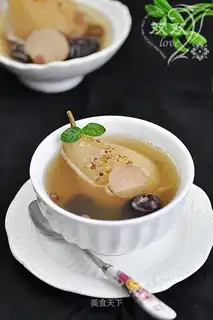
Wang Chan Pear. It's been over 500 years. It's a pear made by the king of cuisine with an ancestral recipe of centuries of history. It's a rare taste for China. Speaking of Wang Chae-pear, everyone knows it. When the night falls, the plumes of the pelican city appear, and in the night the neon lights shine, there is no emotion, and there is often a line waiting to taste a sweet pear. I've heard that there's a lot of pear to eat while it's hot, or there'll be no smell left. The effects of prepared corrugated corrugated slags, impregnated entrances, condensed sweet perfumes, soft filaments, pulmonary coughing, drinking urine, drying up, liver-breeding, and some therapeutic effects on asthma pulmonary fever and chronic bronchitis. They went for a tour last year and had the privilege to taste the pineapple. For the convenience of tourists, they have chosen plastic wrapping, about $5 for a glass and a straw to drink. Despite being pear, the entire pear was not seen in it and was completely slaged to the point of inhaling fruit and beans with a straw. There's no special feeling about the first meal, and after that, there's a strong taste, and there's still a fragrance in the mouth and there's nothing to sell when you want to eat again! It's a pity that on the Internet, we've made a bowl of our own, but we don't have the bottom soup, we don't have the raw materials, but the taste is a bit similar, and it's even more expensive, the medicine must be there. In autumn, when the weather is high, the climate dry and the air dry in the autumn is prone to lung damage, the diet of the autumn is suitably selective in the selection of healthy and fertilizing food. First of all, learn about the two-sniffed Chinese medicine used in pears: white sips: sexual temperature, sincinum. The main treatments are wind and cold, know-how for pain, live bleeding, raw muscles for pain and dry and wet belts. This is called the white "Little skin, moist colours, which can be used as a lipid" in the ancient beauty formula. Mother Kawakawa: Pain, Gyan, little cold. It's cool to cough. With these two tastes, it can be seen that Wang's pear is a bowl of good soup in autumn. Although my pear looks intact, it's completely impregnated. It's just a spoon to pick it up and take a picture. It's a spoon to the back. It's to the back. Looks like the fire's in place
Recipe Recommendations
- pear appropriate amount
- red bean appropriate amount
- jujube appropriate amount
- Angelica dahurica appropriate amount
- bulbus fritillariae cirrhosae appropriate amount
- rock sugar appropriate amount
- Osmanthus honey appropriate amount
- sweetening
- cook
- several hours
- simple
Steps for Wang Chan Pear
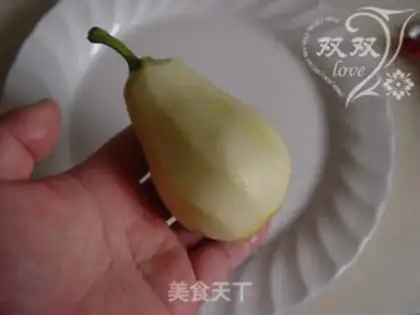
1
Pear wash, peel with a peeler。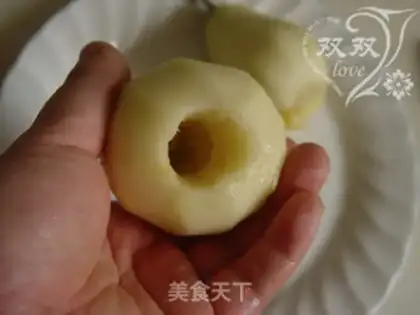
2
Dig the core from the bottom。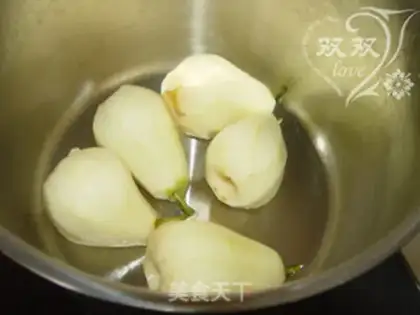
3
I'll cut the pear code at the bottom of the pot。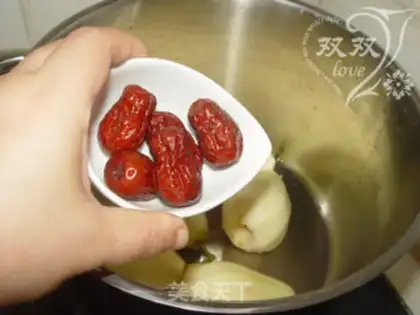
4
Put in the showered dates。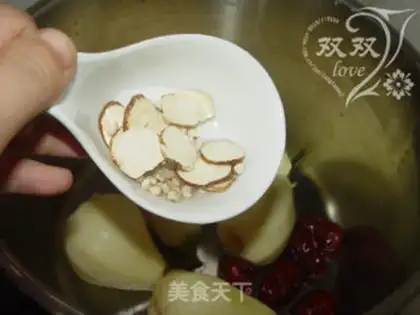
5
It's in the rinsed whites and the scavengers。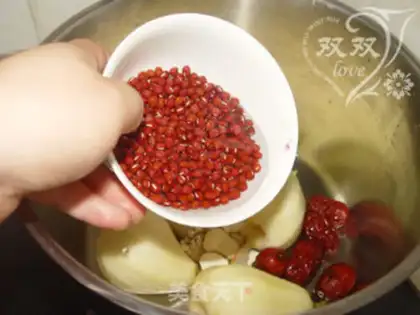
6
Put it in the washed red beans。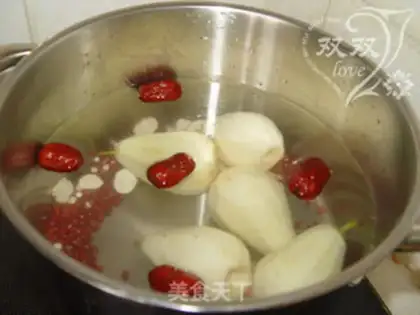
7
A full amount of fresh water。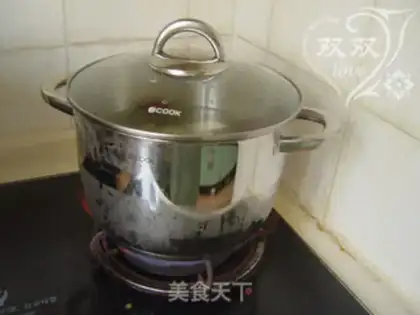
8
The fire broke open and turned into a small fire for two hours。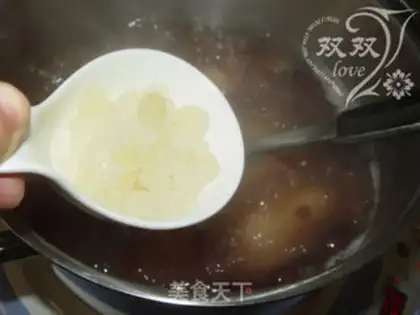
9
Add a proper amount of ice sugar。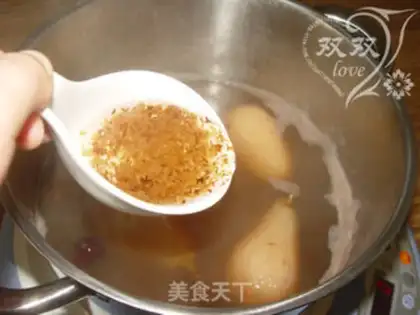
10
Add cinnamon honey。Wang Chan Pear Make Tips
1. Personally, I feel that it is best to choose pears with soft taste, which are easy to boil and crispy. The crispy taste wastes firepower and cannot achieve particularly good results.
2. The boiling time must be in place, and the pears must be crispy and rotten to the point where they melt immediately in the mouth.
3. If you like to eat it, you can leave part of the soup and use it as old soup, pack it in a crisper box, store it frozen, and put it in new soup next time to continue cooking. The taste will be better!
4. After all, Angelica dahurica and Fritillaria Cirrhosae are traditional Chinese medicines, and it is not necessary to add more. Just add about 10 grams and 3-5 grams.
2. The boiling time must be in place, and the pears must be crispy and rotten to the point where they melt immediately in the mouth.
3. If you like to eat it, you can leave part of the soup and use it as old soup, pack it in a crisper box, store it frozen, and put it in new soup next time to continue cooking. The taste will be better!
4. After all, Angelica dahurica and Fritillaria Cirrhosae are traditional Chinese medicines, and it is not necessary to add more. Just add about 10 grams and 3-5 grams.