Tastes of raw milk
By VicentaLakin
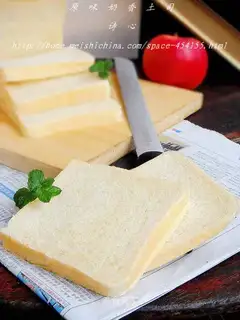
It's been a long time since I've uploaded the literature on the Department, counting the days, from the first time I've learned to make the toast, since I've learned nothing from the beginning, and now I've learned a little bit about fur, in which I've done lots and lots of toast, every touch, every progress, and I've enjoyed the joy and satisfaction in it! I love baking. I love the excitement of witnessing the slow expansion of the mantle! I like the smell of the house with my hands on it! I prefer to see the kids smiling sweetly! This square, which is the same formula that I learned to make toast for the first time, and the bread is completely two different breads. Although it was also when many of the bakers shared, and were able to do so well, they began to learn, many of the experiences that they had to do themselves to figure out. As far as I don't know what it was about, how to get out, how to split, how to shape, how to look at the whole process, how to look at things, how to look at things, what I've failed to do, what I've never given up, what I've been doing with my hobby, what I've been trying to do, almost every day since I started to bake a toast. When you realize that you're really making progress, you're still so happy and content. Today, I have made this toast more often, with particularly simple raw materials and ingredients and a high success rate. Although it does not add any ingredients, its delicate taste and taste are very popular with their families. It's very delicate, and it's good to have slices and tore with my hand, and I can't take a picture of Lassy because I don't have any help. As can be seen from the pictures, the soil is thin, and even the thin skin can draw silk. After that period of time, not only did the time for face-to-face change become much shorter, but also some small details requiring attention. So we re-recorded it, so there's a lot of steps. It's a little bit murky, too, and I hope it's a little bit helpful for the relatives who, like me, are still on the baking road. I'm also looking for more guidance from my seniors
Recipe Recommendations
- qingshui 145 grams
- salt 1/2 teaspoon
- fine sugar 40 grams
- milk powder 12 grams
- egg liquid 20 grams
- high powder 270 grams
- dry yeast 1.5 small spoon
- butter 25 grams
- sweetening
- baking
- several hours
- senior
Steps for Tastes of raw milk
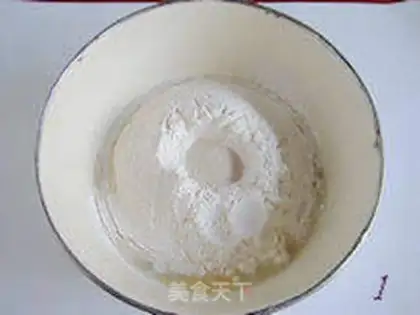
1
Take a large bowl with all the raw materials measured, add materials in the order of water, salt, sugar, egg fluid, milk powder, high powder (high powder sifted in advance so as not to add particles, salt and sugar to the corner), and finally, dig a hole in the high powder and put a yeast on it, then cover it with flour。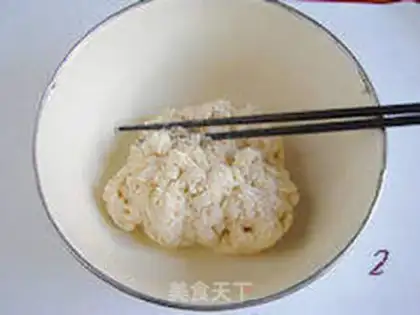
2
Put chopsticks in the same direction and mix them into dry powder-free patches. It took about half a minute。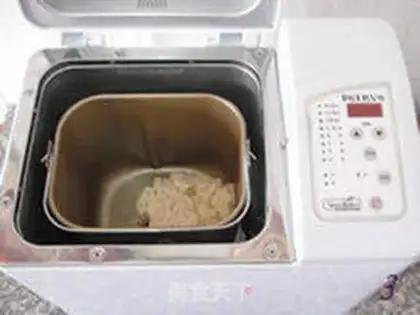
3
Add the dry-dry flour in the big bowl to the bakery。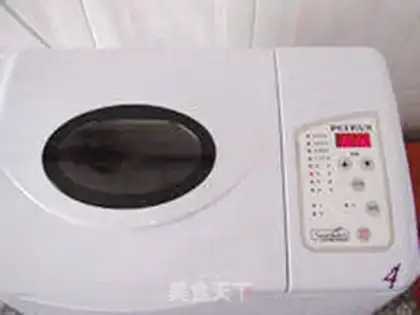
4
Cover the lid, start the face program. (A one-faced program is 15 minutes)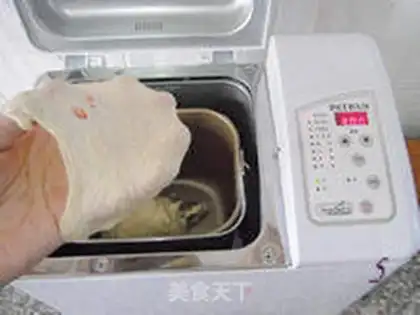
5
Following the completion of the meta-chamber procedure, the bread opportunity sends a “sweet” alarm, at which time the face is rougher, with a small section of the face tested, which, although easily extended, is easily broken, and at which point it is in the “extension” phase, where it is possible to make some sweet bread, but is not suitable for making toast。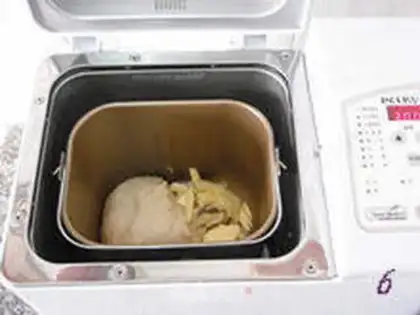
6
At this point, an early softening of butter is added, a lid is placed and a face-to-face process continues。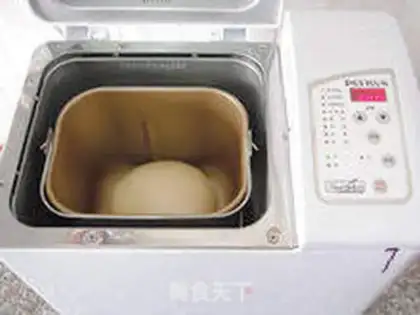
7
At the end of the second and the face, the face of the face was very smooth and delicate。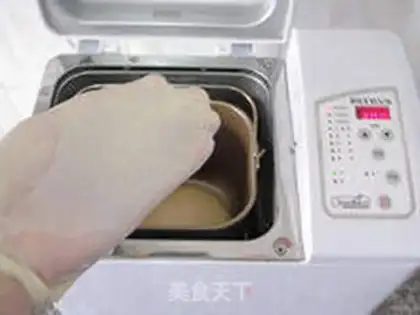
8
Take a small noodle, pull it slowly in the opposite direction with the thumb and index finger of both hands, pull out a thin film that can be easily worn on the hand, which is often referred to as the “mode of gloves”. By that time the noodles had reached the “full” stage and could be used to make toast. ♪ And the face takes 30 minutes ♪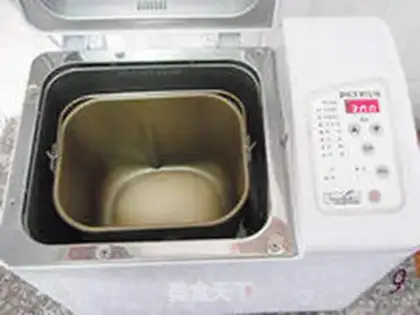
9
Put the noodles back in the bread can, with both hands。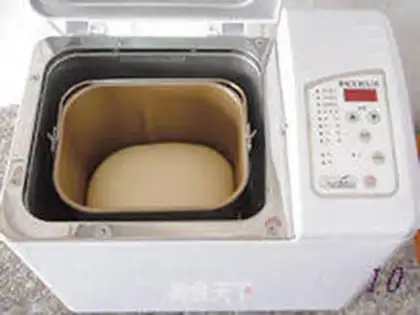
10
Cover the bread drum with a skin-covered film and then cover the bread machine (in order to prevent the volatilization of the noodle book) and ferment it to about 2 to 2.5 times its original size. (If it's winter, you can start the fermentation function of the baker, now it's just a warmer fermentation. And I usually shut down the power when I fermented with constant temperature)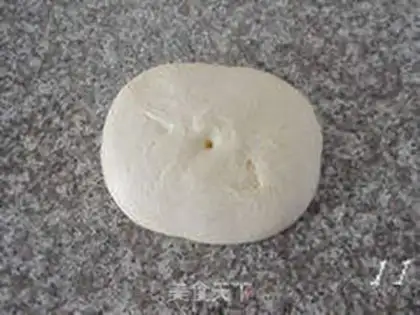
11
fermented noodles pour out the bread bucket。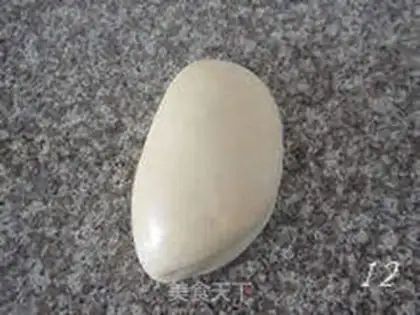
12
Put the face on the cover and press it with your hands and vent. (Because the surface of the fermented face is less sticky, so when you fall out, you turn the bottom of the face up and turn it over, press it on the original surface of the face of the face and vent it, which is better to operate)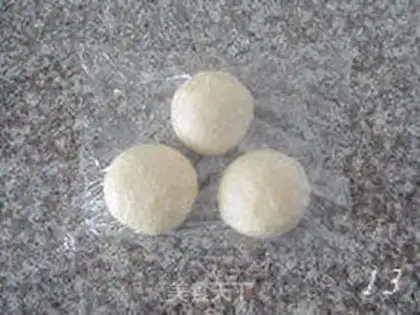
13
The excavated face group is divided into an average of three equals, rolling round, covering the film and 15 minutes of silence. (This step is generally referred to as fermentation in the middle and is intended for the rear plastics, which are more difficult to stretch if they are not awaken)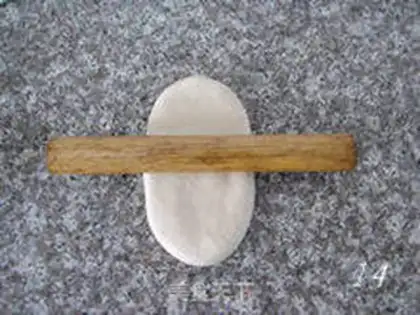
14
Take a noodle and turn it into an ellipse。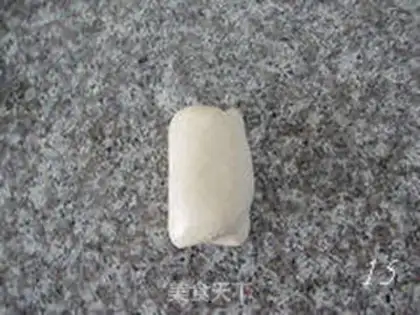
15
Turn over and fold from one third of both ends to the middle。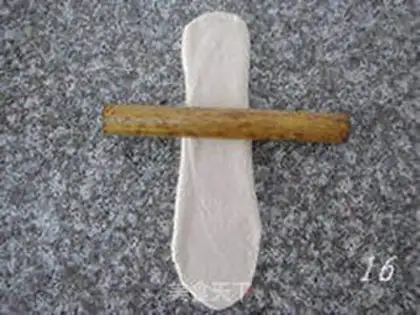
16
Open from the middle to the square, grow the bars and at the bottom. (The bottom is thin, so that the pasta in the back is sticky and steady, and if it is thick, the pasta in the back is fermented slowly after a period of time. I'm not sure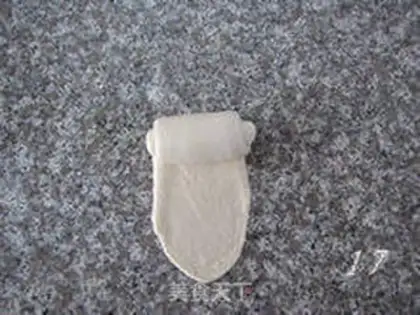
17
Good noodles from top to bottom, tight。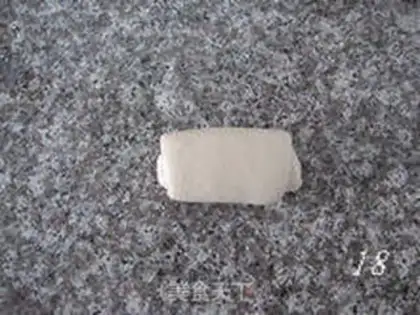
18
The rolls to the end, press gently, and the other two rolls in turn。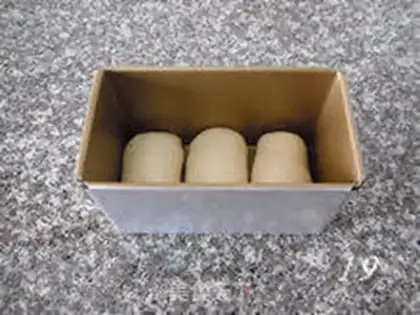
19
I'll put it in the toast box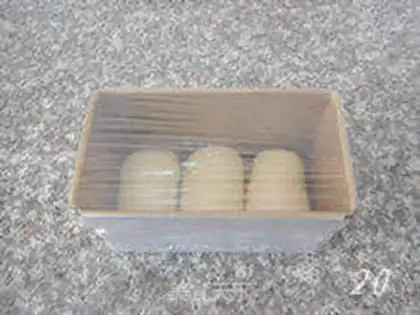
20
Cover it and put it in warm and wet for final fermentation. (It can also be placed in ovens or microwaves, and then put a bowl of hot water in them, so that a more suitable fermenting environment can be created and, if it's winter, it can be put in the oven while the fermentation function is activated to complete)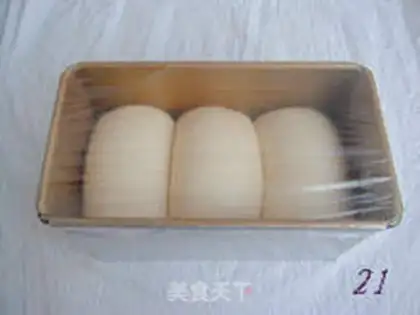
21
fermented to eight cents full of toast boxes and removed the protective film。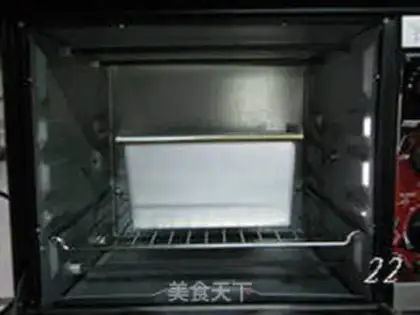
22
Put it in a pre-heat oven, 180 degrees, up and down, 40 minutes or so. (The timing is adjusted, as appropriate, on the basis of home-based oven practices)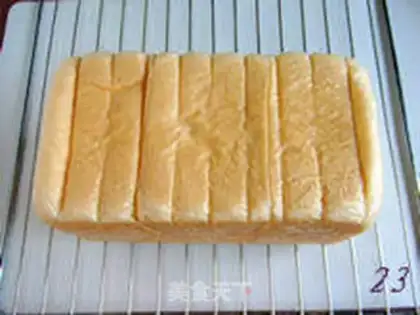
23
Roasted toast, right away。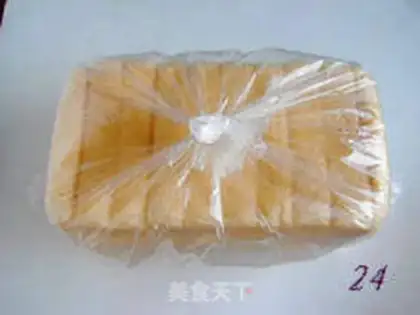
24
When it cools up to the temperature of the hand, it is packed in a bag and sliced the next morning。Tastes of raw milk Make Tips
It is a very easy toast to succeed. Although it is not the most perfect one, it has improved a lot in my baking process. Baking is not as casual and free as we usually cook. Its formula is very important and the raw materials must be precise. And there are many details that need to be noted:
1: Because the flour used by everyone is different and the water absorption of each flour is different, when trying a new formula, the amount of water should not be added all at once, but should be based on the humidity of the dough. Increase and decrease as appropriate.
2: When adding materials, the general order is water, salt, sugar, egg liquid, milk powder, high flour, and finally yeast (salt and sugar are placed diagonally). In other words, liquid is placed first and then powder is placed. Therefore, because ordinary bread makers have an appointment function, the purpose of this is to prevent yeast from coming into contact with liquid and playing its role in advance during the appointment process. If it had been stirred and made at that time, it would have been more casual. And I am used to putting it like this whether I make an appointment or not.
3: Butter is best added after the dough has been kneaded out of the fascia, that is, when the dough reaches the expansion stage, which is conducive to the formation of gluten.
4: When the temperature is high in summer, you can choose to use ice water and frozen eggs, so that the bread maker will not heat excessively during the kneading process, and the dough will not be too sticky.
5: When kneading dough, I first stir the ingredients to a dry powder state and then put them into the bread machine. This is to save the kneading time of the bread machine. In this way, two kneading procedures, that is, 30 minutes, can knead a very perfect "glove film". Of course, the power of different bread machines is different. If the two kneading procedures cannot reach the complete stage, then the kneading time needs to be increased as appropriate.
6: When testing whether the dough has a film, take a small piece of dough, not the entire dough. Use your thumbs and forefingers to slowly pull away in the opposite direction. If the method for testing the dough is incorrect, and the dough has reached the complete stage, but it is mistakenly thought that it has not yet been done. In this case, if you continue to knead the dough, you will over-knead it and cause the gluten to break.
7: Fermentation is also an important link. If fermentation is insufficient, not only will the volume of the bread become smaller, but the taste will also be dry and hard. But if the fermentation is excessive, the dough will become sour and the baked bread will collapse. During the first fermentation, the dough is usually fermented to about 2 to 2.5 times the size of the original dough. Use your fingers to dip the dough with the flour and poke a hole in the dough. The hole will not retract or collapse. If the edge of the hole collapses, it means excessive fermentation.
8: After the fermented dough, the gas inside should be exhausted, and then divided, awakened, and shaped. If there is gas left in the dough, there will be holes in the baked bread.
9: Each
1: Because the flour used by everyone is different and the water absorption of each flour is different, when trying a new formula, the amount of water should not be added all at once, but should be based on the humidity of the dough. Increase and decrease as appropriate.
2: When adding materials, the general order is water, salt, sugar, egg liquid, milk powder, high flour, and finally yeast (salt and sugar are placed diagonally). In other words, liquid is placed first and then powder is placed. Therefore, because ordinary bread makers have an appointment function, the purpose of this is to prevent yeast from coming into contact with liquid and playing its role in advance during the appointment process. If it had been stirred and made at that time, it would have been more casual. And I am used to putting it like this whether I make an appointment or not.
3: Butter is best added after the dough has been kneaded out of the fascia, that is, when the dough reaches the expansion stage, which is conducive to the formation of gluten.
4: When the temperature is high in summer, you can choose to use ice water and frozen eggs, so that the bread maker will not heat excessively during the kneading process, and the dough will not be too sticky.
5: When kneading dough, I first stir the ingredients to a dry powder state and then put them into the bread machine. This is to save the kneading time of the bread machine. In this way, two kneading procedures, that is, 30 minutes, can knead a very perfect "glove film". Of course, the power of different bread machines is different. If the two kneading procedures cannot reach the complete stage, then the kneading time needs to be increased as appropriate.
6: When testing whether the dough has a film, take a small piece of dough, not the entire dough. Use your thumbs and forefingers to slowly pull away in the opposite direction. If the method for testing the dough is incorrect, and the dough has reached the complete stage, but it is mistakenly thought that it has not yet been done. In this case, if you continue to knead the dough, you will over-knead it and cause the gluten to break.
7: Fermentation is also an important link. If fermentation is insufficient, not only will the volume of the bread become smaller, but the taste will also be dry and hard. But if the fermentation is excessive, the dough will become sour and the baked bread will collapse. During the first fermentation, the dough is usually fermented to about 2 to 2.5 times the size of the original dough. Use your fingers to dip the dough with the flour and poke a hole in the dough. The hole will not retract or collapse. If the edge of the hole collapses, it means excessive fermentation.
8: After the fermented dough, the gas inside should be exhausted, and then divided, awakened, and shaped. If there is gas left in the dough, there will be holes in the baked bread.
9: Each