Milk bread
By VicentaLakin

It's hard to make bread. First of all, it's hard work, hand-stamping to the full stage, and it's really exhausting, and many people have replaced it with a toaster to save their energy. Secondly, fermentation is a technical job, which is not fermented or overloaded, and which is not good bread. Also, the fermentation is very affected by ambient temperatures, as we are in the northeast, which are now below 5 degrees, but before heating, the house is cold enough to ferment with room temperature, which is patient and cannot take place in one day. But if there's a good tool, making bread is easy and easy. The introduction here is the use of electric omelet and noodles and the use of fermentation in ovens to produce instant bread. It needs to be noted, however, that not all electric egg-pumpers are able to meet each other, so don't rush to look at your own egg-pumper instructions and see if you can do it. I'm using an eggmaker, and the 938 series is generally good. New-style ovens are mostly fermented, and if they are not, hot water is put in the oven, which can also simulate fermentation. This approach is more helpful for those who do not have a bakery to help and face and do not want to be burdened by hand。
Recipe Recommendations
- high-gluten flour 200 grams
- milk powder 10 grams
- yeast 2 grams
- whole egg liquid 40 grams
- fine sugar 20 grams
- salt 2 grams
- butter 30 grams
- water 80 grams
- milk fragrance
- baking
- several hours
- simple
Steps for Milk bread
1
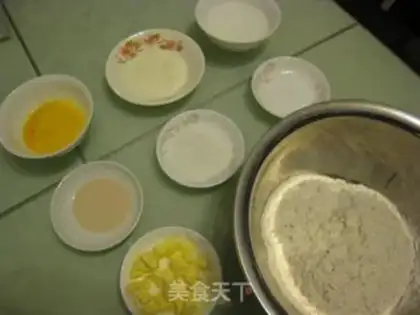
Get all the food you need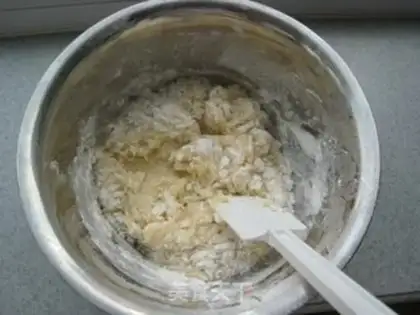
2
Material other than butter is placed in the basin. Note: Water should not be fully discharged at once, with different intakes of each flour, depending on the circumstances. Spectrum and grouping are first used with silicone razors in order to facilitate the punching of eggs and noodles。3
Read the instructions for the egg-beater and, if it has metaphysical features, select and hook on the egg-beater。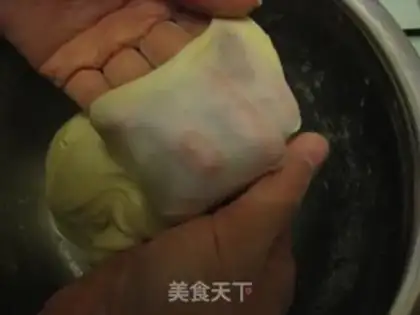
4
The noodles were always hurried at a low speed of 1 to stop for 30 seconds and rest for 30 seconds to prevent excessive load and burn of the egg-beaters. At first, the noodles were sticky, and they were on the bottom of the basin. When the dough started not too sticky, it was about three to five minutes, and it was basically an extension. At this point, the already softened butter is added, which continues to stir for three to five minutes, stopping from time to time to look at the formation of the face. A full phase is reached when a small segment is taken and slowly spread to form a thin film that is not easily broken. And face over。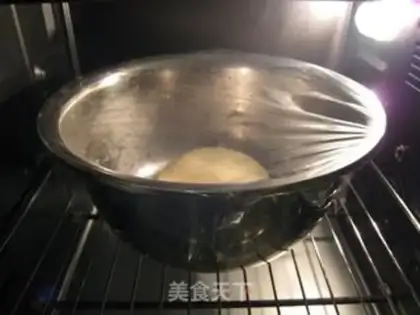
5
Put the film on the hood, put it in the oven, turn on the fermentation function。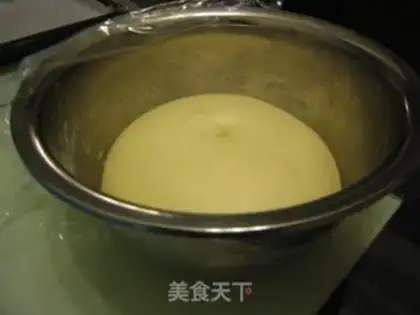
6
It fermented for about 60 minutes, and the pasta group grew more than twice as large. It shows a smooth bubble (if there is a bubble indicating that it is fermented too much), a hole is inserted in the middle with a finger on it, the hole is not convulsed and the surrounding face does not collapse, indicating that the fermentation is fermented。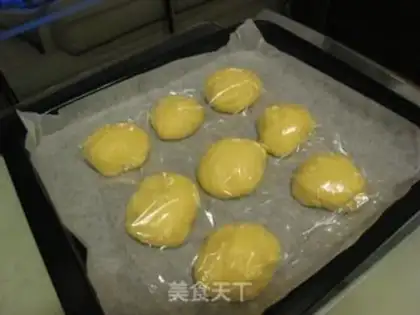
7
The noodles are removed, manually rubbed on the panel, and the air in the face is squeezed out, divided into eight equals, covered with a skin-skinned film, and awakened for 10 minutes. If room temperature is low, the noodles can be placed on the grill, the oven can be placed in the oven, and the remaining temperature in the oven can be used for the awakening。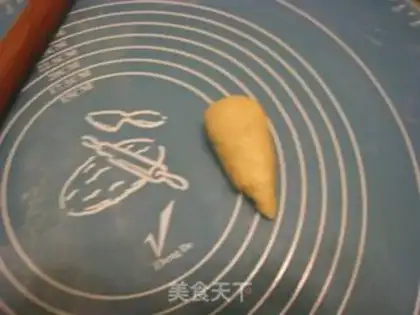
8
Upon awakening, each of the dough is rubbed into a large carrot。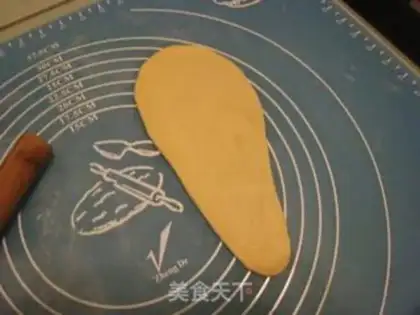
9
It's still big and small。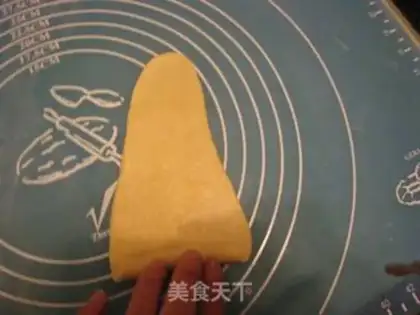
10
Start with the big face and roll it in the direction of the small。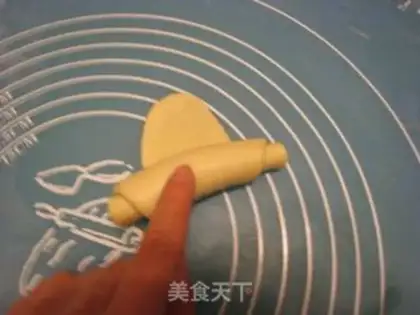
11
The face is as tight as possible and there are no gaps in the middle。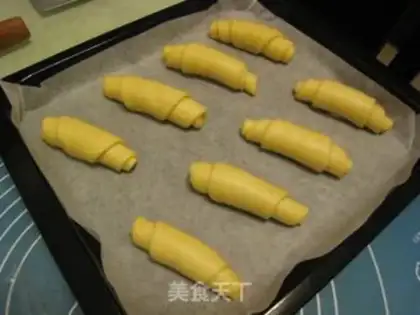
12
The small head at the end of the roll is as thin as possible and the mouth is down on the grill. (If the mouth is not down, in the course of the roasting, the face of the small head rises up and affects the shape of the bread) When it is all covered, it is placed on a board of oilpaper, with a certain distance between each one。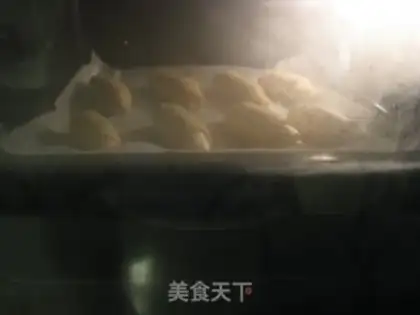
13
Put the oven in the oven, turn on the fermentation function and re-ferment. At the same time, a bowl of hot water is placed on the lower level of the grill to simulate the adaptive humidity (80 per cent) required for bread to ferment twice and to prevent the bread from losing moisture during the fermentation process. The glass is full of fog, so it's not clear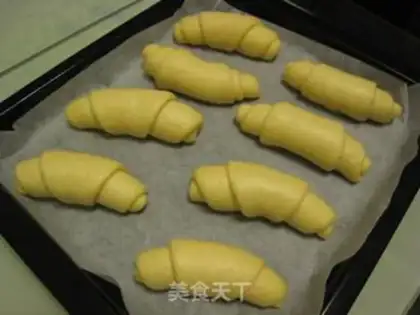
14
Hot water is replaced in a timely manner when it is cool. In about 40 minutes, the roll fermented to about twice the original volume。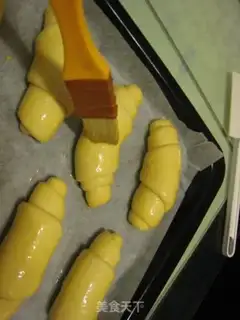
15
Remove the oven and adjust the oven temperature to 170 degrees preheat. A layer of full egg fluid on the bread surface。
16
The temperature of the surface oven has reached the pre-heated temperature when the heating tube in the oven is turned red to black. Put the oven in the middle of the oven, fire it up and down, 170 degrees and bake it for 15 minutes. (to adjust temperature and time according to the temper of each oven)
17
When it's dried, it's put in a bag or a box, and the next day it's eaten, tastes better, and the smell of milk is thicker。Milk bread Make Tips
(1) The egg beater should not work continuously for too long to avoid burning.
(2) When rolling a roll, be sure to close the mouth downwards, otherwise you will be surprised to find horns grow on the bread during the baking process.
(2) When rolling a roll, be sure to close the mouth downwards, otherwise you will be surprised to find horns grow on the bread during the baking process.