Fry shrimp
By VicentaLakin
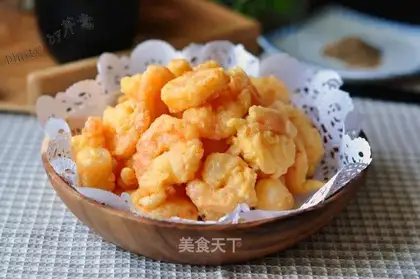
Fresh prawns, soft skins, absolutely lovely home foods, especially for children
Recipe Recommendations
- salty and fresh
- fried
- ten minutes
- ordinary
Steps for Fry shrimp
1
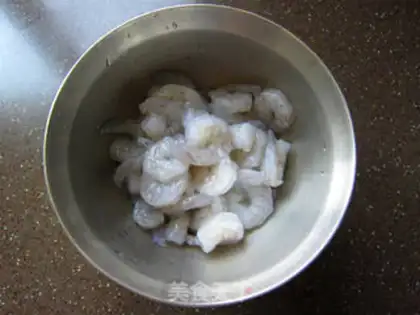
(b) Shrimp is naturally unfrozen and the line is removed (some of the high-quality shrimp is picked up, but still checked to remove the residue)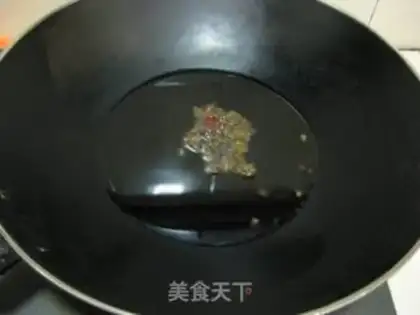
2
(b) Add salt and wine, with one-time gloves, “grain massage” (stamping) of prawns and five minutes of pickle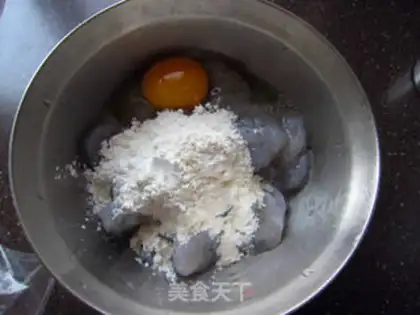
3
Add an egg and flour and dry starch; add a spoon each, adjusted as appropriate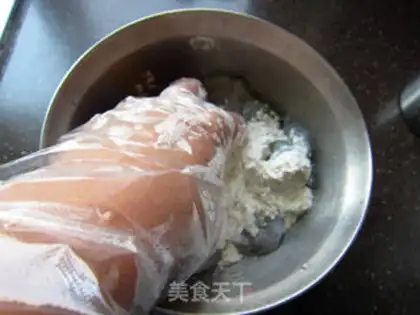
4
Continue the massage, for a longer period of time, with a sense of stickyness, evenly attached to a layer of slurry. It also adjusts the density of the slurry: it's too dry to add a little water; it's too thin to add powder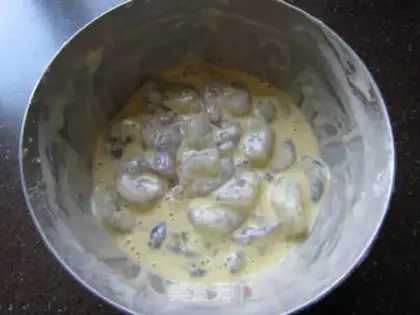
5
Hanging after state. It can't be too sticky, otherwise it's too thick to eat. When hung up, 5 to 10 minutes of silence to give prawns a break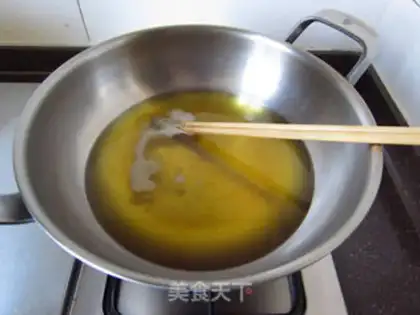
6
(a) A boiler, a fire, a hot boiler to cool the oil, and a while later, with chopsticks to test the temperature: clean, waterless chopsticks, put into the pot, if there is a small bubble around the chopsticks at a slower rate, which means that the temperature is not enough; if the bubble is large and spreads fast, there is also a fast “clap” indicating that the temperature is high; if the bubble around the chopsticks is even and spreads faster, the sound of the oil is flat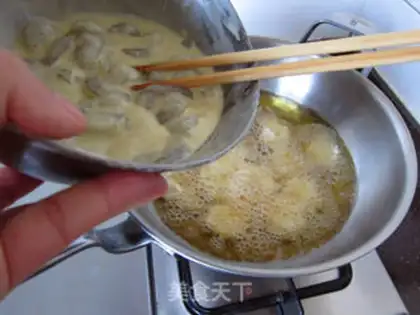
7
(b) Rapidly individualized and individually - guaranteed that it is not attached and fast - consistent maturity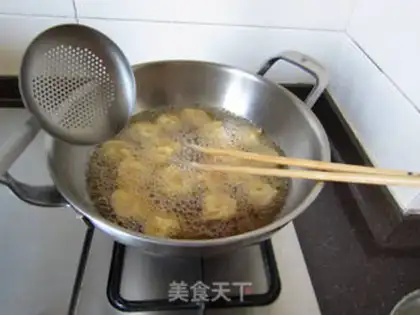
8
(b) When all enters, immediately reverse, when the colour of the gold is dim and the fire explodes for a few seconds, and quickly reverses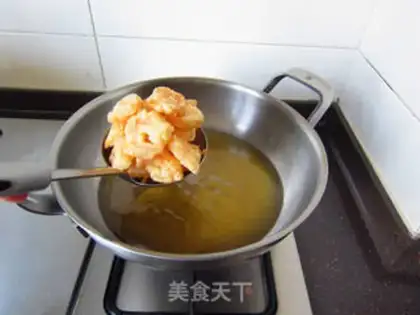
9
It's definitely golden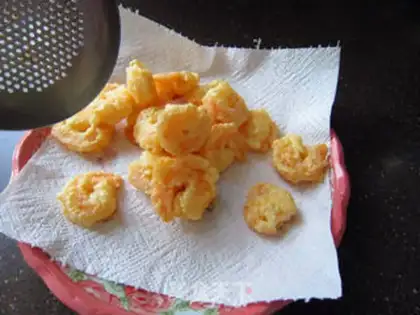
10
Put it on the suction paper and suck out the extra grease and load it to the table。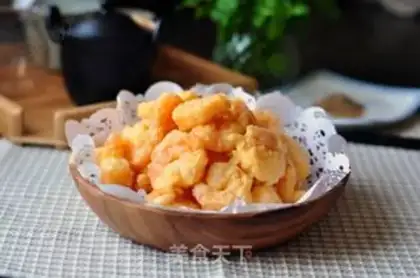
11
Get up to the table and make pepper salt。Fry shrimp Make Tips
I. Ingredient Selection: High-quality individually frozen raw shrimp. Unlike fresh shrimp, the quality of shrimp meat can basically be judged by visual inspection. The market is a mixed bag, full of counterfeits and shoddy products passed off as high-quality goods, so it is crucial to keep your eyes peeled when selecting shrimp. Generally, after natural thawing, firm flesh and a bright color indicate good quality. However, what merchant would allow you to thaw them before purchasing? Therefore, a reliable approach is to buy branded shrimp from reputable merchants. Make sure to use raw shrimp; cooked shrimp is not suitable for making soft-fried shrimp.
II. Marinating: Use seasonings sparingly. Marinate first, then coat with batter. Shrimp is naturally delicious; using too much seasoning will actually destroy its flavor, so just a little salt and a little cooking wine are sufficient. My standard practice is to marinate for a while to let the shrimp absorb the flavor, and then coat it with a batter. It is important to note that the marinating time should not be too long, otherwise the shrimp will become tough.
III. Battering: The main ingredients are eggs, flour, and dry starch. Mastering a key ratio is essential. Using eggs results in a crust that is thin and crisp, golden in color, and has a great texture. Most importantly, for the coating powder, mix flour and dry starch in a 1:1 ratio. This is the golden ratio I learned from a professional chef, and it is very reliable.
IV. Frying: The oil temperature should be slightly high; add the shrimp quickly for even cooking. Do not fry for too long. Finally, flash-fry for a few seconds and remove immediately. When making soft-fried shrimp, I generally do not double-fry. Since the shrimp is tender and cooks very easily, double-frying makes it difficult to control the heat and risks making the shrimp tough. Therefore, when frying, maintain a slightly high oil temperature at around 60-70% heat (the method for testing oil temperature is detailed in the steps). You must add the shrimp quickly. Do not fry for too long. Before removing from the pot, turn up the heat to flash-fry for a moment, then take them out immediately to ensure even cooking. A crucial point: turn off the heat only after the shrimp are out of the pot. Otherwise, the shrimp will absorb too much oil and the texture will become very greasy. The final flash-fry is also intended to force out some of the oil from the shrimp.