Red sesame rolls
By VicentaLakin
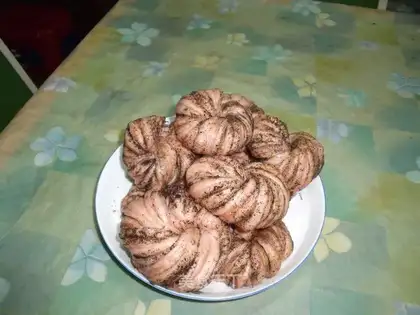
I don't think anyone's ever done it, with sesame and peanuts, and the smell of fragrance really makes you saliva, so when you smell flour, it'll mean something that's steamed. So many people ask how long it's gonna take, so the simplest way to make a pot is to smell it!
Recipe Recommendations
- medium-gluten flour 600g
- yeast 6G
- red koji paste 3 tablespoons
- water 300g
- sugar 60g
- 塩 1/4 teaspoon
- salad oil 15g
- black sesame powder appropriate amount
- peanut flour appropriate amount
Steps for Red sesame rolls
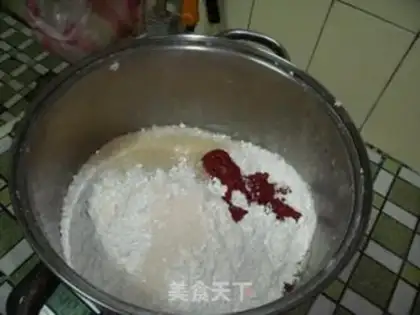
1
All materials in the basin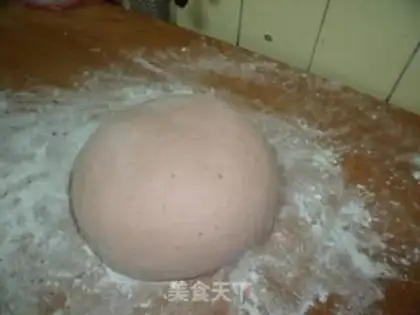
2
It's mixed into a noodle, and then it's put on the table, and it's covered with a shampoo, and it's 5-10 minutes。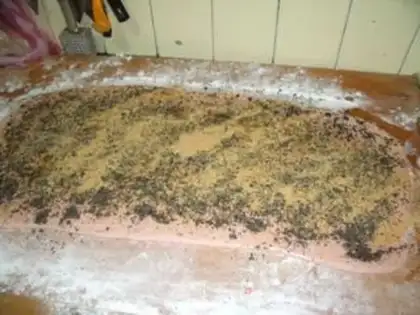
3
The silhouettes, which grow in strip form, then in thin form, are all covered in salad oil, then sesame powder, peanut powder and sugar。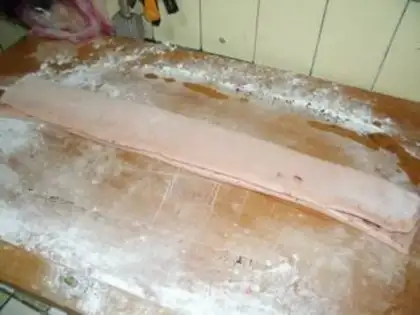
4
One third of each of them go up and down to the middle, and grow up。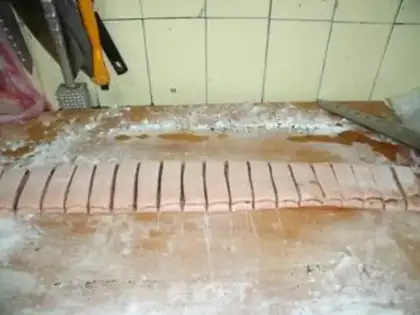
5
Cut it with a knife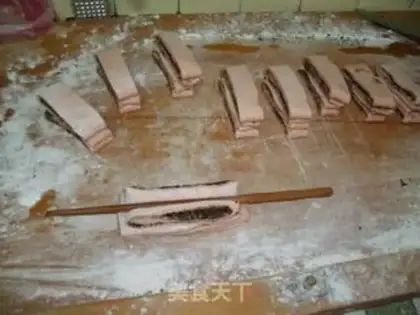
6
The two folded places, with a scratch, were down and pressed with chopsticks in the middle, but not too hard to break the face。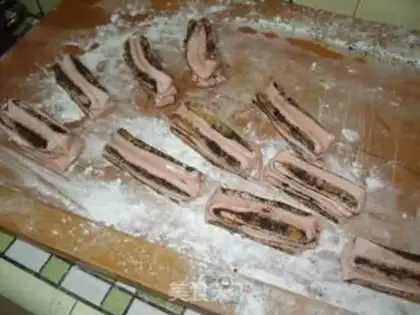
7
After each is pressed, hold for three minutes。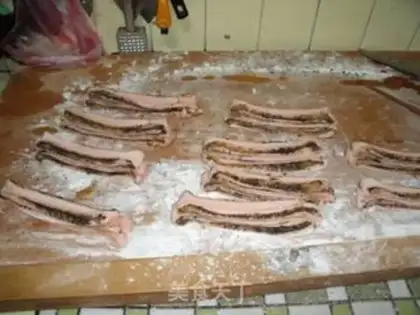
8
The silence became softer and more than doubled. Put the chopstick in the middle of the bottom, pick it up and spin it around. If you think the noodles are soft enough, you can do it twice, but it's easy to break it. Then you can stick the chopstick to the hand。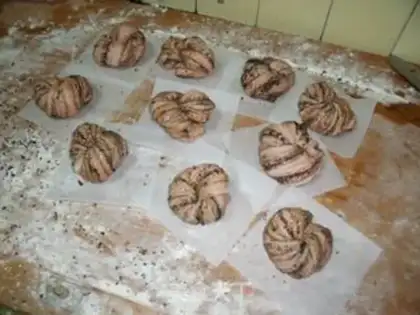
9
Sticky and put it in a steam cage, making a second fermentation for about 20 minutes。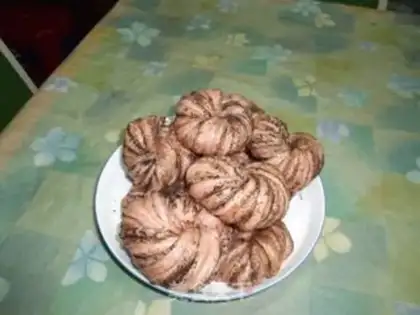
10
The water evaporates for about 12 minutes. Isn't it beautiful!Red sesame rolls Make Tips
Many people think making dough-based food is very difficult, but that is actually not the case. Especially for the first fermentation, I only let it rise for five minutes. Many people say you need to ferment for 20 minutes to an hour until the dough doubles in size, then knead it smooth, shape it, let it rest again, and then steam it. It often takes more than three hours to complete a dough dish, which makes many people afraid to try. I think the most important part of making dough food is mastering the final fermentation. Especially in winter, time cannot be fixed; you must observe the changes in the dough itself, such as it doubling in size, becoming very soft, or seeing that there is enough moisture on the surface. That is experience; if you try a few times, anyone can do it.