Hot cabbage
By VicentaLakin
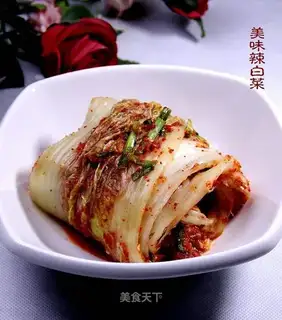
In modern life, there is a greater desire for food hygiene and safety, which is a very correct idea from a health point of view, so that people will also be more careful in their choice of food, and that is no shame. Indeed, a large number of genetically modified foods, anti-fat foods, heavy salt foods and excess preservative foods, among others, are on shelfed and marketed, reducing the choice of healthy foods. In general, when shopping and choosing foods, the intangibles allow people to take stock and accumulate common sense of selection and some knowledge related to food health, and while government departments are strictly regulated, we do have to raise some awareness about healthy foods, choosing only the right and not the only measure of price in shopping. Today, I'd like to introduce a pickled dish. There is some misunderstanding about pickles, most of which are considered unhealthy because of high levels of nitrite, which can cause cancer. It is also not entirely true that some of the long pickled dishes are not carcinogenic, but that high salty foods are still poorly eaten and, while not necessarily carcinogenic, are prone to the hardening of cardiovascular vessels, which is also detrimental to health. Pickles, if they are salted for longer than 20 days, will gradually decline from their initial peak to almost zero. Experimental use of pickles, while not carcinogenic, is also detrimental to the cardiovascular environment, especially for friends suffering from such diseases, who eat less or less. But pickled sour foods are different, and as long as they are made well and hygienicly controlled, they are healthier. It contains a large amount of lactacid that promotes metabolism in the human body, which is both appetizing and good for health. However, if there is no strict sanitary control during the pickle process, the mixing of the fungus can contaminate the raw materials of the pickle, and the bad taste can affect health. Today's first production is a spicy cabbage. This dish has already been introduced, but at the invitation of a friend, it is presented once more in detail. The most important thing about making spicy cabbage is hygiene, starting with the strict disinfection of the vessels in use and the burning and cooking of the upcoming bottle jar jars or scavengers with boiling water. If a box is used, it must be marked with a triangulation and marked with five words in the centre of the triangulation, which is a non-toxic, non-temperature-resistant container, with the market being open to South Korean imports and domestic production. The box was chosen to wash it and then put a small amount of clean water into the microwave and rotate it with a high fire for five minutes to achieve total disinfection. The pickle process, which selects the salt of small particles, is sold. It is suggested that, if you have the conditions, the pepper noodles should be made by yourself, that you can go to the market and choose some of the best pepper colours, which are pure and even, and then go home and use the scissors and mix them with a cuisine machine to grind them into pepper noodles, and that the hot cabbage is good-looking and delicious, if you don't like it too hot, and you can choose a small spicy brand of pepper, so that it tastes so hot and eats sour, salty and salty seafood with fruit and light. The reason I'm suggesting homemade pepper noodles is to prevent the purchase of fake chili noodles, which, if you don't look away, will be filled with nuclei nuclei or wheat peppers, which will probably be filled with poisons such as pigment, which will significantly affect your health and that of your family. Specific steps in the production of “spicy cabbage” are described below。
Recipe Recommendations
- Chinese cabbage 2500 grams
- Apple 200 grams
- fragrant pear 200 grams
- leek 50 grams
- garlic 120 grams
- fresh ginger 60 grams
- onion 60 grams
- Salt-free dried fish 30 grams
- coarse salt 150 grams
- white sugar 200 grams
- Homemade chili noodles 100 grams
- MSG 15 grams
- fish sauce 25 grams
- white rice vinegar 30 grams
- slightly spicy
- pickled
- several days
- simple
Steps for Hot cabbage
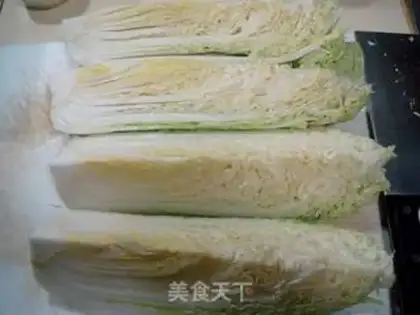
1
First, the cabbage is washed on two floors of the old gang, then the root of the prominent part of the cabbage is removed, and each of the cabbage is divided into four petals with a knife。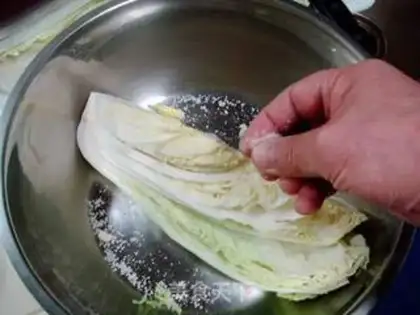
2
Each of the cabbages is slowly splattered with their hands and splattered with their hands。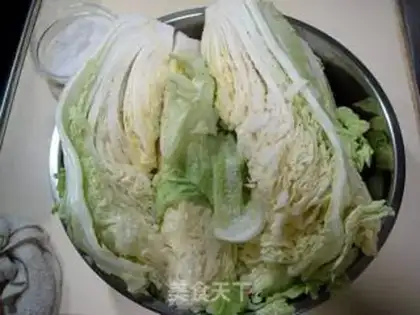
3
The salted cabbage code is placed in a large basin, with the use of a china, a porcelain or stainless steel basin, the removal of corrosive aluminium or copper basins, and the cleaning of the cabbage code with heavy lifting on it for a period of two to three days, twice during which time the cabbage is to be rolled up until it has collapsed out of the water, and longer in the summer。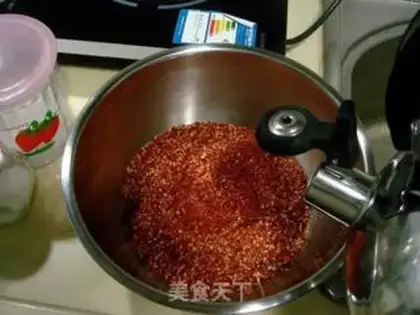
4
Putting pepper noodles in the pot with a proper amount of boiling water, about 100 grams of pepper noodles with 100 grams of water, and then absorbing the expansion into dryer form。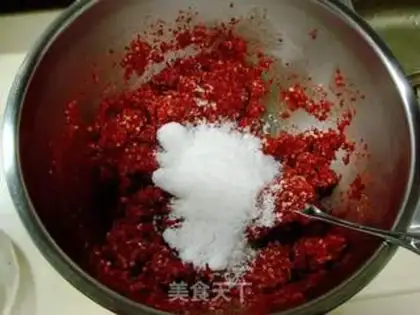
5
Burn the pepper noodles while it's hot and tasted, a little salt and sugar。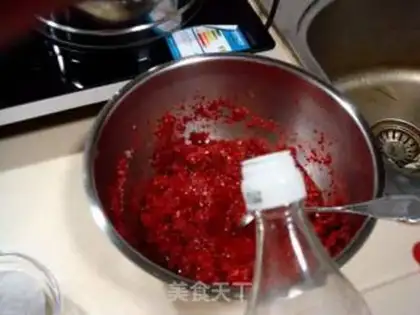
6
When the peppers are dry, they pour into the white rice vinegar and the fish field。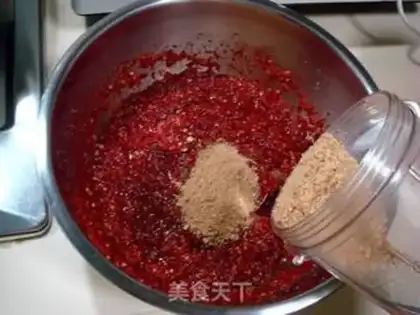
7
Dry the fish in the pot with a little fire-cooked drying and a little drying, which is mixed into a powdered pepper paste。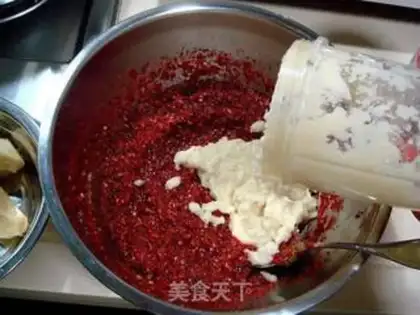
8
Smash the garlic into a paprika。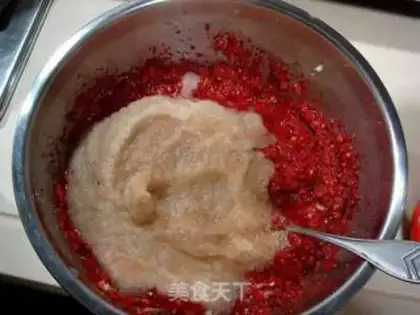
9
Slice the ginger, the onions, the apples and the pears, respectively, and mix them in the pepper paste。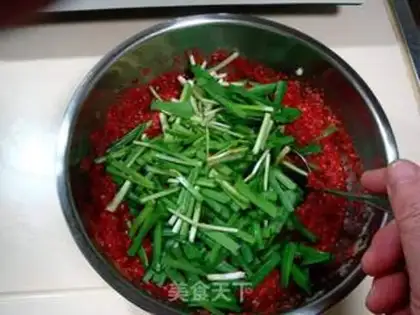
10
In the end, the cuisine wash and water-purification segment is mixed into the pepper paste。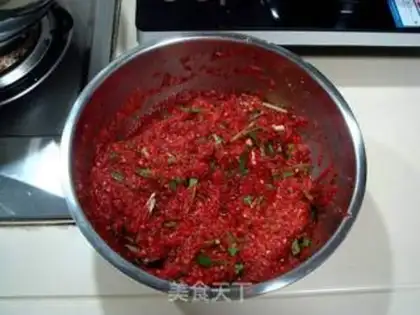
11
This is when the pickled cabbage sauce is finished。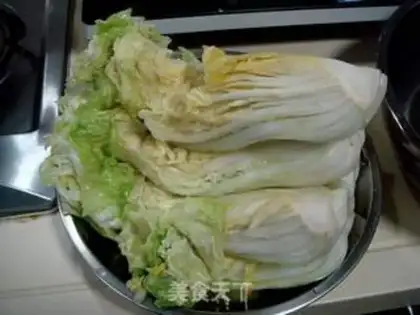
12
Hand-drink the big cabbage made of salt。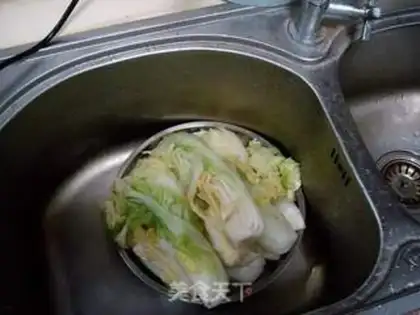
13
The water was then washed over and over again and dryed。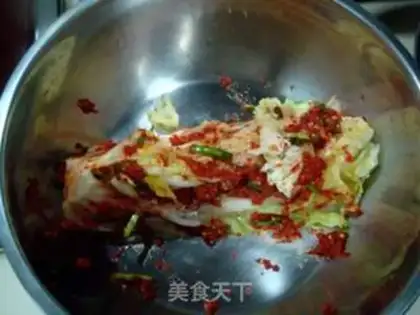
14
The sauce made of pepper paste is laminated on cabbage by hand, and every dish is painted to its advantage。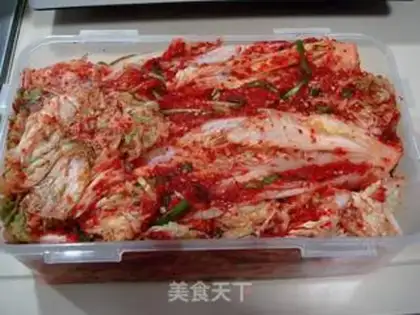
15
Then you put a full code of cabbage coated with sauce in a special preservation box。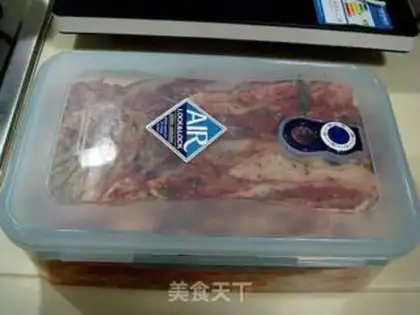
16
Finally, the cap is sealed。
17
If a container with a calendar knob on the safeguard box can record a pickled date in advance, spicy cabbage is generally made for a longer period of time, with a minimum of 20 days or more。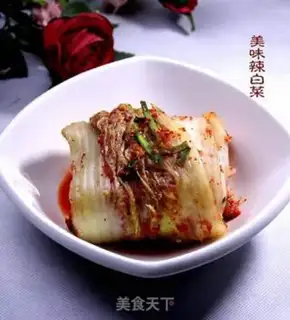
18
At this point, all hot cabbage is finished. A week later, the pickle must be put in a freezer, which can be kept in a non-transformative condition for months, and when you eat it, you must use a special disinfectant clamp or chopstick to prevent contamination. It took me eight months last year to make the pickles, which taste better laterHot cabbage Make Tips
Kimchi Characteristics: Shiny red color, crisp and fragrant taste, sweet and sour with a hint of saltiness and garlic, fresh fruity scent with a slight seafood flavor, a mildly spicy aftertaste that is very appetizing. It is versatile and can be used to cook dozens of Korean dishes.
Friendly Tips:
1. Kimchi appears to use a large amount of salt, but it is actually not salty. The sweet and sour flavors outweigh the salty taste. This is because after salting, water is extracted and it is rinsed, leaving only a faint salty taste; therefore, a small amount of salt should still be added to the sauce.
2. Vinegar is used to help the cabbage ferment quickly, so do not add too much. White rice vinegar is best to use; vinegar essence is a chemical product that tastes bad and is unhealthy.
3. This sauce is a multi-purpose marinade that can be used to make many dishes. For example, white radish, shredded kelp, cabbage, bellflower root, dried pollock or dried anchovies, dried yellow croaker, etc., can all be pickled or mixed with this seasoning. They make excellent Korean side dishes.
4. If you like Korean-style side dishes, you might as well make a larger batch at once to save a lot of trouble and tedious preparation. This type of kimchi is least prone to spoilage if refrigerated properly; it can be eaten from winter through summer and autumn without issues, provided you use a dedicated container and maintain hygiene.
5. There are many ingredients that can enhance the freshness of pickled kimchi, but it is best to choose salt-free pure dried goods. For example, dried yellow croaker, dried anchovies, dried shrimp, or crushed shellfish can all be used. They must be dry-roasted and cooked before use for the taste to be both fresh and fragrant.
6. For fruit, choose hard apples with a rich fruity flavor, such as domestic Fuji or Guoguang apples. For pears, fragrant pears are best, though other pears are also acceptable.
7. It is best not to use "Chaotianjien" (bird's eye chilies) for dried chili peppers as they are too spicy. If possible, go to a large market to select high-quality chilies with good color and variety. Grinding your own chili powder allows you to control the spiciness by mixing spicy and non-spicy dried chilies. If you can buy tomato powder, it is best to add some to adjust the color; it tastes good without being too spicy. When grinding chilies, be sure to remove the stems. The seeds can be removed or left in, but the chili powder will look more beautiful if the seeds are removed. Only making it yourself brings fun and good taste, absolutely surpassing market-bought kimchi. Market-bought kimchi is sour, tastes bad, and is not authentic; loose bulk kimchi is even less hygienic. It cannot achieve the sweet, sour, fragrant, fresh, and slightly spicy flavor profile, and others won't use good ingredients to make it. It is very likely that colorants and preservatives are added—that's for sure, haha! Big Ladle's premium quality "Kimchi" is introduced here for your reference, friends