Luffa contains B vitamins and vitamin C such as protein, fat, carbohydrates, crude fiber, calcium, phosphorus, iron, citrulline and riboflavin. It also contains saponins, a component contained in ginseng. It is a home-made vegetable in summer and autumn. It is delicious, smooth, suitable for all ages, rich in nutrients, and has medicinal value.
When eating loofah, it should be peeled and can be mixed cold, fried, boiled, made into soup or taken with juice for diet therapy. For example, the loofah is washed, sliced, blanched with boiling water, and mixed with sesame oil, soy sauce, vinegar, etc. to make cold loofah.
This year, my father planted more than 10 loofah trees in his backyard and harvested a lot. In addition to eating at home, he also gave a lot to his neighbors. "Gluttonous Music" used its own harvest of loofah to make 25 loofah dishes to form a series of loofah dishes, which are introduced one by one here for reference only for interested friends.
Garlic towel gourd
By DwightGraham
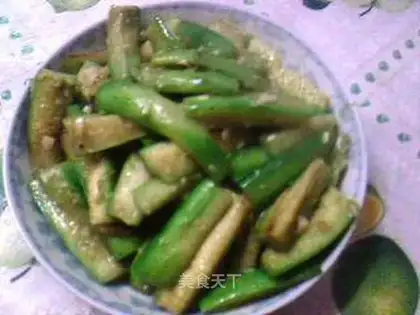
Recipe Recommendations
Steps for Garlic towel gourd
1
Peel the loofah. If the loofah is tender, you can leave fewer green skins. After making the dishes in this way, the loofah is firmer. Remove seeds from the loofah. If the loofah is tender, this step can be omitted. [The flesh of tender loofah is edible]2
Wash the peeled and seeded loofah, change the knife into inches, and cut it into strips. Chop the garlic.3
Heat the oil in the pan, add the minced garlic over low heat and saute until fragrant. Then add the loofah strips and stir-fry over low heat. When the rice seedlings collapse, it becomes soft. Season with salt and MSG.4
Stir fry evenly, and change to high heat to collect the juice. Serve the pan and plate.