Liangpi is one of the BEST3 "Summer Poetry" in my heart. I miss it very much in summer. When I was still a student, I had to eat a serving almost every day after returning to China for more than a month during the summer vacation. The kind you never get tired of eating. Later, when I worked here, I had no summer vacation, and I rarely had the opportunity to return to China during the long holiday in August. I missed Liangpi even better.
"If you don't cut it, you will still be in chaos"...
I want to eat cold rice noodles to an extreme extent. Suddenly, what a great man once said began to ring in my ears,"If you have conditions, you must go." If there are no conditions, we must also create conditions."----- I forget what the great man said, but let's just pretend that he was Grandpa Mao. Anyway, these words gave me infinite courage. Kill haha!
cold rice noodles
By SusieSteuber
Recipe Recommendations
- sesame oil 1 small plate
- vinegar appropriate amount
- MSG appropriate amount
- Oil poured chili appropriate amount
- salt appropriate amount
Steps for cold rice noodles
1
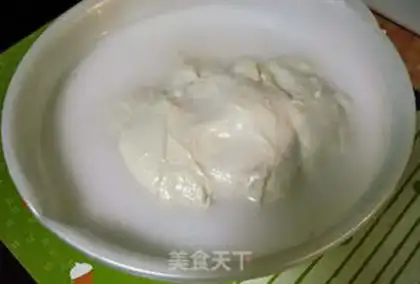
First, 1 kilogram of powerful wheat flour was prepared. Mix dough. Cover the live dough with a damp cloth and let it rest for an hour. Then put the dough into the water. Start washing your face. Just rub it around like washing clothes. The water around the dough will turn white. After the very turbid and turbid white water appears, you can change it to a basin of water and continue washing. Be sure to wash it hard. Until the water in washing the dough is less cloudy. This is what you call cleaning. The remaining dough is the material for making gluten.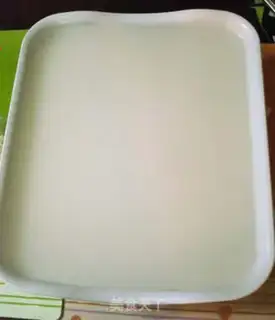
2
Don't throw away the white water for washing your face, concentrate it in a large container. This white water is the material for making dough. I couldn't put this big container in the refrigerator, so I turned on the strong air conditioner and left it on the table all night. After one night, the starch separates from the water. For those who are impatient, they don't have to be left overnight. It seems that it can take a few hours.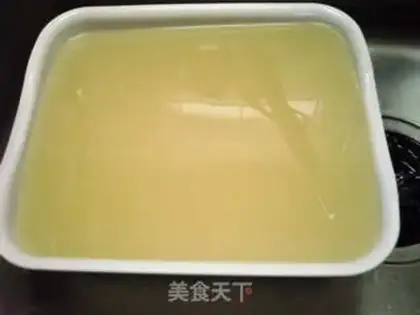
3
The results settled overnight. It's water on top. Pour it out carefully. It is best to use a large spoon to wash it off one by one. Otherwise, the water and the starch in the lower part will be re-precipitated when they mix together.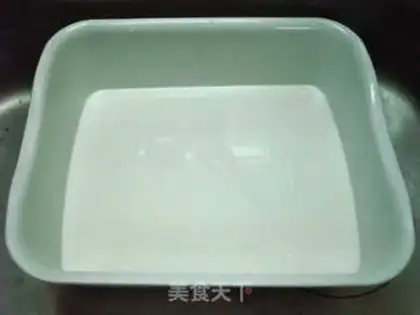
4
The state after removing the water. White flowers, this is the final material of the dough.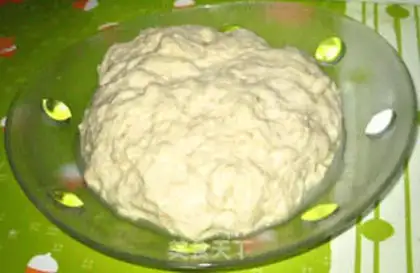
5
Washed gluten. It doesn't look good. It's riddled with holes.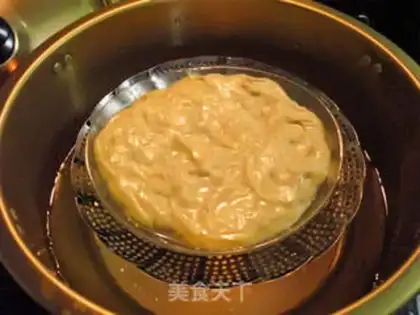
6
Place gluten in a large pot and steam for 30 minutes.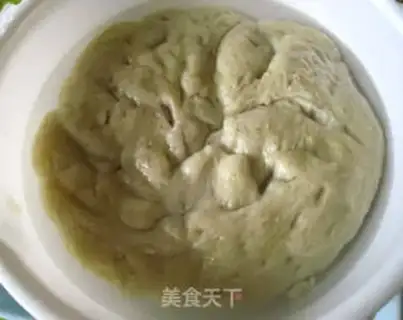
7
Gluten out of the pot. Put it in cold water. Making dough takes time. I put the gluten basin in the refrigerator.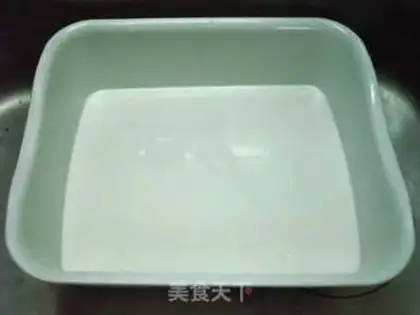
8
Continue with the starch that has just been precipitated. It's been settling all night. Therefore, some of them have been stuck to the bottom of the basin. Mix it carefully.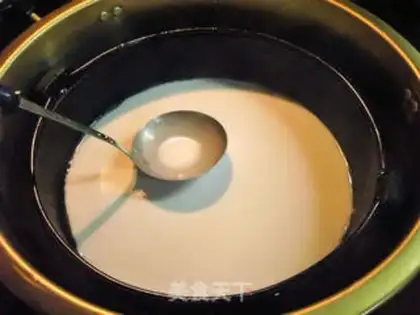
9
Prepare a small flat plate, preferably with a thin bottom. I really couldn't find the right one, so I used Sukiyaki's pot to do it. However, the bottom of the pot is too thick and takes time. Next time, be sure to find a slightly larger plate with a thin bottom iron or stainless steel. Spread the material evenly. It cannot be too thick, otherwise it will be difficult to steam. It's too thin to be easily removed. If it is an ordinary thin chassis, it will take about 3 to 5 minutes. There is a big bubble in the middle of the dough and it is ready to serve. Cover the plate with the lid, place it in cold water to cool the bottom, and then rinse under cold water. You can peel it off and place it in a tray.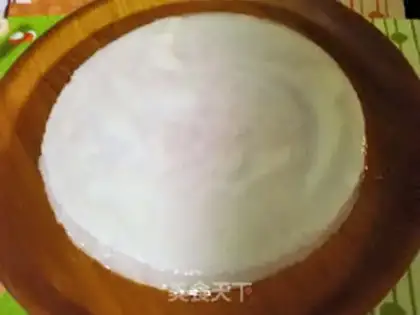
10
The steamed dough looks good. Note that the lower part of the tray should be coated with cooking oil or sesame oil. Also apply a layer on top of the dough. Otherwise, when stacked together, the two sheets of dough will easily stick together.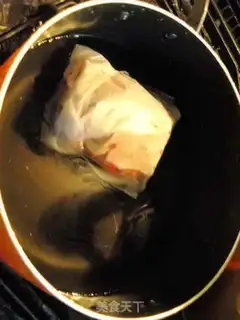
11
Prepare the seasoning. Zanthoxylum bungeanum, water and vinegar should be cooked. Put the pepper aniseed in a tea bag and add water to boil.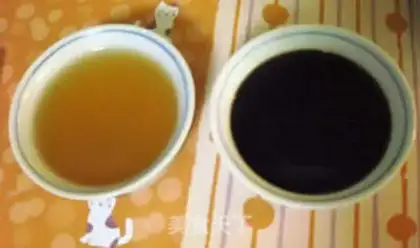
12
Let's not talk about the steps of boiling vinegar. I use Zhenjiang balsamic vinegar. On the left is the cooked pepper aniseed water, and on the right is vinegar.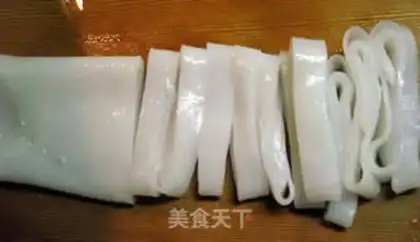
13
Fold the dough into a good cut shape and cut into strips. Then you can put in a plate of seasoning.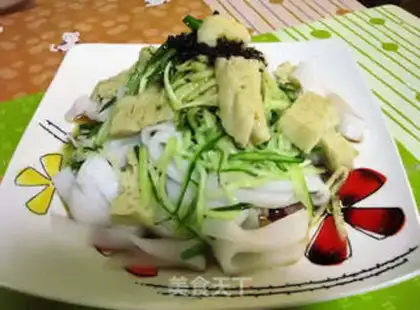
14
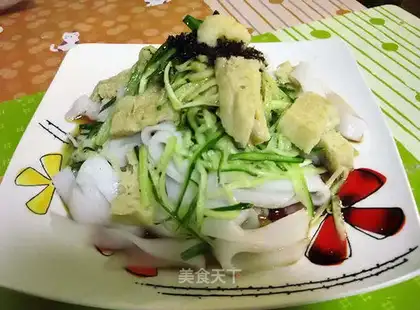
The final side dish. The most basic seasonings are vinegar, pepper, water, salt, monosodium glutamate, oil-poured chili seeds, and mashed garlic. In addition, shredded cucumber as a side dish, of course, you can also add some bean sprouts according to your preference. What else is gluten. Put the above seasonings one by one, and this is it----cold noodles! Then, salad and start eating.cold rice noodles Make Tips
1. Washing the dough is very important. It takes a long time and a lot of effort. This ensures the washed water is murky enough, and the gluten is clean enough to be chewy.
2. The washed water is used to make the noodle sheets. When pouring off the water from the settled starch, be sure to pour it out completely; otherwise, the noodle sheets will break easily.
3. The pot for steaming the noodle sheets must have a thin bottom. Otherwise, it is difficult to steam them well.
4. Gluten has many uses. After making the cold skin noodles, some gluten was left over. When boiling noodles the night before last, I cut the gluten into small pieces and added them to the noodles. It didn't feel out of place at all. It was quite tasty and very convenient.