Nadu
By VicentaLakin
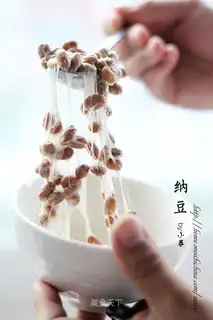
NADU IS A TRADITIONAL FERMENTED FOOD COMMON IN JAPAN, MADE FROM SOYBEANS FERMENTED THROUGH THE NAYA FUNGUS (FAST BACILLUS), WHICH IS ADHESIVE, NOT ONLY PRESERVES THE NUTRITIONAL VALUE OF SOYBEANS, IS RICH IN VITAMIN K2, INCREASES THE DIGESTIVE ABSORPTION OF PROTEINS, BUT, MORE IMPORTANTLY, THE FERMENTATION PROCESS PRODUCES A VARIETY OF PHYSIOLOGICALLY ACTIVE SUBSTANCES WITH HEALTH EFFECTS OF DISSOLVED FIBRE PROTEINS AND OTHER REGULATING PHYSIOLOGICAL FUNCTIONS. IN FACT, NADU BEGAN IN CHINA AND JAPAN USED TO CALL NADU A "ZIANG" AND THERE IS ALSO THE "ZIANG" IN THE ZHIJIANG OF THE TOWN. SINCE THE SOYA BEAN WAS PLACED IN A KEG STORAGE AFTER ITS MANUFACTURE IN THE MONASTERIES AND THEN SPREAD FROM CHINA TO THE JAPANESE TEMPLE, NADU WAS FIRST DEVELOPED IN THE TEMPLE, ALSO KNOWN AS THE “DONALDS” OR “SINATS”. THE NUTRITIONAL EFFICACY OF NANOBEANS IS SUMMARIZED IN THE FOLLOWING 14 ITEMS: (1), STRONG SOLUBILITY OF BLOOD CLOTS; (2), PREVENTION OF OSTEOPOROSIS; (3), ANTIBACTERIAL RESISTANCE; (4), PREVENTION OF HYPERTENSION; (5), INHIBITION OF HYPERGLUCOSE; (6), PREVENTION OF BRAIN CELL AGING; (7), REDUCTION OF CHOLESTEROL; (8), ADJUSTMENT OF INTESTINAL FUNCTION; (9), INHIBITION OF TUMOURS; (10), IMPROVEMENT OF DIGESTIVE SYSTEMS; (11), INHIBITION OF O-157 COLIFORM; (12), IMPROVEMENT OF IMMUNE FUNCTION; (13), INDUCTION; (14), BEAUTY SKIN ~ ~ ~ ~ ~ ~ ~ ~ ~ ~ ~ ~ ~ ~ ~ ~ ~ ~ ~ ~ ~ ~ ~ ~ ~ ~ ~ ~ ~ ~ ~ ~ ~ ~ ~ ; SO, THE NANOBEANS ARE VERY SUITABLE FOR THE ELDERLY PEOPLE, SO LET'S BE DONE QUICKLY. IT'S VERY HEALTHY. HOUSEHOLD PRODUCTION IS NECESSARY, BOTH FOR FRESH AND FOR THE BEST OF THE BEANS, BECAUSE OF THE LONG SHELF LIFE OF THE MARKET. WHEN NADU WAS INTRODUCED INTO JAPAN, NADU WAS DEVELOPED ACCORDING TO THE JAPANESE WIND AND THE JAPANESE PREFERRED TO EAT NADU. THEY EAT MAINLY THE XENNA BEANS AND THE LASNA BEANS, WHICH THE KANSAI LIKE, WHILE THE KANSAI LIKE. RATHNA BEANS, DUE TO DIFFERENT FERMENTATION METHODS, APPEAR A STICKY, NON-SALT。
Recipe Recommendations
- dried soybeans 150 grams
- white sugar 5 grams
- Bacillus natto
- MSG 2.5 grams
Steps for Nadu
1
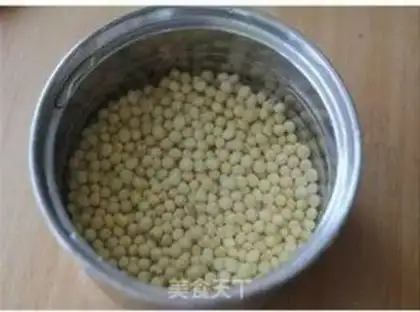
50 grams of dry soybeans are washed, 24 hours of cold water bubble, 3-4 times of water in the middle, cooled bubble hair in the fridge in the heat of the day, and clean water is the best。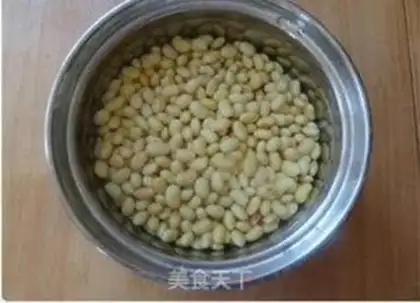
2
The soybeans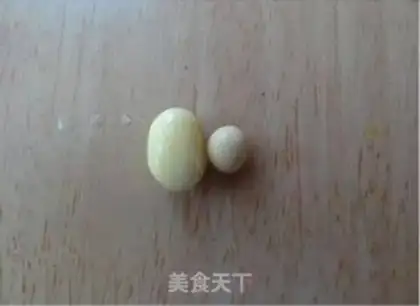
3
The soybeans和干豆的对比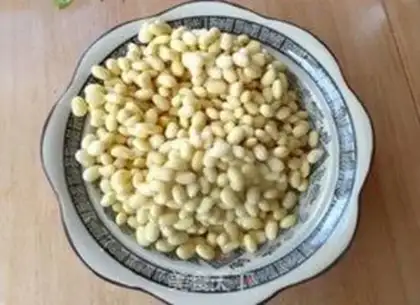
4
The soybeans滤掉水,放入干净无油的容器。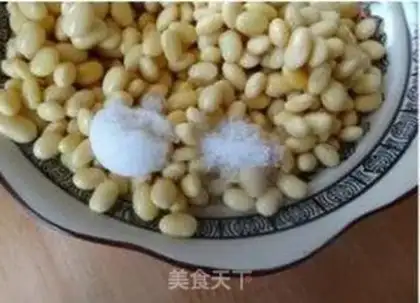
5
Put in 5 grams of sugar and 2.5 grams of flavour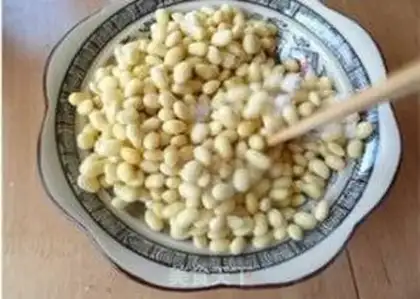
6
Smash even。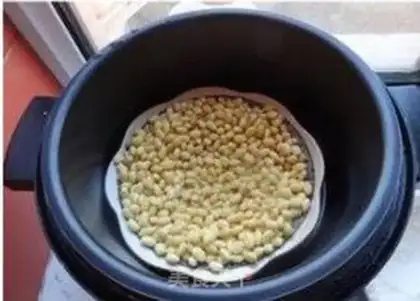
7
Put in high pressure pan steam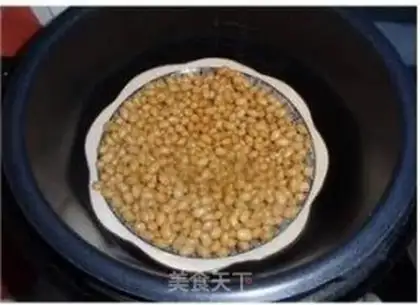
8
As soft as beans。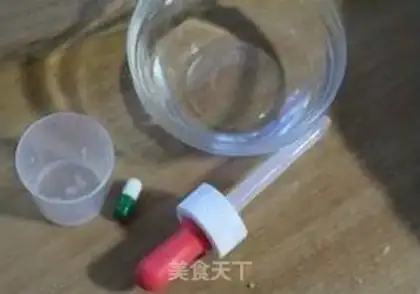
9
Equipment for the inoculation of nanobeans, pure water, nanobeans capsules, and drip tubes of scale (my baby has to be fed)。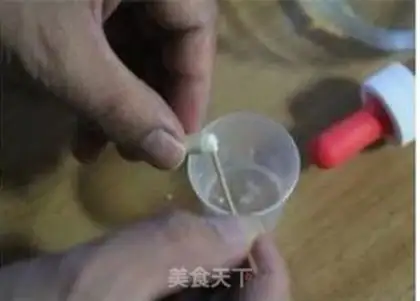
10
Give the matchhead-sized natella with toothpicks。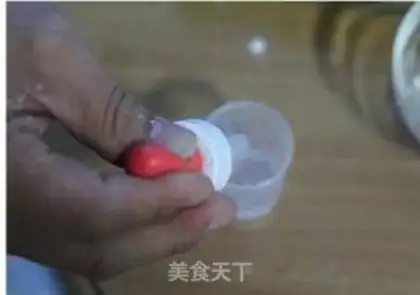
11
2 ml of pure water from the drip tube, evenly mixed with the nanobeans。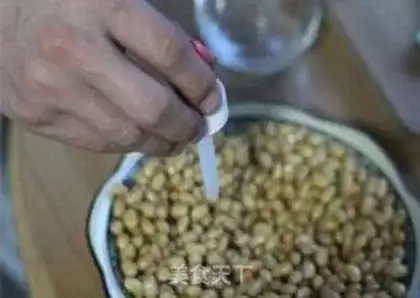
12
把混合好的纳豆菌溶液,滴入蒸好晾凉至45度左右的黄豆中,混合Smash even。这步要注意,一定要用干净的筷子,掉出来的黄豆一定不要捡起来放回去,以免混入杂菌导致纳豆不成功!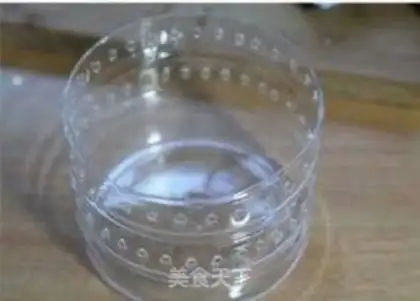
13
(c) The home-made container of the yogurt。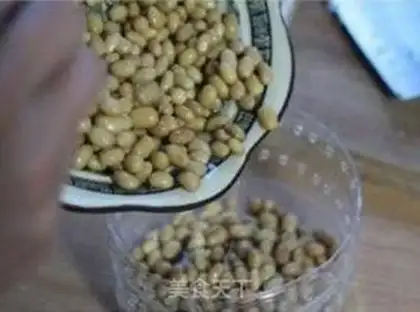
14
The soybeans mixed with the nanobeans are poured into the homemade container。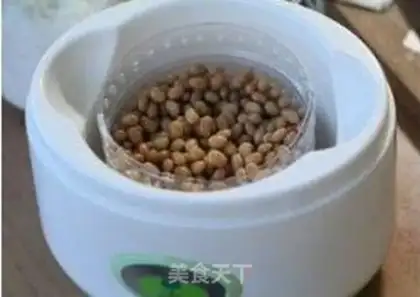
15
Packs of soybean soybean inoculation are placed in yoghurts, which pour into a little water, so be careful not to enter them。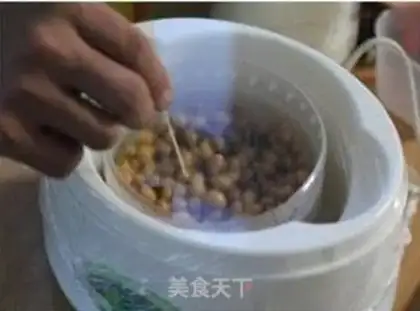
16
It is easy to breathe with a lasagna with a toothpick of about 50 eyes。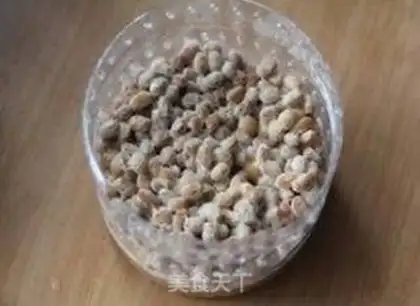
17
It ferments for 16-20 hours until it ferments to a white membrane。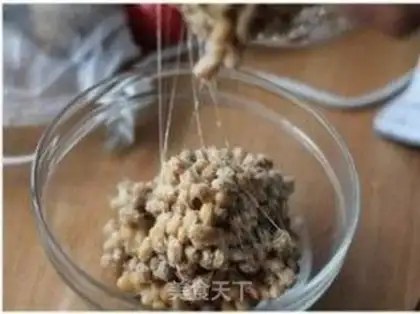
18
First fermented beans, poured into clean containers。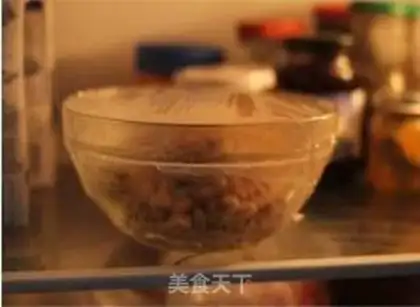
19
The film seals continued to be placed in the freezer room for a second fermentation of 12 hours。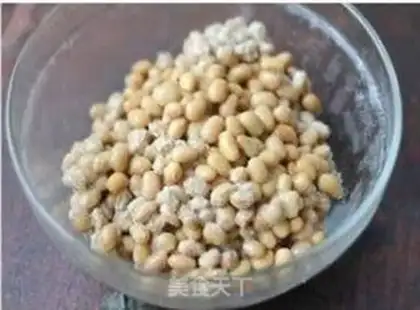
20
After a second fermentation, most of the white membranes on the nanobeans become transparent。Nadu Make Tips
* Fresh, small soybeans are best. It is recommended to use 160g of soybeans for soaking. After soaking, pick out any bad or dead beans.
* You need to control the steaming time yourself. Steam until the soybeans are soft to the bite; this makes the natto very tasty. I use a pressure cooker on the "bean and tendon" setting and steam twice.
* More natto starter bacteria is not necessarily better. For this amount of soybeans, a matchstick head's worth is sufficient, or you can use a clean ear scoop.
* When inoculating steamed soybeans with natto starter, cleanliness is crucial to prevent contamination by other bacteria.
* The container shown in picture 15 was made by me. I left a 3cm height at the bottom to prevent water from entering and poked small holes all over the top. Since natto fermentation is different from yogurt fermentation, natto bacteria are aerobic microorganisms that require a large amount of oxygen during growth and reproduction. Therefore, having many holes facilitates aeration. This is also the reason for wrapping it in plastic wrap and then poking small holes in it.
* When inoculating the natto starter, the soybeans must be cooled to between 38-45 degrees Celsius. If they are too hot, the bacteria will be killed. It is best to use a thermometer; if you don't have one, you can stick a toothpick into a soybean and test it against your wrist pulse.
* If you make a large amount of natto, it can be frozen for about 8 months. If you make a small amount, it can be refrigerated for about a week.
* Natto starter bacteria can be bought online. The amount needed is very small, so one purchase can make a huge amount of natto. If you run out of starter, you can also use fermented natto as the starter. For the amount I make, one soup spoon of natto is sufficient. Mix it thoroughly with the steamed soybeans cooled to 38-45 degrees Celsius. I have done this once, and it works perfectly.
**Precautions**
Patients with cardiovascular diseases taking coumarin-based anticoagulants should not eat natto, as the Vitamin K2 in natto can render the medication ineffective.
**Notes**
1. Eating natto for dinner is the most effective. Experiments show that nattokinase dissolves blood clots between 1 and 12 hours after consumption. Statistics show that the onset of various thrombotic diseases, such as cerebral infarction and myocardial infarction, is mostly in the early morning or on Mondays. Therefore, eating it at dinner on either night or Sunday night is best.
2. Try not to heat it. Nattokinase is heat-sensitive; its activity disappears when heated to 70℃. Therefore, eating it raw is best.
3. You must eat it every day. Nattokinase's activity lasts for 12 hours in the body. Therefore, eating 30-100g every day is ideal.
4. You can still eat it slightly past the expiration date. Natto has a shelf life of one week. During storage in the refrigerator, it continues a slow low-temperature fermentation, and nattokinase and Vitamin K2 are constantly increasing. However, although it can still be eaten after the expiration date, the natto bacteria will continuously decompose proteins to survive, resulting in an increasingly strong odor.