Hot cabbage
By VicentaLakin

Recipe Recommendations
- cabbage
- white radish 2500 grams
- pear of 3
- green onions 150 grams
- leek 150 grams
- oyster 100 grams
- fish sauce 25 grams
- shrimp paste 100 grams
- garlic 300 grams
- Jiang 150 grams
- spicy 100 grams
- Coarse and spicy 700 grams
- sugar 700 grams
- great salt 150 grams
- glutinous rice flour 100 grams
- slightly spicy
- pickled
- a day
- simple
Steps for Hot cabbage
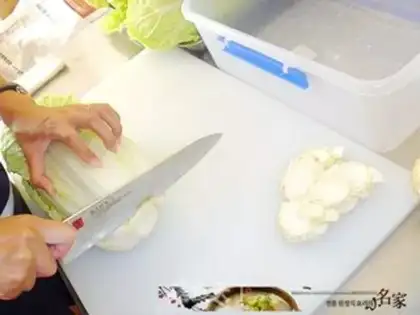
1
Take the cabbage off and take it out
2
Picked up cabbage, half of it
3
Take the old gang off the net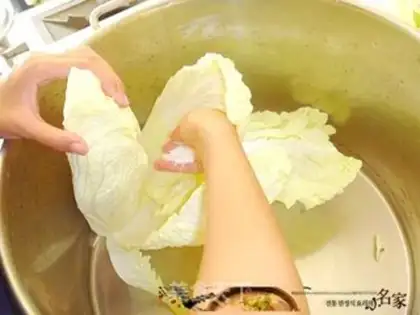
4
The cabbage salines
5
The salted cabbage is cut and placed in the container in full code. Internal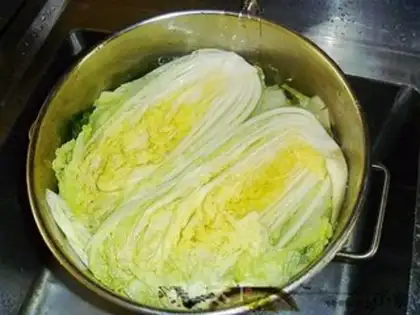
6
Water in the inner wall of the container until no cabbage overstretch covers the spare film
7
I've got a spare
8
The onion cutter's spare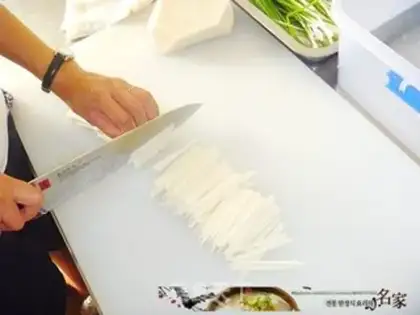
9
A spare for the pear
10
One hundred grams of platinum, 500 grams of cool water, and then the little fire is covered in cold
11
We're gonna mix the spicy, spicy, spicy, spicy salt evenly with 800 grams of boiled water
12
Smuggle all formulations evenly (no-soft particles)
13
I'm going to clean up the water-killed cabbage and rinse it down the floors with a niced pickles sauce
14
Pack up the cabbage and place it in the non-metal container in a cold seal for more than a weekHot cabbage Make Tips
1. Regarding the seasonings, note that 'coarse chili' refers to coarse chili flakes, and 'fine chili' refers to chili powder. Kimchi-specific chili powder (such as brands like Xiaohuozhu Huhu) should be used.
2. Fish sauce is relatively common. Oysters are a type of shellfish and should be used raw and chopped. If shrimp paste is hard to find, dried shrimp can be used as a substitute, but you must not use the 'smooth shrimp paste' commonly found in Chinese cuisine.
3. I once made a batch a long time ago that turned out with a very strange taste. The entire process must be hygienic, and contact with oil is strictly prohibited.
4. If you're in a hurry, you can leave it at room temperature for 1-2 days and then refrigerate it for 2-3 days. However, the flavor won't be as good as with cold fermentation. The Kimchi is typically best eaten raw between 7 and 20 days after preparation. To maintain its optimal flavor and texture, store it at -1 to 4°C (the brine may have ice crystals, but the Kimchi itself should not freeze).
5. The Kimchi brine is very useful for making Kimchi stew. The ratio of salt to sugar should be adjusted to your taste. For instance, Korean-Chinese Kimchi is saltier than Korean Kimchi, as the latter has a sweeter flavor profile.