Eight inches of windcake
By VicentaLakin
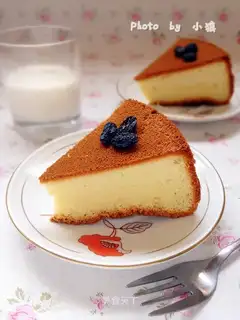
To be precise, this is my second twilight cake. For the first time, I was looking forward to making a yoghurt, and I didn't know that my hands were too busy in the process and that the formula was not accurate, and I forgot to warm up the oven, and I knew that the end of the storm had turned into an eggcake. Today, it's ready to try this crazy seven-time kamikaze cake, although it's warmer and warmer to bake, and the surface is not cracked, but because of a lack of understanding of the high temperature of the oven, which, although eventually covered with tin paper, has led to a deep surface colour of the cake and learning from next time. It's not good enough to sell, but it tastes good, it tastes soft, it's good for early or afternoon tea
Recipe Recommendations
- sweetening
- roast
- several hours
- simple
Steps for Eight inches of windcake

1
Separate yolk and protein. The mix of yolk and milk, 20 grams of sugar, corn oil and salt is even。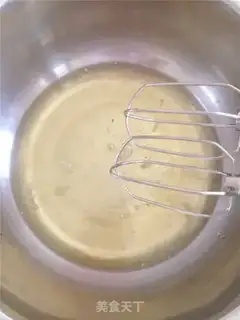
2
The container for the egg is free of water and oil。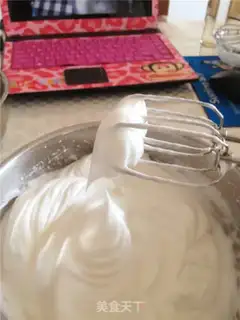
3
The proteins are added to 50 grams of sugar with an electro-pumper from a low to high speed to a hard hair bubble, and the low angle of the protein in the map is not allowed to make twilight cakes。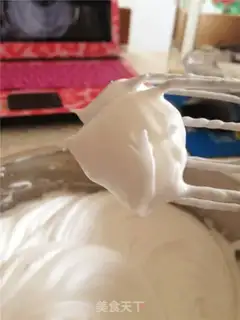
4
About five minutes later, the fine print of the protein was very visible, it felt heavy when it was strewn, and the angles of the protein were short and straight, i.e. it had reached a very high level of rigid hair bubbles, which could not easily be broken in a round。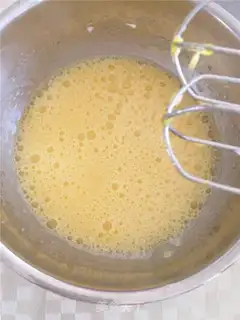
5
The mix of egg yolk was evenly tuned with a low-speed eggbeater. We're going to turn the oven to 150 degrees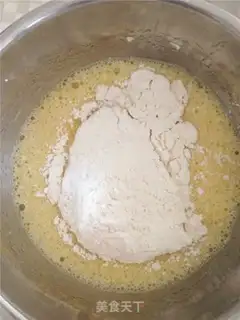
6
It was poured into sifted low powder, which was evenly tuned to non-particle form with a manual omelet。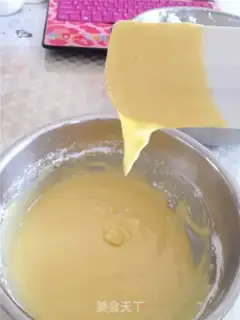
7
The mixed yolk paste is very delicate, very fluid。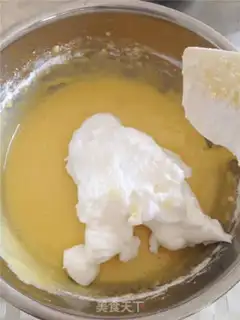
8
Take one third of the protein cream and add an even mix within the yolk paste。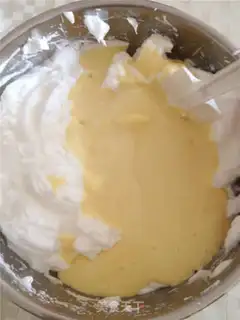
9
And then back to the two-decision three-protein frost, which is evenly mixed。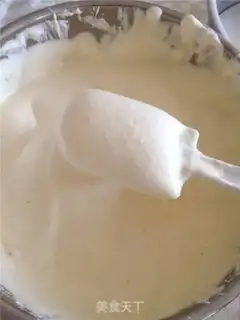
10
This is a crucial step, and it is important that the protein cream and the yolk paste be evenly mixed, and that the final state is delicately smooth and comfortable. It's almost the same time as the time when the protein was passed. As long as the protein is in place, don't be afraid it will melt
11
Put the cake in the mold, fall a few times up and down, shake the bubble。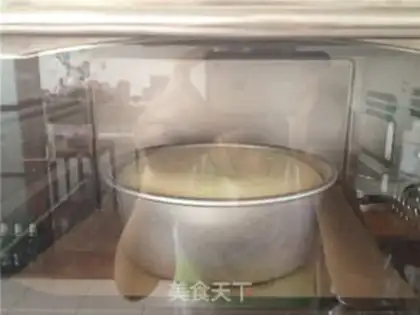
12
The oven baked at 150 degrees for 30 minutes, at which point the face of the cake was white。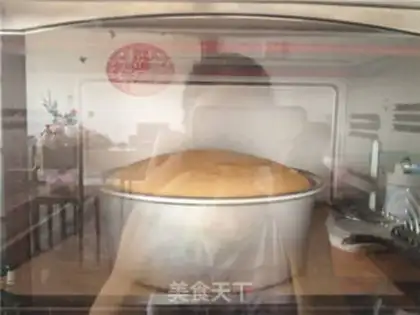
13
Turn 170 degrees and bake for 30 minutes. When the oven is baked, a light fall up and down, and a 30-minute slip, the cold cake takes the edge out of the mold with its hands and removes the bottom of the cake with a machete。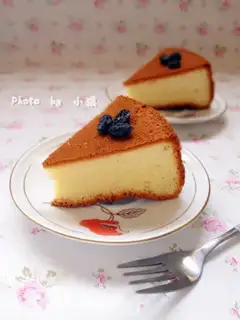
14
Cutting through the tissue is delicate and soft is flexible。Eight inches of windcake Make Tips
A Discussion on the Causes and Solutions for Sinking or Not-Risen Chiffon Cakes
1. Too much oil or water in the recipe, without the appropriate amount of baking powder, will cause the cake to collapse under its own weight, just like not inverting it in time. Solution: Adjust the recipe.
2. The batter develops gluten, causing it to shrink after cooling. Solution: Use cake flour, or a blend of 80% all-purpose flour and 20% cornstarch. During the process, be careful: do not overmix the batter before adding the egg yolks—just 6-7 whisks is fine; it's okay if it's not even. After adding the yolks, mix a little longer until you have a smooth, thin batter. When combining the yolk batter and the meringue, fold gently from top to bottom, rather than stirring in circles.
3. Meringue Deflation: Insufficient whipping, stopping and then continuing, whipping for too long, or adding sugar at the wrong time can all make it hard to achieve stiff peaks. This creates an unstable meringue that is prone to deflating, reducing air pockets and decreasing the batter's volume. The cooled cake will then shrink. A deflated batter can separate, forming a pudding-like layer during baking, which is another possible cause of shrinkage. Solutions: a. Ensure your beaters and bowl are spotless, with no trace of water or oil; copper or stainless steel bowls are ideal. b. Use fresh, chilled eggs. Separate the yolks and whites meticulously, ensuring no yolk contaminates the whites. c. Adding sugar, white vinegar (or cream of tartar), and cornstarch aids in whipping and stabilizes the foam. d. Start whipping at low speed. Once coarse bubbles form, add one-third of the sugar, white vinegar (or cream of tartar), and cornstarch, then increase to medium speed.
4. Inadequate mixing of the yolk batter, insufficient emulsification of fats, uneven folding of the yolk batter and meringue, or meringue deflation as previously mentioned, all cause denser components to sink. This results in a pudding-like layer after baking and prevents the cake from rising. Solution: Master the folding technique—be gentle and quick, but ensure everything is mixed thoroughly.
5. Using a non-stick pan, greasing the sides, or failing to clean the pan's inner surface, leaving an oily residue, all result in poor adhesion. This prevents the batter from climbing and rising during baking, so the cake never achieves its full height. Solution: Refrain from using non-stick pans and ensure the pan's inner surface is free of any oil.
6. Excessive bottom heat can cause the bottom of the cake to shrink upwards. When inverted and removed, the bottom will appear concave, forming a crater-like depression. Greasing the bottom of the pan might also contribute to this problem. Solutions: Lower the bottom heat, place the pan on a higher oven rack, place the pan on a baking sheet, or reduce both top and bottom heat.
7. Stopping the bake before the cake is fully cooked is another common cause of shrinkage. Solution: Bake the cake completely. If you're concerned about the surface browning too much, you can lower the oven temperature and extend the baking time, or cover the top with aluminum foil (without sealing it to avoid steaming). The common way to check is the toothpick test—insert a toothpick and ensure it comes out clean. An experienced baker can also gently tap the surface; it should spring back without leaving a dent and should not make a sandy sound.
8. The temperature drops too much during baking...