Bitter melon is a polarizing vegetable in folklore; many people are fond of it, while others avoid it. However, it was the great Ming Dynasty medical expert Li Shizhen who truly gave it a prestigious reputation, calling it a "first-class melon" and a rare anti-cancer gourd. Bitter melon's momordicin is hailed as a "fat killer," and its fresh juice contains momordicoside and insulin-like substances that effectively lower blood sugar, reducing the intake of fat and polysaccharides. In addition, bitter melon can lower the incidence of liver cancer.
Bitter melon is rich in dietary fiber and vitamin C, with nearly three times the amount found in tomatoes. Vitamin C is an excellent antioxidant that can improve the body's stress resistance. The active ingredients in bitter melon can inhibit the cancerous transformation of normal cells and promote the restoration of mutated cells, possessing a certain anti-cancer effect and reducing the risk of liver cancer.
Modern Western medicine has proven that the anti-cancer effect of bitter melon comes from a quinine-like protein, which is an active protein that can activate immune cells. Acting as a "middleman," these immune cells then kill cancer cells or other abnormal cells. Bitter melon seeds contain a protease inhibitor that can inhibit tumor cells from secreting proteases, thereby suppressing the invasion and metastasis of cancer cells.
What other vegetables have anti-cancer effects?
1) Eggplant: "Frost-bitten eggplant" is a good medicine
Fish-flavored eggplant
In many traditional Chinese medicine formulas and folk remedies, "late autumn old eggplant" and "frost-bitten eggplant" are often used. A growing body of evidence shows that eggplant has anti-cancer functions. An experiment once extracted a non-toxic substance from eggplant that proved effective in treating stomach and cervical cancer. Additionally, eggplant contains various alkaloids such as solanine, cucurbitacin, stachydrine, choline, perilla glycoside, and nasunin. Among these, solanine and cucurbitacin have been proven to have anti-cancer properties. The eggplant flower, calyx, root, and juice are all considered beneficial medicines, with ancient records using eggplant root to treat tumors.
Eggplant is also rich in nutrients. Except for slightly lower levels of vitamins A and C, its other vitamins and minerals are almost comparable to tomatoes, and its protein and calcium content are even three times higher.
2) Kelp: Can prevent breast cancer and thyroid tumors
Sautéed shredded kelp
In traditional Chinese medicine, kelp is known as "Kunbu" and can prevent breast cancer and thyroid tumors. It is widely known in China that kelp is rich in iodine and can prevent goiter. In fact, kelp has many other "abilities." The sodium alginate it contains has a strong binding capacity with carcinogenic strontium and cadmium, expelling them from the body. Kelp can selectively kill or inhibit bacteria in the intestines that produce carcinogens, and its fiber promotes the excretion of bile acids and cholesterol. Kelp extract has a direct inhibitory effect on various cancer cells.
3) Sweet Potato: An anti-cancer superfood gradually being forgotten
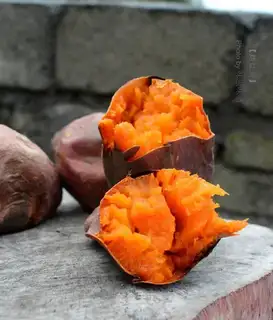
Roasted sweet potato
The days of winter childhood, holding a fragrant roasted sweet potato to warm hands and satisfy a craving, are fading from the memory of many young people. Roasted sweet potato vendors, once common on streets, are now almost nowhere to be found. With improving economic conditions, surveys show that many urban residents in China no longer eat sweet potatoes.
Sweet potato: Also known as yam,红薯 (hongshu), or white potato, it is considered an excellent food for preventing illness, prolonging life, weight loss, and health preservation. In fact, sweet potatoes also have a powerful anti-cancer function. Recently, a substance called dehydroepiandrosterone (DHEA) was found in sweet potatoes, which can prevent the occurrence of colorectal and breast cancer.
4) Pumpkin: Hailed as a "divine melon"
Pumpkin tangyuan (dumplings)
In some countries, it is hailed as a "divine melon" because it can serve as both grain and vegetable. Americans eat pumpkin on Thanksgiving to express their gratitude. However, it is rarely grown in China nowadays.
Pumpkin can prevent obesity, diabetes, hyperlipidemia, and high cholesterol, and is very effective in cancer prevention. The vitamin A content in pumpkin is unimaginably high. It is also rich in vitamin C, calcium, and fiber, and contains an unknown ingredient that inhibits the carcinogen tryptophan-P.
5) Wheat bran: The best anti-cancer dietary fiber
Wheat bran toast
Also known as bran, it is the seed coat removed when wheat is milled into flour, used as animal feed, not for human consumption. When fed to livestock, bran makes their skin ruddy and their coats shiny, appearing extremely healthy. Wheat bran is now receiving increasing attention. For health, many Western institutions are calling on people to eat whole grains and whole wheat foods, which are made by grinding the whole wheat grain into flour and then separating out the bran.
Wheat bran is a "warehouse" of the main nutrients of wheat. B vitamins, minerals such as selenium and magnesium, and dietary fiber are almost all concentrated in it. It can prevent and treat colorectal cancer, diabetes, hypercholesterolemia, hyperlipidemia, constipation, and hemorrhoids. Therefore, many experts believe that wheat bran is the best anti-cancer dietary fiber.
6) Radish: The "health protector" among root vegetables
Carrot and egg pancake
Radish, also known as Laifu, comes in many varieties and is an anti-cancer expert in all of them. Thus, there is a farmer's saying: "Eat radish in winter and ginger in summer, and you'll never need to run to the pharmacy in your life," and "October radish is water ginseng." The Dutch have designated carrots as their "national vegetable," while Japan and the US consider it the "health protector" among root vegetables.
Radish has functions of anti-cancer, relieving chest tightness, resolving phlegm, and promoting urination. Radish contains various enzymes that can eliminate the carcinogenic effects of nitrosamines. Its lignin can stimulate the body's immunity, increase the activity of macrophages, and enhance their ability to engulf and kill cancer cells. The pungent taste of radish comes from mustard oil, which can stimulate intestinal peristalsis and promote the excretion of carcinogens. Radish also contains many unknown ingredients that inhibit mutagenic activity. The vitamin C content in radish is 8-10 times higher than in apples and pears. Carrots, rich in carotene, also have excellent anti-cancer properties.
7) Kiwi: The highest vitamin C content among fruits
Kiwi and soy milk smoothie
Brown and potato-shaped, its flesh is jade-green like an emerald, sweet and sour. It was once a wild fruit in the southern mountains but is now cultivated all over the country. Its fruit is rich in sugar, protein, lipids, vitamins, organic acids, and various minerals. It has the highest vitamin C content among fruits, with 200mg per 100 grams—almost 100 times that of oranges and 30 times that of tomatoes—making it a veritable "natural vitamin C tablet." It is also rich in vitamin P, which protects blood vessels, making its nutritional value extremely high.
 Madonna toast
 Roast potatoes
 Cherry