The winter weather is relatively dry, and many people catch a cold due to neglect in diet, lifestyle habits, or other aspects. The main symptoms of a cold are fever, headache, or limb weakness, which can have a certain impact on our normal lives. Medication can alleviate cold symptoms, but "all medicine has some toxicity." Below, we will introduce in detail 5 food therapy remedies made from white radish and pear to relieve cold symptoms:
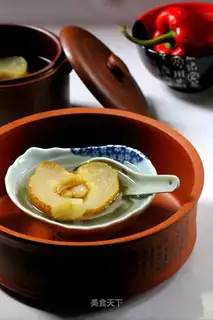
Chuanbei Pear Syrup
Food Therapy Remedy 1: Requires 5 grams of tea leaves and 100 grams of white radish.
Method: Brew the tea leaves with boiling water to extract the tea. Then, slice the radish, cook it in a pot until tender, add salt to taste, and pour in the tea. Take twice a day.
Effectiveness: Suitable for bronchitis, cough, and excessive phlegm.
Food Therapy Remedy 2: 1 fresh pear, 3 grams of Chuanbei mother, 10 dried lychees, and a little rock sugar.
Method: Core and chop the pear. Remove the shell but keep the pit of the dried lychees. Steam the ingredients and eat them while warm. Once a day, and it can be cured in 3-5 days.
Effectiveness: Suitable for wind-cold cough.
Food Therapy Remedy 3: 9 grams each of mulberry leaf, almond, and burdock seed, and 5 grams each of platycodon root and mint leaf.
Method: Decoct in water and take twice a day.
Effectiveness: Suitable for wind-heat cough.
Food Therapy Remedy 4: 1 white radish, 1 pear, 7 white peppercorns, 30 grams of raw honey, and a little ephedra.
Method: Place the ingredients in a bowl and steam them. Then consume.
Effectiveness: Suitable for wind-cold cough.
Food Therapy Remedy 5: 25 grams of mulberry leaf, 15 grams each of almond and rock sugar.
Method: Use 2 bowls of water to decoct down to 1 bowl. Drink it warm while it's hot, and you will recover once you sweat.
Effectiveness: Suitable for wind-cold cough.
The above are 5 food therapy remedies with white radish and pear that can relieve cold symptoms. It should be noted that winter is a good season for nourishment, but it is not advisable to consume excessive greasy food to avoid generating internal heat, which can create an internal environment conducive to catching a cold!
 Hong Kong Bay Sydney