As the saying goes, "Radish after autumn is better than ginseng," showing that radish is a great ingredient for autumn and winter. Today, let's take a look at how babies can eat white radish and carrots to get more nutrition.
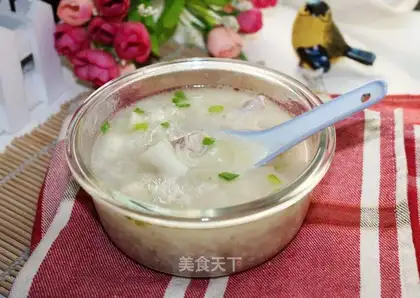
Chinese Yam and Radish Porridge
White Radish
The mustard oil and coarse fiber in white radish can promote digestion and increase appetite.
When a baby has indigestion and a poor appetite, making a soup with white radish for them can help with digestion.
White radish can also relieve coughs and reduce phlegm, and has the effect of clearing heat and reducing internal heat.
There are many ways to prepare white radish, such as radish porridge, radish puree, radish shreds, white radish and pork rib soup, white radish and lamb soup, etc. When making soup, you can cook it until it's a bit softer, so it's easier for the baby to chew and absorb the nutrients.
Chinese Yam and White Radish Porridge (for babies over 10 months)
Moms should note that cooking with the root of the white radish will produce a strong spicy flavor, so it's better to use the middle part of the radish when making baby food.
Chinese yam contains substances like amylase and polyphenol oxidase, and white radish contains digestive enzymes. This Chinese yam and white radish porridge has the effect of promoting the baby's spleen and stomach digestion and absorption.
Ingredients: 1 bowl of rice porridge, 50g Chinese yam, 30g white radish
Step 1: Peel the Chinese yam, wash it, and cut it into small pieces.
Step 2: Wash the white radish and cut it into pieces.
Step 3: Put the white radish pieces into boiling water and blanch until cooked.
Step 4: Mash the blanched white radish into a puree.
Step 5: Take a small pot, pour in the rice porridge, add the Chinese yam pieces, and cook until the yam is soft.
Step 6: Then mix in the white radish puree and cook until well combined.
Step 7: Serve the Chinese yam and white radish porridge into a bowl.
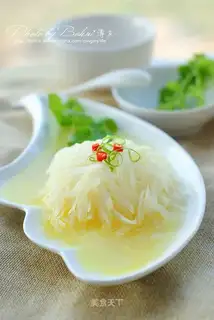
Chicken Broth Radish Shreds
Chicken Broth Radish Shreds (for children over 1 year)
The secret to the good taste of this dish is the chicken broth, with old hen broth being the best. If the broth is too clear, you can add a little lard or chicken oil to enhance the flavor.
Ingredients: 1 white radish, 1 tsp salt, an appropriate amount of broth, 1 tsp lard, 1 spring onion, half a tsp of pepper
Step 1: Cut the white radish into shreds about 6 cm long. Blanch the radish shreds in boiling water, then remove and drain.
Step 2: Pour chicken broth into a pot, bring to a boil, skim off the foam, add the radish shreds, and cook until they are flavorful. Season with salt and pepper.
Step 3: Serve into a small bowl or cup.
Step 4: Drizzle with a little lard or chicken oil (not needed if the broth is already oily).
Step 5: Garnish with shredded spring onion, radish leaves, and red chili peppers.
Carrot
Carrots are rich in carotene, which can be converted into vitamin A in the human body, which is beneficial for the development of a baby's eyes, skin, etc.
Carrots are a common ingredient for baby food. Here's how babies can eat them to better absorb nutrients:
It's best to eat them cooked, because when eaten raw, most of the beta-carotene cannot be absorbed by the body.
Beta-carotene is a fat-soluble substance, so it's best to eat carrots with meat or other oily foods for better absorption.
A friendly reminder: Don't let your baby eat too many carrots, otherwise it may cause the skin to turn yellow.
Here is a real example:
A mother in Wuhan gave her 1-year-old son one carrot every two days, and also ate three boiled corns during that period. After a month, she found that her baby's skin turned yellow, especially on the face and soles of the feet. After asking a doctor, she learned that the problem was with the carrots and corn. The doctor advised that as long as these foods were temporarily stopped at home, the condition would improve.
Why? This is because carrots contain carotene. If you eat too much, the liver cannot convert it into vitamin A in time. The excess carotene will flow throughout the body with the blood, causing the baby's skin to turn yellow. It may also cause nausea, vomiting, loss of appetite, and fatigue.
In addition to carrots, corn, tomatoes, pumpkin, papaya, citrus fruits, and some green leafy vegetables also contain relatively more carotenoids, which should not be eaten in excess, as they can also turn the skin yellow. So, no matter what you eat, moderation is key.
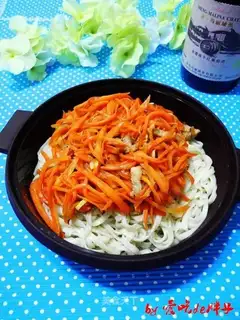
Carrot and Shredded Pork Noodles
Carrot and Pork Minced Noodles (for babies over 10 months)
Carrots are rich in vitamins, and their natural sweet and fragrant flavor makes baby food more delicious.
Ingredients: 25g baby noodles, 25g carrots, 15g pork, 400ml water
Step 1: Wash the pork and mince it.
Step 2: Peel the carrots, wash them, and mince them.
Step 3: Break the baby noodles into small pieces.
Step 4: Take a small pot, pour in water, add the baby noodles when the water is cold. After the noodles come to a boil, add the minced carrots.
Step 5: Then add the pork mince.
Step 6: Cook the ingredients until they are soft, then serve.
Carrot and Egg Pancake
Carrot and Egg Golden Pancake (for children over 1 year)
Among all kinds of breakfasts, the carrot and egg golden pancake is more nutritionally comprehensive, rich in vitamins, protein, and carbohydrates, making it a nutritious food.
Ingredients: appropriate amount of wheat flour, appropriate amount of milk, appropriate amount of eggs, appropriate amount of carrots, appropriate amount of salad oil
Step 1: Beat the eggs.
Step 2: Add milk to the beaten eggs.
Step 3: Add flour and mix into a batter.
Step 4: Add shredded carrots to the batter and mix well.
Step 5: Pour a spoonful of batter into a pan, try to spread it evenly. Flip it over to cook the other side once one side is set. Cook until golden brown, then plate and serve.
 Shredded radish with chicken sauce
 Porridge
 Carrot eggcake
 Carrot gravy