Dates have been consumed in China for over 3,000 years. The "Shennong Ben Cao Jing," the earliest existing monograph on pharmacology in China, lists dates as a superior grade herb. Dates are known as the "King of the Five Fruits" because of their rich nutritional value. It is suitable to eat more dates in winter.
They contain protein, fat, and carbohydrates, and are rich in organic acids such as malic acid and tartaric acid. Vitamins include carotene, vitamin B2, vitamin C, and vitamin P, as well as minerals and trace elements like calcium, phosphorus, and iron. They are particularly high in carbohydrates and vitamin C. Fresh dates contain 20% to 36% sugar, while dried dates can be as high as 50% to 80%. Every 100 grams of fresh dates contain 380 to 600 milligrams of vitamin C, which is about 100 times higher than in apples, peaches, and other fruits. Therefore, they are called "living vitamin C pills." In addition to being rich in vitamin C, dates also contain hawthorn acid and adenosine diphosphate. The former has the effect of inhibiting cancer cells, while the latter regulates cell division. The synergistic effect of the two can enhance immunity and cause the division of abnormally proliferative tissue cells to return to normal.
Jujube and Glutinous Rice Cake
Depending on the processing method, dates are divided into red dates and black dates. Red dates are made by briefly scalding fresh dates in boiling water, then drying them in the sun. Research has found that regular consumption of red dates can increase the oxygen content in the blood and has the function of nourishing all cells in the body, making it a mild tonic. Black dates are made from high-quality fresh dates that are scalded in boiling water, then smoked and roasted until the skin is black and shiny, the flesh is semi-cooked, and the moisture is moderately dried. They have the dual effects of nourishing the kidneys and enriching the blood. The source is the same, with the best quality coming from Xinzheng, Henan, and the largest production in Shandong. Nanju dates are a variety of jujube, produced in Lanxi, Jinhua, Zhejiang. They were once a tribute item, so they are also called tribute dates. Today, they are often used as ingredients in food and medicinal wines, frequently in Chinese medicine prescriptions, and are considered by the people to have the best tonic effect.
Dates have always been an excellent health food for replenishing qi, nourishing blood, and calming the mind. They are also a commonly used item in traditional Chinese medicine for treating diseases and are a plant-based food for both medicinal and culinary purposes announced by the Ministry of Health of China. Clinical observations show they have a good tonic effect on patients with hypertension, cardiovascular diseases, insomnia, anemia, and others. In traditional Chinese medicine prescriptions, dates are often paired with licorice or used as a guiding herb. In the "Qun Fang Pu," there is such a record: "In October, take large dates, split them in half, remove the skin and pits, and repeatedly roast them over a low flame until fragrant. Then, boil them in water to make a soup to drink, which is very suitable for strengthening the spleen and whetting the appetite."
The ancient recipe "Gan Mai Da Zao Tang" is a decoction made by cooking red dates with Huai wheat and licorice. Long-term use has a regulating and nourishing effect on symptoms such as anemia, thrombocytopenic purpura, menopausal sweating in women, restlessness, and emotional instability. In folk remedies, when treating chronic hepatitis, cirrhosis, and other diseases, it is also common to use 200 grams of dates, decocted with 90 grams of Yinchen. Eat the dates and drink the soup, divided into morning and evening doses, to achieve good results.
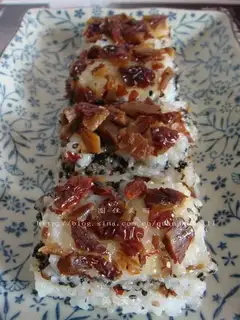 Jujube-flavored glutinous rice cake