Blood is the source that nourishes the body, flowing through all the body's tissues and organs. However, as we age, some "waste" can also appear in the blood. If it is not "cleaned" in time, it can lead to unclean, thick, and poorly circulating blood, thereby affecting health. How to purify the blood throughout the body? Five essential tools.
At this time, you might as well use some vascular "scavengers" from your dining table to help the body clean up blood waste and give your body a thorough cleaning.
Blood sugar stabilizer: Pu-erh tea
Pu-erh tea has a mild nature, causing relatively less stimulation to the spleen and stomach, and contains various health-beneficial components such as tea polyphenols. Research has found that Pu-erh tea has a significant inhibitory effect on enzymes related to diabetes, helping to stabilize blood sugar.
Recommended consumption: It is recommended to drink Pu-erh tea between meals. Use 100°C boiling water for brewing. It is best to rinse the Pu-erh tea once first, because most Pu-erh tea is consumed a year or even several years later and is prone to accumulating dust. "Rinsing the tea" can achieve the purpose of "cleansing the dust and moistening the tea."
Blood lipid regulator: Oatmeal
Oatmeal is rich in beta-glucan and dietary fiber, which can inhibit the human body's absorption of cholesterol and is very effective for regulating blood lipids. Moreover, oatmeal can provide a strong feeling of fullness, keeping you from feeling hungry for a long time.
Recommended consumption: It is recommended to choose the "purest" oatmeal, that is, large-flake, whole, unbroken, and without any added sugar, creamer, or other ingredients. You can use it to cook congee and add some nuts for a nutritious and delicious meal.
Fruit and Oatmeal Congee
Blood pressure controller: Celery
Celery is rich in potassium and apigenin, both of which are beneficial for controlling blood pressure. A study published in the journal *Hypertension* by the American Heart Association pointed out that drinking celery juice appropriately can indeed help lower blood pressure.
Blood circulation catalyst: Black beans
Black beans are rich in anthocyanins, which can remove free radicals from the body, lower cholesterol, and promote blood circulation. In addition, anthocyanins also have the effect of protecting the eyes.
Recommended consumption: Anthocyanins are more stable under acidic conditions, so soaking them in vinegar is beneficial for the absorption of nutrients in black beans. Before soaking, the black beans need to be stir-fried first. After cooling, pour in aged vinegar until it covers the black beans, but leave about 1/3 of the space to prevent the beans from expanding and overflowing. Soak with the lid on, and they can be eaten after the black beans are fully swollen. Black beans can also be used to make soy milk or soups.
Blood purifier: Kelp
Kelp is not only a food high in iodine but also rich in dietary fiber and gelatin. The gelatin component can bind to harmful substances in the blood, such as heavy metals, and has the effect of detoxifying and purifying the blood.
Recommended consumption: You can directly soak the kelp until it rehydrates and make it into cold-dressed kelp shreds. However, because kelp is considered a "cooling" food, it is recommended that people with a "cold" body constitution or who are weak can eat kelp stewed with tofu. After high-temperature heating, the cooling nature of the kelp can be neutralized.
Kelp with Soybeans
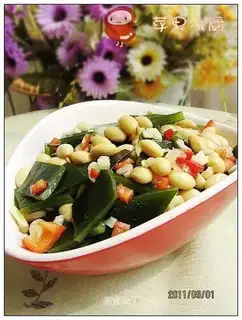 Seaweed mixed with soybeans
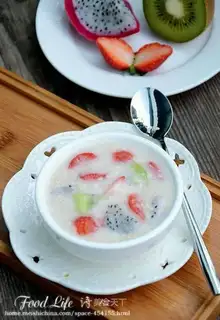 Fruit oatmeal