Eating mutton often in the winter can not only ward off the cold but also nourish the body. Mutton is rich in protein, fat, vitamins, and various nutrients such as calcium, iron, and phosphorus, and is beneficial for people suffering from tuberculosis, cough, bronchitis, asthma, and anemia. Mutton warms the stomach and supports yang, making it highly beneficial to eat during the winter.
Scallion-Fried Mutton
Mutton has the effects of tonifying the middle and replenishing qi, and warming the stomach to support yang. The "Compendium of Materia Medica" says of it: "Tonifies the middle and replenishes qi, primarily treating deficiency-cold from overexertion, and the five labors and seven injuries in men." In addition to being consumed as a nourishing food for healthy people in the winter, it can be eaten year-round by those who are weak due to prolonged illness, have postpartum weakness, suffer from qi and blood deficiency, or have insufficient yang, manifesting as aversion to cold, frequent urination, nocturia, impotence, premature ejaculation, menstrual irregularities, infertility, and cold sensations.
When eating mutton, it is best to pair it with tofu, which not only supplements various trace elements, but the gypsum in it can also clear heat, purge fire, and relieve vexation and thirst. When mutton and radish are cooked together, the radish's cooling nature, ability to resolve stagnation, and transform phlegm-heat can be fully utilized.
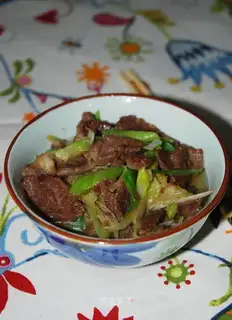 lamb with fried green onions