Many people believe that meat is a very nutritious food. Therefore, children should especially eat more meat, and many people who are "not afraid of getting fat" also indulge themselves by eating large amounts of meat. In fact, eating too much meat not only leads to excessive fat, but also has other negative effects—causing calcium loss in the body.
Fan Zhihong, a council member of the Chinese Nutrition Society and an associate professor at the College of Food Science and Nutritional Engineering at China Agricultural University, told a reporter from the "Life Times" that, first of all, among all types of food, meat has the lowest calcium content. According to the USDA's food database, fresh pork shoulder contains only 14 milligrams of calcium per 100 grams; lean beef steak has only 9 milligrams of calcium per 100 grams; and lamb's calcium content is also only 8 milligrams per 100 grams. In contrast, bok choy has 109 milligrams of calcium per 100 grams, tofu has 140 milligrams of calcium per 100 grams, and low-fat milk has 125 milligrams of calcium per 100 grams. From this data, it is clear that meat, especially pork, beef, and lamb, has the lowest calcium content among all food groups. Besides dairy products, which are high in calcium and easily absorbed, soy products and green leafy vegetables are also excellent sources of calcium.
Sweet and Sour Honey Meat
Secondly, eating too much meat not only reduces calcium absorption but also increases calcium excretion. Fan Zhihong told the reporter that excessive meat intake leads to an excess of total dietary protein. And an excess of protein causes a significant loss of calcium through urine.
Therefore, from the perspective of supplementing calcium, as well as controlling fat and cholesterol intake, we should control our meat intake in our daily diet. Adults should consume no more than 100 grams of fish and meat per day, and no more than 75 grams of poultry and livestock meat. Meat should only be used as an accent on the plate, not the "main course," so that its rich nutrients can be fully utilized by our bodies.
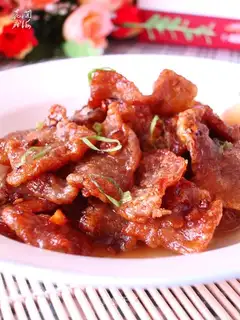 sweet and sour honey pork