Perhaps many people have experienced anger. When angry, one may feel a tightness in the chest, shortness of breath, and a painful blockage in the heart. So, besides adjusting one's mindset, what are some good methods to help soothe the qi? Traditional Chinese Medicine (TCM) believes that food and medicine share the same origin, and some foods have the effect of regulating qi. Here are a few qi-regulating foods to consider eating when angry.
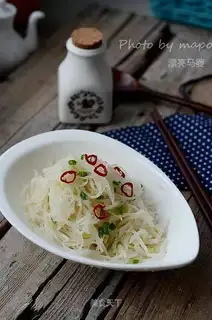
Stir-fried White Radish Shreds
Bergamot
It has various medicinal functions, such as regulating qi and resolving phlegm, stopping coughs and relieving bloating, soothing the liver, strengthening the spleen, and harmonizing the stomach. The flowers and fruits of bergamot can be steeped in tea for a qi-regulating effect. For liver qi stagnation, bergamot can be decocted with other herbs.
Rose
It can promote qi circulation, aid digestion, detoxify, promote the production of body fluids, harmonize the middle jiao, and stop coughs. It has a heat-clearing and phlegm-resolving effect for those with qi stagnation, heat, and phlegm. Roses can be steeped in water to drink, or fresh flowers can be placed in the living room, which is also beneficial for soothing qi and calming the spirit.
Tangerine Peel
Wash and dry the tangerine peel, which becomes the traditional Chinese medicine, dried tangerine peel (Chen Pi). It has the effects of regulating qi and resolving phlegm, strengthening the stomach, and eliminating dampness. It can be steeped in water with tea or alone. It has a delicate fragrance that can refresh the mind and promote qi circulation. Soak dried tangerine peel in baijiu (white liquor) for 2-3 weeks, after which it can be drunk to clear the lungs and resolve phlegm. A few pieces can also be added to dishes to relieve greasiness and whet the appetite.
White Radish
Wash fresh radishes, cut them into small pieces, and cook them with japonica rice and water into a porridge. Season with a small amount of salt and eat. It can stop coughs, resolve phlegm, aid digestion, and benefit the diaphragm. It is suitable for symptoms of fullness and oppression in the chest and diaphragm, and indigestion with bloating.
Hawthorn
It regulates qi, relieves pain, aids digestion, and resolves food stagnation. It is suitable for bloating, fullness, and pain in the chest and abdomen caused by food stagnation. It also has a certain effect on rapid heartbeat and arrhythmia caused by anger. It can be eaten raw, cooked, or steeped in water, and all methods are effective.
Lotus Root
It strengthens the spleen and harmonizes the stomach, promotes qi circulation, and nourishes the heart and calms the spirit. Lotus root stewed with pork ribs or cold-dressed lotus root are both good choices.
Papaya
Papaya has high nutritional and medicinal value and is known as the "king of beneficial fruits." It can aid digestion, strengthen the spleen and stomach, regulate qi, moisten the lungs, stop coughs, and relieve summer heat and thirst. Papaya milk, snow fungus stewed with papaya, and papaya stewed with pork ribs are all excellent choices.
Getting too angry harms the body, so people should try to be angry less and maintain a calm and peaceful attitude towards things. When you do get angry, you should immediately try to look at the problem from a different perspective or do something else to distract your attention.
 Piggy radish