As the saying goes: "Nourish in autumn and winter, and you'll be strong enough to fight a tiger in spring." Some people believe that everyone can benefit from this nourishment, with great nourishment bringing great benefits and minor nourishment bringing minor benefits. In reality, however, while winter nourishment is a key feature of TCM health preservation, it is not necessary for everyone. Beware of falling into the traps of nourishment, as improper choices can lead to fatal harm.
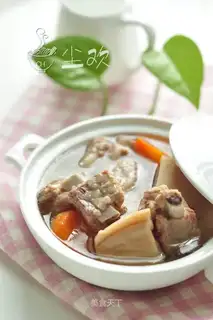
Pork Rib and Lotus Root Soup
Myth 1: "Indiscriminate Nourishment" Without Considering Region
Our country is vast with diverse geographical environments and different lifestyles. Winter in the northwest is vastly different from that in the southeast coastal areas. Therefore, you must not practice "indiscriminate nourishment" without considering regional differences.
In the cold winters of the northwest and northeast, it is advisable to consume foods that are large in warming and heating properties, such as lamb, dog meat, and venison. Tonics like ginseng wine and deer antler wine can indeed strengthen the body and help ward off cold and boost yang.
In the areas south of the Yangtze River, although it is winter, the temperature is much milder than in the north. It is better to opt for light, sweet, and warming foods like chicken, duck, and goose.
Experts remind people in the south of the Yangtze River that consuming too much lamb, dog meat, or venison can easily lead to internal heat and fire, resulting in symptoms like a sore throat, mouth sores, and nosebleeds. In areas with less rainfall and a drier climate, it is also best to use these foods sparingly. Instead, one should opt for dry and moistening products that promote the production of body fluids, such as fruits and vegetables like lilies, water chestnuts, lotus roots, and pears.
Myth 2: "Brute Nourishment" Without Distinguishing Between Old and Young
Due to differences between men and women and between the old and the young, winter "nourishment" is not the same for everyone. For instance, the physiological functions of the elderly decline, and most have a weak constitution. Therefore, appropriate and moderate "nourishment" can enhance their resistance and benefit their health.
However, children have vigorous physiological functions. Healthy children who are developing normally, or those who are not yet fully recovered from an illness, should not "nourish" themselves. This is especially true for sweet, warming, and heat-inducing foods like lamb, dog meat, venison, sparrow meat, and sparrow eggs, which are only suitable for adults. Even if a child has a weak constitution, they should avoid or consume these foods in small amounts; otherwise, it will be harmful rather than beneficial.
Therefore, teenagers (including children), as their bodies are in a stage of growth and development, should pay attention to their nutritional intake and make adjustments. Generally, they should not use medicinal tonics.
Myth 3: "Chaotic Nourishment" Without Differentiating Syndromes
For winter "nourishment" to achieve its intended effect more accurately, it should be applied based on an individual's different constitutions and the properties of foods. In Traditional Chinese Medicine, foods are classified according to their nature and flavor into categories like neutral, warming, and cooling nourishment.
So-called "neutral" nourishment foods are those necessary for maintaining health and life. "Warming" nourishment foods can warm yang and boost fire, alleviating symptoms of aversion to cold and thus strengthening the body. However, for a constitution with yin deficiency and internal heat, excessive consumption can worsen the rising of yang and fire, leading to symptoms like a dry throat, toothache, bleeding gums, and constipation. "Cooling" nourishment foods are cool in nature and can clear fire. For a constitution with yang deficiency and a tendency towards cold, excessive consumption can make the body colder, leading to symptoms like diarrhea and abdominal pain.
Therefore, even if you feel weak, you cannot blindly engage in "chaotic nourishment." There are many types of weakness, and each has specific tonics, medicines, and foods. A mismatch between the medicine and the condition is not only ineffective but can also have side effects.
Myth 4: "Seeking Nourishment" Without a Deficiency
Nowadays, due to widespread media coverage, advertisements often exaggerate the miraculous and effective properties of various "tonics." Driven by a desire to nourish themselves, many people seek tonics without actually having a deficiency.
Experts remind us: Health supplements are neither food nor medicine. In other countries, they are called "functional foods." They cannot cure a specific disease nor make you healthier than you already are; they can only restore your sub-health state to a normal level of health.
As for the belief that the more expensive a tonic, the more effective it is, expensive tonics often contain costly Chinese herbs such as ginseng, Cordyceps, saffron, bird's nest, bear's paw, and royal jelly. However, without targeted use, they generally do not produce special effects.
There is absolutely no tonic that can "cure illness when you have it and preserve health when you don't."
Throughout history, there have been countless cases of people who sought tonics indiscriminately, violating the principle of "nourish when there is a deficiency," and only brought disaster upon themselves. Take ginseng, for example. In TCM, it is known as a great tonic for restoring primordial qi, calming the spirit, and improving intelligence and lung and spleen function. It is considered the supreme of all tonics. For those with heart failure, shock, bleeding, a weak constitution, or impotence, ginseng can indeed have a miraculous effect. However, if it is not used for the correct condition, it can cause mild discomfort at best and be fatal at worst.
 The raisin soup