Red beans, also known as love beans, represent longing in the world of love and are considered a symbol of beauty. Red beans are also a food-medicine dual-use product with excellent health benefits, not only for beautifying the skin but also for strengthening the spleen and nourishing the stomach, and expelling dampness from the body. It is a treasure for women's health. There are four major benefits to eating red beans regularly!
Red Bean Steamed Cake
The medicinal value of red beans
Red beans have great medicinal value. Traditional Chinese Medicine (TCM) believes that red beans are neutral in nature, sweet and sour in taste, and non-toxic. They have the functions of nourishing and strengthening, strengthening the spleen and nourishing the stomach, promoting urination to remove dampness, harmonizing qi and expelling pus, and promoting lactation. Red bean seeds can be used for both food and medicine, often used to make congee and bean paste. Dried beans contain 21-23% protein, 0.3% fat, and 65% carbohydrates. Red bean leaves can treat frequent urination and enuresis; the flowers can clear heat, quench thirst, sober up, and detoxify. In addition, the aqueous extract of red beans has an inhibitory effect on *Staphylococcus aureus*, *Shigella flexneri*, and *Salmonella typhi*.
Four major benefits of eating red beans for health
Benefit One: Nourishing the Heart and Blood Ancient physician Li Shizhen called red beans the "grain of the heart," emphasizing their heart-nourishing effect. Red beans can clear heart fire and nourish heart blood. They are rich in crude fiber, which clinically helps lower blood lipids and blood pressure and improve heart function; at the same time, they are rich in iron, which can promote qi and blood circulation, making them very suitable for nourishing the heart. They will keep your hands and feet from getting cold in autumn and winter.
Benefit Two: Strengthening the Spleen and Stomach A strong digestive system with good absorption is crucial. Therefore, people who are relatively weak should reinforce their health more diligently in autumn and winter to build up nutritional reserves for the following year, ensuring they will have good energy, be strong, and not get sick. Red beans, known as "chixiaodou" in Chinese medicine, also have a significant effect on strengthening the spleen and stomach.
Benefit Three: Reducing Edema In addition to being rich in potassium, the saponins in the outer skin of red beans have a strong diuretic effect, which can effectively improve swelling in the face and feet caused by beriberi and kidney function decline. Therefore, red beans are a must for treating edema.
Benefit Four: Expelling Dampness and Clearing Heat From a TCM perspective, edema means there is dampness in the body. Body fluids cannot flow with qi and blood, stagnating between human cells and causing the body to swell rapidly. Red beans are rich in B vitamins, iron, protein, fat, carbohydrates, calcium, phosphorus, niacin, and other components, and have the effects of clearing heat, promoting urination, expelling dampness, and detoxifying.
Red Bean and Jujube Soup
A few red bean recipes:
Red Bean and Winter Melon Tea
200g red beans, 100g winter melon, a little salt
Specific method:
First, soak the red beans for half an hour, then add them to 1000cc of boiling water. Dice the winter melon and cook it with the red beans for about 30 minutes, making sure the red beans are cooked. Then turn off the heat. Let it sit covered for ten minutes, then add a little salt. Drink after meals daily for at least two weeks.
The soup from cooking red beans with winter melon is a great dietary remedy for systemic edema. This weight loss method is suitable for people of all ages and genders and is a safe and side-effect-free way to lose weight. Give it a try.
Red Bean and Jujube Soup
100g red beans, 10 jujubes, 1500g water
1. Wash the red beans and soak them in water for about 30 minutes.
2. After washing the jujubes, add them to the red bean water. Bring to a boil over high heat, then simmer over low heat until the red beans are tender. It is then ready to eat.
Nutritional benefits: Red beans are rich in vitamin B1, B2, protein, and various minerals, and have the effects of nourishing and strengthening, strengthening the spleen and nourishing the stomach. Jujubes are rich in protein, carotene, vitamins, and components like phosphorus, calcium, and iron. They are sweet in taste and warm in nature, and have the effects of tonifying the middle energizer, replenishing qi, nourishing blood, and calming the mind. Red bean and jujube soup can promote urination and detoxify, nourish blood and benefit the spleen, and calm the mind, providing excellent nourishment.
In the Five Elements theory of TCM, the heart belongs to fire, and the color red also belongs to fire. Red-colored foods can enter the heart meridian and have the effects of nourishing blood and qi, and benefiting the heart's qi. Women are especially suitable to eat more red beans. For those with a weak spleen and stomach and damp-heat in the body, red beans are even more suitable. It can achieve the effect of strengthening the spleen and nourishing the body.
 Red bean steamed cake
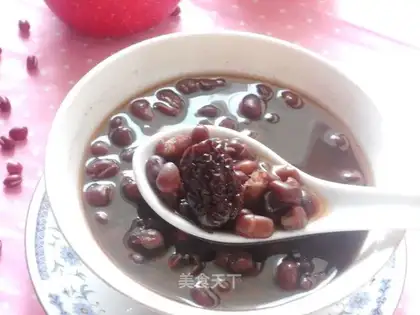 Red bean and date soup