Kelp is a familiar seafood to everyone. It is not only very delicious but also nutritious. However, selecting good quality kelp is an art. Inferior kelp can have a strange taste and its nutritional value is diminished. Below, the editor will tell you how to choose good kelp.
Cold-dressed Shredded Kelp
Nutritional Value of Kelp
Among all foods, kelp has the highest iodine content. Iodine is an essential trace element in the human body and an important raw material for synthesizing thyroxine. Long-term iodine deficiency can lead to endemic goiter. Regular consumption of kelp can effectively prevent goiter. If pregnant women have insufficient iodine intake, it can affect the fetus's growth and development, leading to poor postnatal development and low intelligence. Therefore, pregnant women should also eat kelp in moderation. Regular consumption of kelp also helps prevent the premature graying of hair.
Kelp also contains a large amount of mannitol, which has a diuretic and swelling-reducing effect. It can help prevent and treat renal failure, senile edema, and drug poisoning. Mannitol works in synergy with iodine, potassium, niacin, and other elements, and has good effects in preventing and treating diseases such as arteriosclerosis, hypertension, chronic bronchitis, chronic hepatitis, anemia, and edema.
The high-quality protein and unsaturated fatty acids in kelp have a certain preventive and therapeutic effect on heart disease, diabetes, and hypertension.
How to Choose Good Kelp
Look at the color. Kelp that is brown-green or yellowish is normal. Brown-green or yellowish kelp is a relatively normal color. Dark green kelp is fresh kelp that has been blanched, turning it green, and then processed through cooling, salting, and dehydration. It is generally used for cold dishes. Bright green kelp may have been soaked with added colorings, so consumers should pay special attention when selecting it.
Feel the texture. For brown-green kelp, choose the one with a sticky texture. After processing, dark green kelp has no stickiness on its surface. Chemically treated kelp feels toughless to the touch.
Smell it. Kelp that has not been bleached has a strong seafood smell, while the seafood smell of bleached kelp is reduced.
Suitable People for Eating Kelp
Most people can eat kelp.
1. It is suitable for those with iodine deficiency, goiter, hypertension, hyperlipidemia, coronary heart disease, diabetes, arteriosclerosis, osteoporosis, nutritional anemia, and sparse hair to consume more;
2. It is especially suitable for those with insufficient energy, iodine deficiency, qi and blood deficiency, liver cirrhosis with ascites, and neurasthenia;
3. People with a weak spleen and stomach should eat it with caution, and patients with hyperthyroidism due to excess iodine should avoid it.
Two Groups of People Should Not Consume Kelp in Large Quantities
One group is pregnant women. On one hand, kelp has a labor-inducing effect. On the other hand, kelp has a very high iodine content, and excessive consumption can affect the development of the fetus's thyroid. Therefore, pregnant women should be cautious when eating it.
The second is that, according to Traditional Chinese Medicine, kelp itself is considered "cold" in nature. Therefore, people with a weak spleen and stomach should not eat too much kelp at once, or should not pair it with other "cold" substances, as it may cause stomach discomfort.
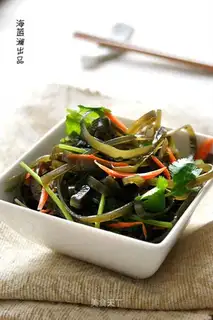 Shredded seaweed salad