In daily life, people often eat wild vegetables. Many people believe that traditional wild vegetables are non-toxic or have low toxicity, so they consume them frequently. However, many people experience symptoms like dizziness, headaches, nausea, and vomiting. This could be a sign of poisoning, so it is crucial to know first aid. How to provide first aid for poisoning from eating wild vegetables indiscriminately?
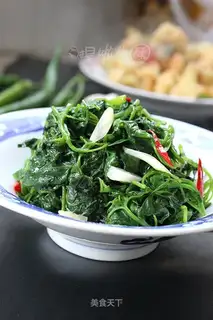
Stir-fried Gray Goosefoot
Wild Vegetables Are Not "Green"
In recent years, wild vegetables have gradually gained popularity among the public. There are three main reasons for this: first, they are relatively nutritious, containing various amino acids, trace elements, and dietary fiber essential for the human body; second, they often have a unique fragrance and a pleasant texture; third, they are perceived as "green" and healthy, aligning with the consumer trend of returning to nature and losing weight. However, they are not as "green" and healthy as people might imagine. Because green plants purify the atmosphere, they not only absorb dust and solid suspended particles from the air but also filter harmful gases and chemical compounds from the air and soil. If these wild vegetables grow in polluted areas, it is natural for them to become contaminated, and these pollutants are difficult to wash off completely. Therefore, equating wild vegetables with "green food" is unscientific.
Methods for Consuming and Preparing Wild Vegetables
1. Eating raw (as a salad). For wild vegetables known to be non-toxic or delicious, such as sow thistle or wild chives, pick and wash them, then blanch them in boiling water before eating with seasonings. This method is ideal for preserving the various nutrients in wild vegetables. However, it is essential to check for pollution or parasite eggs and to choose wild vegetables that have been proven non-toxic through prior consumption experience to avoid illness or poisoning.
2. Direct stir-frying. For wild vegetables known to be non-toxic or without an unpleasant taste, such as thistle, shepherd's purse, wild amaranth, Salsola collina, Polygonum aviculare, and Commelina communis, pick the tender stems and leaves, wash and chop them, and then stir-fry. From the perspective of preserving nutrients, this method is also very good.
3. Steaming. Steaming involves washing wild vegetables (such as Salsola collina seedlings, Artemisia sieversiana, water spinach, and面条菜), mixing them with flour, steaming, and then seasoning with cooked oil, salt, and garlic. For steamed vegetable buns, mix the vegetable with the dough, shape it into steamed buns or twisted rolls, and steam. For vegetable dumplings, use wild vegetables like shepherd's purse or purslane. Blanch them in boiling water (or not), wash, chop, and mix with oil and salt to make a filling.
4. Cold salad. For wild vegetables known to be non-toxic and with tender tissues, such as purslane and broadleaf dock, blanch or boil the wild vegetables for three to five minutes, then remove them, squeeze out the juice, and mix with seasonings for a cold salad. This method can remove some of the undesirable bitter taste and has little impact on nutrient loss.
5. Boiling and soaking. This is a widely used method among the public and can be applied to wild vegetables with a bitter taste that may have slight toxicity. For example, Patrinia scabiosaosa, Laportea cuspidata, Lysimachia clethroides, watercress, Viola spp., Oxalis corniculata, and Agrimonia pilosa. After picking the tender stems and leaves and washing them, boil them in boiling water or salt water for 5-10 minutes. Then, remove and soak in clean water for several hours, changing the water frequently. The soaking time depends on the bitterness of the wild vegetable and can exceed 24 hours if necessary. After soaking, the wild vegetables can be stir-fried, mixed with staple foods to make steamed buns or twisted rolls, or mixed with soybeans to make bean paste.
First Aid and Treatment for Poisoning from Indiscriminate Consumption of Wild Vegetables
Symptoms of poisoning such as nausea, abdominal pain, and diarrhea. At this point, stop consuming the wild vegetables immediately and provide first aid. The principle and goal of first aid are to eliminate the poison and detoxify.
Inducing vomiting: Use a finger or another object to touch the back of the throat until the person vomits clear water.
Catharsis: Common cathartics are magnesium sulfate and sodium sulfate. The dosage is 15-30 grams, dissolved in 200ml of water, taken orally.
Gastric lavage: The most convenient method is to use soap or strong tea water for gastric lavage. A 2% sodium bicarbonate solution can also be used, which can also remove toxins that have already entered the intestines, acting as an intestinal wash.
Detoxification: After the above first aid measures, symptomatic treatment and the administration of detoxifying agents should be carried out. The simplest method is to drink raw egg white or raw milk, or to chew garlic and drink the juice. If available, a universal antidote can be taken (activated charcoal 4 parts, magnesium oxide 2 parts, tannic acid 2 parts, and water 100 parts). Its main function is to adsorb or neutralize toxins such as alkaloids, heavy metals, and acids.
 Cream graze