Diet during menstruation. The few days when your period arrives each month are when a woman's body is at its weakest. Making appropriate dietary adjustments can replenish lost nutrients and boost immunity.
Jujube and Chinese Yam Porridge
7 Dietary Recommendations for Menstruation
1. It is advisable to consume nutrient-rich, spleen-strengthening and appetite-stimulating, and easily digestible foods.
Such as jujubes, noodles, Job's tears porridge, etc. To maintain nutritional balance, fresh vegetables and fruits should also be consumed. Food should be fresh, which not only tastes better and is easier to absorb, but also results in less nutritional destruction.
2. It is advisable to eat bananas.
Bananas are rich in vitamin B6, which has a calming effect on the nervous system. It can not only stabilize a woman's uneasy mood during menstruation but also help improve sleep and reduce abdominal pain.
3. It is advisable to eat more fish.
Due to the influence of changes in endocrine hormones, many women experience depressive moods during their period. Research has found that regularly eating fish rich in omega-3 fatty acids, such as salmon and sardines, can help women alleviate depressive moods or reduce the incidence of depression. This is because the omega-3 fatty acids abundant in these fish have antidepressant effects.
4. It is advisable to consume foods that are beneficial for "the movement of menstrual fluid".
Such as warming and nourishing foods like lamb, chicken, red dates, tofu skin, apples, Job's tears, milk, brown sugar, and longan.
5. It is advisable to consume foods high in iron.
Iron is not only involved in the synthesis of hemoglobin and many important enzymes but also plays an important role in immunity, intelligence, aging, and energy metabolism. Due to significant iron loss during menstruation, it is very important to consume iron-rich foods. Fish, lean meat, animal liver, and animal blood are rich in iron and have high bioavailability, making them easily absorbed and utilized by the body. In contrast, plant-based iron found in soybeans and spinach has a lower absorption rate.
Therefore, the diet during menstruation should pay attention to a balance of meat and vegetables, and appropriately consume more animal-based foods to meet the special need for iron during this period.
6. It is advisable to drink hot milk with honey.
Symptoms such as lower abdominal pain, soreness in the lower back and knees, body fatigue, poor sleep, and irritability are common physical discomforts women experience during their period. Research has found that women who drink a cup of warm milk with honey before bed during their menstrual period can reduce or eliminate various menstrual discomforts.
This is because the potassium in milk can soothe the mood and has the effects of reducing abdominal pain, preventing infection, and decreasing the amount of menstrual blood; the magnesium in honey can calm the central nervous system, help eliminate tension, and reduce psychological stress during menstruation.
7. It is advisable to supplement with protein and minerals.
Due to blood loss during menstruation, especially for those with heavy periods, each period causes the loss of major components of blood such as plasma protein, potassium, calcium, and magnesium. Therefore, within 1-5 days after the menstrual period ends, protein and mineral-rich foods should be supplemented. Foods that are both beautifying and blood-nourishing can be chosen, such as milk, eggs, beef, lamb, pork pancreas, Euryale ferox seeds, carrots, apples, and cherries.
Research has found that some women with menstrual migraines have extremely low magnesium levels in their blood. If attention is paid to consuming magnesium-rich foods in the diet, such as millet, buckwheat, beans, bananas, nuts, and seafood, it can reduce the frequency of migraine attacks.
Diet During Menstruation
One of the principles for diet and conditioning for beauty and health in women is "cyclical diet," which aligns with changes in the menstrual cycle. This is also one of the main differences in diet and conditioning for beauty and health between men and women.
Many women experience some uncomfortable symptoms in the days before their period (premenstrual phase), such as depression, anxiety, emotional tension, insomnia, irritability, restlessness, and fatigue. It is generally believed that this is related to an imbalance in the ratio of estrogen and progesterone in the body. At this time, women should choose foods and medicines that are beneficial for skin and beauty, as well as for replenishing qi, soothing the liver, and regulating negative emotions, such as cabbage, grapefruit, lean pork, celery, japonica rice, duck eggs, stir-fried Atractylodes macrocephala, Chinese yam, Job's tears, lily, golden squash, winter melon, kelp, sea cucumber, carrots, white radish, walnut kernels, black fungus, and mushrooms.
When menstruation begins, symptoms such as poor appetite, lower back pain, and fatigue may occur. At this time, it is advisable to choose foods and medicines that are beneficial for skin and beauty and also for "the movement of menstrual fluid." Recommended foods and medicines include: lamb, chicken, red dates, tofu skin, apples, Job's tears, beef, milk, eggs, brown sugar, motherwort, Angelica sinensis, prepared rehmannia root, and peach blossom.
The ancient scholar Zhao Zhibi said: "During the movement of menstrual fluid, warmth should be commonly used and cold should be avoided, as cold can cause the blood to stagnate, preventing the elimination of turbid waste, which leads to issues like leukorrhea, abdominal masses, and fullness." Therefore, during menstruation, many foods that are normally good for skin and beauty should also be avoided, such as pears, bananas, water chestnuts, rock ear, coral fungus, water caltrop, winter melon, kale, black fungus, rabbit meat, and cannabis seeds.
As mentioned above, a portion of blood is lost during menstruation. The main components of blood include plasma protein and inorganic salts such as potassium, iron, calcium, and magnesium. This means that protein and inorganic salts are lost with each period. Therefore, in principle, within 1-5 days after the menstrual period ends, it is important to supplement with nutrients like protein and minerals and use some blood-tonifying medicines. During this time, foods and medicines that can both beautify the skin and have blood-nourishing and blood-activating effects can be chosen, such as milk, eggs, quail eggs, beef, lamb, pork pancreas, Euryale ferox seeds, spinach, cherries, longan flesh, lychee flesh, carrots, apples, Angelica sinensis, safflower, peach blossom, prepared rehmannia root, and Huang Jing (Polygonatum sibiricum).
Motherwort Boiled Eggs
Dietary Conditioning During Menstruation
During menstruation, immunity decreases and emotions can be volatile, with some people experiencing poor appetite, lower back pain, and fatigue. Due to blood loss during menstruation, especially for those with heavy periods, each period causes the loss of major components of blood such as plasma protein, potassium, iron, calcium, and magnesium. Therefore, within 1-5 days after the menstrual period ends, it is important to supplement with protein, minerals, and blood-nourishing foods. Foods and Chinese medicines that are both beautifying and blood-nourishing and blood-activating can be chosen, such as milk, eggs, pigeon eggs, quail eggs, beef, lamb, pork pancreas, Euryale ferox seeds, spinach, cherries, longan flesh, lychee flesh, carrots, apples, Angelica sinensis, safflower, peach blossom, prepared rehmannia root, and Huang Jing.
During menstruation, it is also advisable to supplement with foods that are beneficial for "the movement of menstrual fluid," such as warming and nourishing foods like lamb, chicken, red dates, tofu skin, apples, Job's tears, milk, brown sugar, motherwort, Angelica sinensis, and longan. When experiencing symptoms like poor appetite or lower back pain, the diet should consist of nutritious, spleen-strengthening, appetite-stimulating, and easily digestible foods, such as jujubes, noodles, and Job's tears porridge. To maintain nutritional balance, fresh vegetables and fruits should also be consumed. Food should be fresh, which not only tastes better and is easier to absorb, but also results in less nutritional destruction.
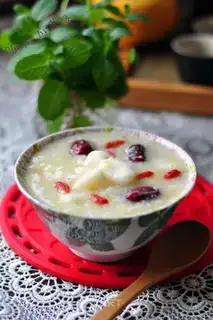 The porridge of the mountain
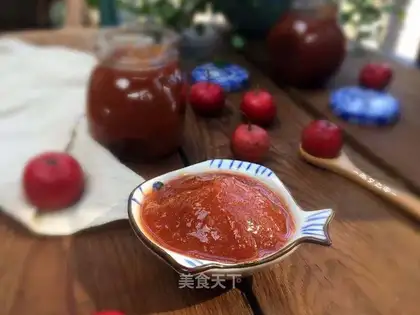 Sour sweet appetizer sauce