In spring, all things are born, and all can be used for dietary supplementation. Many people think that during the Spring Festival, they have eaten so much that they are not interested in anything. In fact, spring requires clever eating. Eating right is a way to nourish your health, and you will be fit and strong all year round!
Eating more bitter foods in spring means you won't suffer all year round
Crispy Andrographis
1. Andrographis
It can treat acne. This vegetable, with its thick, shiny green leaves, is perfect to eat this season. The Andrographis that ends up on the table is culinary Andrographis. Although both have the effect of clearing internal heat, it is different from medicinal Andrographis, which is not edible.
Mashed leaves and flowers of Andrographis can be used to treat acne and stress-induced pimples, and it is also effective for eczema in children caused by indigestion. It tastes bitter, has a cold nature, and has the effects of clearing heat and detoxifying, cooling the blood, reducing swelling, and eliminating dampness and dryness. In addition, it contains natural anti-inflammatory and antiviral components such as andrographolide. Eating it in spring has preventive and therapeutic effects on influenza, pneumonia, frequently occurring pharyngitis, angular cheilitis, high blood pressure, and cholecystitis.
2. Dandelion
It has a miraculous effect on treating tonsillitis. Dandelion appears right after shepherd's purse in April, blooming with yellow flowers, and soon after, it flies away on little parachutes. Dandelion is also slightly bitter and tastes great in a cold salad. Because of its excellent liver-clearing and detoxifying properties, it is highly effective in treating tonsillitis, mastitis, and acute jaundice hepatitis.
3. Viola
A master at detoxifying, cooling the blood, and reducing swelling. Viola, those small purple wildflowers that look like noble irises, are common in spring. It has a cold nature and a slightly bitter taste. It can also clear heat and detoxify, cool the blood, and reduce swelling, making it a master on par with dandelion. Blanching it and eating it as a cold salad is delicious.
In spring, these bitter vegetables can help us clear the accumulated internal heat and intestinal toxins from a whole winter, which is very beneficial for the spring growth and summer development.
In spring, eating tender sprouts nourishes yang and prevents illness
At the spring dining table, diners are pleasantly surprised to see plates of tender yellow sprouts!
1. Soybean Sprouts
The most nutritious of all sprouts. Among all sprouts, soybean sprouts are the most nutritious. The protein utilization rate of soybean sprouts is much higher than that of soybeans. Moreover, the polysaccharides that are hard to digest in beans quietly disappear during the germination process, avoiding bloating and allergies from eating soybeans. When soybeans have just sprouted, the content of vitamin C and amino acids is highest and easily absorbed and utilized. If this stage is passed, the longer the sprout grows, the lower the nutritional value.
Dry-fried Soybean Sprouts
2. Mung Bean Sprouts
A good medicine in the eyes of doctors. Although the nutritional value of mung bean sprouts is not as high as that of soybean sprouts, in the eyes of Traditional Chinese Medicine, mung bean sprouts are a valuable medicinal herb: Mung bean sprouts are cool in nature and sweet in taste. They can not only clear summer heat, unblock the meridians, and counteract various toxins, but also regulate the five organs, beautify the skin, and promote the excretion of dampness and heat. If you have a sore mouth from getting "heatiness" in the spring, or your urine is yellow, there is fluid behind your ears, or your eyes are blurry with eye discharge in the morning, you should eat more mung bean sprouts to detoxify.
3. New Sprouts
The most energetic and delicious. Besides mung bean sprouts, black bean sprouts are also often seen in supermarkets. In addition, there are toona sprouts, radish sprouts, and wheatgrass sprouts. All of these are edible, nutritious, and can be grown at home with two pieces of cotton paper. Making a salad with some olive oil is perfect.
Spring is the season of growth, and new sprouts are the most energetic and delicious. The bamboo shoots, loved by people in the south, can help us scrape off the intestinal grease from winter; the fragrant toona sprouts can supplement the hormones that aid reproduction; and the magnolia buds also have the energy to clear fire and remove toxins. These tender sprouts, having stored up nutrients for a whole winter, are very nutritious.
In spring, the top three choices for reducing fire and lowering blood pressure
1. Shepherd's Purse
The most delicious in spring. Actually, shepherd's purse is available all year round, but the tender sprouts in spring are the most delicious and nutritious. Shepherd's purse is rich in vitamin C and carotene, which helps enhance the immune function of the respiratory mucosa. The iteodide it contains can fight inflammation and bacteria, increase the vitamin C content in the body, and has antiviral effects. Therefore, eating more shepherd's purse can prevent spring flu; it is rich in carotene, a precursor of vitamin A, which can improve eyesight; it contains acetylcholine, which can not only lower cholesterol and triglycerides but also lower blood pressure. For those who ate too much meat in winter, eating more shepherd's purse in spring is a good idea because it has the effects of strengthening the stomach, harmonizing the spleen, aiding digestion, and reducing stomach fire.
Not only that, shepherd's purse can also be made into antihypertensive tea. Every spring, collect the whole plant of shepherd's purse, wash it, dry it, and chop it up. Each time, take 10-15 grams and brew it with boiling water. Long-term use can treat patients with hypertension with symptoms of liver yang rising and dizziness. Although shepherd's purse is good, people with a weak and cold constitution, loose stools, and pregnant women should be cautious.
Shepherd's Purse Wontons
2. Kalimeris Indica
It helps with inflammation and lowers blood pressure. Although Kalimeris Indica has a special smell, it is non-toxic, unlike some wild vegetables in spring that are slightly poisonous. It has a pungent and cool nature, slightly cold, and like shepherd's purse, it has the effects of clearing heat and detoxifying, cooling the blood to stop bleeding, and promoting urination to reduce swelling. It can be called upon for help when suffering from purulent inflammatory diseases such as acute hepatitis, pharyngitis, tonsillitis, parotitis, and mastitis.
Kalimeris Indica also lowers blood pressure. For those with high blood pressure, fundus hemorrhage, or eye pain, a decoction of 30 grams of Kalimeris Indica and 15 grams of raw rehmannia root, taken twice daily for 10 days as a course of treatment, can show results after a month of persistence.
3. Chrysanthemum Greens
Clears heat, whets the appetite, and can be brewed as a tea. Nanjing people call Chrysanthemum Greens, Wolfberry Greens, and Kalimeris Indica the "Three Treasures." Traditional Chinese Medicine says: "Chrysanthemum Greens are sweet, cool, and non-toxic. They have the effects of clearing heat and cooling the blood, regulating the middle burner to whet the appetite, lowering blood pressure, and cooling and detoxifying. They are suitable for stomach heat, vexation, constipation, bitter taste, headache, and red eyes." Like other chrysanthemums, Chrysanthemum Greens can also be used as a medicinal diet for patients with high blood pressure. Even if you usually have symptoms like headache, red eyes, vexation, or a bitter taste in the mouth, you can eat fresh tender seedlings or boil the whole plant and flowers into soup. The dosage is not strict.
Most wild vegetables that grow in spring have the ability to clear fire, benefit the stomach, lower blood pressure, and nourish the liver. But if we are to talk about a combination of deliciousness and health, these "Three Musketeers for Fire" are the best.
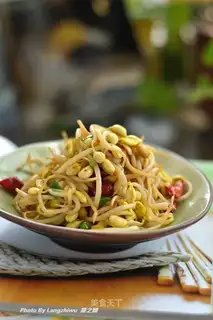 Dry bean sprouts
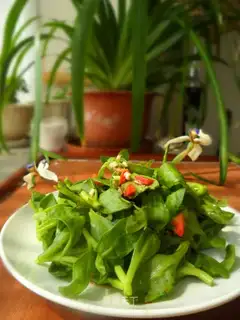 It's a good mouth
 Three cuisine boxes