As a traditional Chinese processed egg product, century eggs have a unique flavor. Some people avoid this taste, while others praise it and are extremely fond of it. However, loving to eat them is one thing, knowing how to eat them properly is another. Today, the editor will chat with you all about the various aspects of century eggs.
Century Egg Tofu
Do century eggs have less nutrition than fresh eggs?
The nutritional content of century eggs, such as protein and fatty acids, is not significantly different from that of fresh eggs.
Compared to duck eggs, century eggs contain more minerals, while their fat and total calories are slightly lower. They can stimulate digestive organs, enhance appetite, promote the digestion and absorption of nutrients, neutralize stomach acid, and have cooling and blood pressure-lowering effects. They are also known for their benefits in moistening the lungs, nourishing yin to stop bleeding, cooling the intestines, stopping diarrhea, and lowering blood pressure. Additionally, century eggs can help protect blood vessels and may also improve intelligence and protect the brain.
Century eggs, also known as pine-patterned eggs, are made from duck eggs. They are processed by taking advantage of the property that proteins in eggs can form a gel in an alkaline solution, turning them into an elastic solid. They are named for the unique pine-pattern-like markings that form on their surface due to specific fungi during the curing process. However, if the curing process is not properly controlled, the proteins in the alkaline solution can hydrolyze instead, causing the protein to denature and turn into a liquid state, making the egg inedible. If the eggshell has cracks or the curing is not well-controlled, hydrogen sulfide inside the egg can escape, causing the yolk to turn golden yellow. A normal century egg should have an ink-green shell, with pine-pattern markings and a rich, elastic texture.
There are three main ways to eat century eggs:
They can be used in congee, soups, and cold salads. Century egg and lean pork congee is the most well-known preparation method; the key to making it well is to add the diced century eggs to the pot twice. Century egg and cucumber soup is a simple, homestyle dish that makes the bland cucumber incredibly delicious. Stir-fried baby bok choy with century egg broth is also very popular; the key to this dish is to first simmer the diced century eggs with ginger thoroughly to bring out the umami flavor. Common cold dishes include ginger juice century eggs, century egg tofu, and green pepper century eggs. Ginger and vinegar are indispensable for cold century egg dishes. Ginger enhances the flavor and neutralizes the "cold" nature of the century egg, while vinegar neutralizes its alkalinity and improves the taste.
What should you pay attention to when eating century eggs?
1. Century eggs should not be eaten with soft-shelled turtles, plums, or brown sugar.
2. When eating century eggs, they should be served with ginger and vinegar to counteract any potential toxins; it is best to steam or boil them before consumption.
3. While lead-free century eggs are delicious and nutritious, children are in a stage of vigorous physical development and are more susceptible to the harmful effects of lead. It is advisable for them to eat them less frequently. In the hot summer, many people enjoy having century eggs with beer or serving them as a cold salad to treat the whole family. They may not have realized that century eggs can also cause food poisoning.
4. According to analysis by food experts, a clean century eggshell has only 400-500 bacteria, while a dirty one can have as many as 140 to 400 million bacteria. If these bacteria enter the egg in large quantities through the pores in the shell, consuming such a century egg can lead to poisoning.
How to select good century eggs?
After the mud is removed, the eggshell should be bluish-green for the best quality. The following two methods can be used to test for a good century egg:
(1) Hold the egg in your hand and gently toss it upward a few times. If it feels elastic and has a heavy, bouncing sensation, it is a good egg; otherwise, it is of poor quality.
(2) Hold the egg at both ends and shake it up, down, left, and right near your ear. If you hear no sloshing or rattling sounds, it is a good egg.
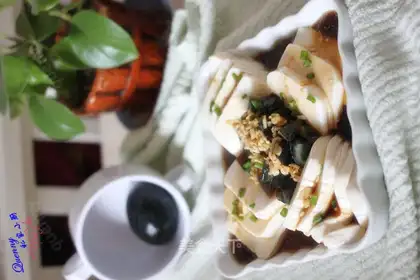 Eggs and tofu