Vegetables are an indispensable part of our diet. Although many vegetables are available year-round now, the most suitable vegetables to eat vary by season. This is because, in a natural environment, vegetables have optimal growth and harvesting times, hence the concept of "seasonal vegetables" and the best time to choose and eat them.
Out-of-season vegetables may be lacking in taste and nutrition, and one may even have to worry about pesticide residues. Below are four major vegetables introduced by season, detailing their properties, how to eat them, and dietary restrictions.
Celery Shredded Chicken Salad
1 Spring
Spinach: Promotes saliva production to quench thirst, lowers qi and moistens the intestines, clears the liver and brightens the eyes. It can be used as a supplementary food for conditions like diabetes, constipation, hemorrhoids bleeding, and red eyes or night blindness caused by wind-fire.
Celery: Clears heat, promotes urination, harmonizes the spleen and stomach, and pacifies the liver to stop dizziness. It has a certain effect of lowering blood pressure and is helpful for irritability and thirst, difficult urination, bad breath, hypertension, and loss of appetite.
Lettuce: Has effects such as clearing heat and detoxifying, promoting urination and stimulating lactation, and lowering blood pressure. It is also beneficial for sores, abscesses, and swelling. Can be stir-fried or eaten cold.
2 Summer
Amaranth: Promotes blood clotting and hematopoiesis, increases hemoglobin, and also clears heat and detoxifies, harmonizes the stomach and nourishes the blood, and aids in weight loss. It is effective as a supplementary treatment for enteritis and bacillary dysentery. Can be stir-fried or boiled. Should not be eaten with soft-shelled turtle or turtle meat.
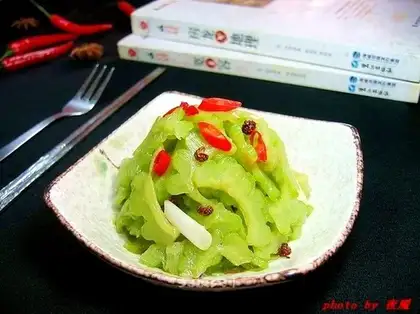
Stir-fried Bitter Melon
Water Spinach: Also known as空心菜 (kong xin cai), it detoxifies, promotes urination, nourishes the blood, and promotes uterine contractions. It is beneficial for carbuncles and sores, difficult urination, and edema. It is mostly stir-fried, but can also be made into soup or eaten cold. It should be avoided by those with a weak spleen and stomach, those who often suffer from diarrhea, and pregnant women.
Cucumber: Clears heat, promotes urination, detoxifies, and benefits the throat. It is effective for thirst in febrile diseases, swollen and sore throat, scanty and dark urine, and scalds from fire or water. It can also prevent skin tanning and is used for inflammation of the lips and corners of the mouth. Can be eaten raw, stir-fried, cold, or pickled. Those with a weak and cold spleen and stomach should eat it with caution or in moderation.
Bitter Melon: Clears summer heat, quenches thirst, clears the heart and brightens the eyes, detoxifies, and relieves fatigue. It is quite effective for preventing and treating summer heat irritability, red and swollen eyes, sores and abscesses, and dysentery. It has a significant effect on lowering blood sugar, boosts immunity, and has certain anti-cancer properties. It is mostly eaten stir-fried, but can also be made into soup or eaten cold. Pregnant women should avoid it, and those with a weak and cold spleen and stomach should not eat it.
Winter Melon: Clears heat and relieves summer heat, eliminates vexation, promotes fluid production, transforms phlegm, promotes urination, and detoxifies. It is effective for summer heat vexation, cough with phlegm and wheezing, difficult urination, edema, and poisoning from fish, shrimp, or alcohol. It can also be a comforting diet for diabetics and is especially suitable for obese individuals. Can be stir-fried, stewed, braised, or cooked in soy sauce.
3 Autumn
Pumpkin: Hailed as a highly effective health vegetable and the best beauty food. It tonifies the body's qi, detoxifies and reduces swelling, nourishes the blood, regulates sugar metabolism, boosts immunity, and prevents hardening of the arterial blood vessels. Can be cooked in various ways such as stir-frying, boiling, steaming, making cakes, or as a filling. Not suitable for those with qi stagnation and bloating or those with damp-heat obstruction.
Stir-fried Pork with Lotus Root and Black Fungus
Potato: Can meet over 90% of the human body's nutritional needs. It strengthens the spleen and stomach, invigorates the body and benefits the kidneys, invigorates blood circulation and reduces swelling. It can be used as a supplementary treatment for indigestion and habitual constipation. Can be stir-fried, boiled, or stewed with various meats.
Lotus Root: Rich in nutrients, it stimulates the appetite and is an ideal nutritional food for those with a weak constitution. Field lotus root is best for stir-frying or deep-frying, while lake lotus root is often braised, stewed, or boiled. Postpartum women should not eat it too early, and it should not be cooked in iron utensils.
4 Winter
Chinese Cabbage: The vegetable richest in minerals and vitamins. It aids digestion, benefits the intestines, promotes fluid production to quench thirst, transforms phlegm and stops coughing. It is beneficial for food stagnation, constipation, type 2 diabetes, and sores and toxins. It is often stir-fried, or stir-fried with mushrooms and shiitake. Those with a weak and cold spleen and stomach or loose stools should not eat much of it.
Hot and Sour Stir-fried Cabbage
Cabbage: Nourishes the stomach, promotes fluid production to quench thirst, clears heat and promotes urination, and detoxifies. It is effective for disharmony of the spleen and stomach, food stagnation, scanty and dark urine, constipation, and sore throat. It can also moisten the intestines to promote bowel movements and beautify the skin. Can be stir-fried, boiled, made into soup, or used as a filling. In the south, it is often eaten with hot pot. Should not be eaten by those with enteritis and diarrhea, and those with deficient qi and a cold stomach should not eat much of it.
Radish: Enhances the body's immune function and has certain disease-prevention and health-care effects. Can be eaten raw or juiced. In cooking, it is often boiled, salt-pickled, shredded and dried then stir-fried with meat, or stewed with lamb, pig's trotters, or beef. Those with a weak and cold spleen and stomach should not eat much of it. Those with gastric and duodenal ulcers, chronic gastritis, threatened abortion, or uterine prolapse should eat it in moderation.
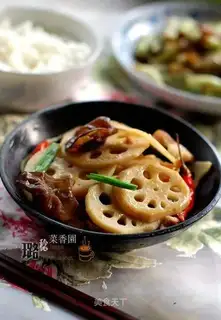 Liang Moo-mu's meat chop
 Celery with chicken silk
 I'm gonna make it
 QQQ SUGAR MOOSE